
At a Glance
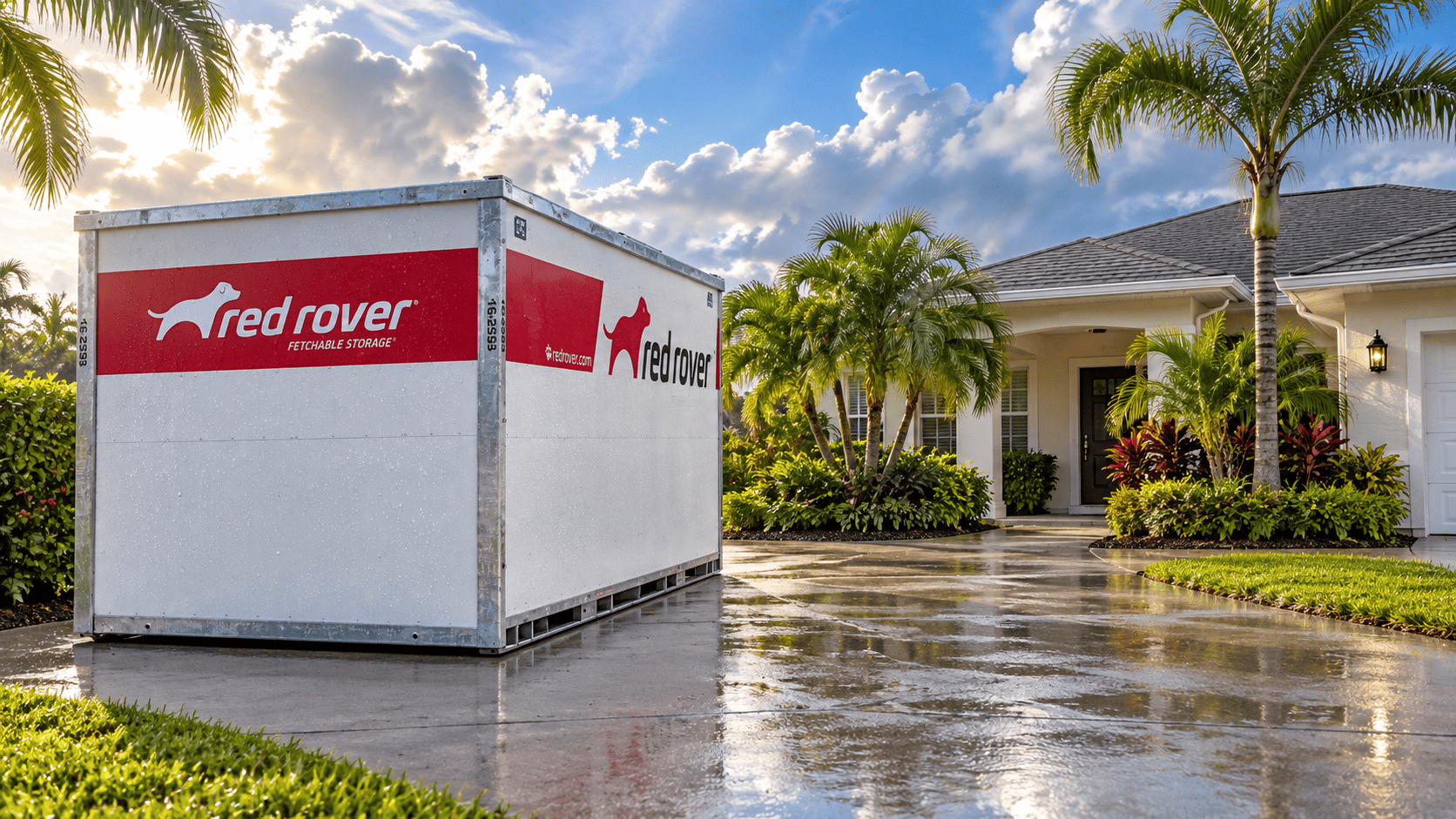
- We deliver a portable storage container to your door. You load it and decide where it goes next.
- An 8-foot container fits 1 or 2 rooms. A 16-foot container fits 3 or 4 rooms.
- In Orlando, portable storage costs $237 to $300 for a two-bedroom move. Prices change based on container size, rental time, and the company. Always check current rates and ask about any extra fees. Movers usually cost $800 to $2,300 or more.
- Central Florida is hot and humid. Use climate-controlled storage to keep your things safe from damage.
- Check your HOA rules before getting a container delivered.
Last summer, a family in Lake Nona called us. Their house sold two weeks early, but their new home was not ready for a month. They had only five days to decide where to put everything. The family had four bedrooms, lots of furniture, two kids, and a dog.
They did not hire movers or rent a truck. They did not make trips to a storage unit. On Monday, two portable storage containers showed up at their home. By Thursday, they packed everything at their own pace with less stress. The containers went to a climate-controlled storage center. They stayed there until the new house was ready. The whole move cost under $600. Movers would have charged $2,400 for the same job.
Portable storage has been around for years. But many people in Orlando do not know how easy and cheap it is. Orlando is growing fast. More than 200,000 new people are moving in from 2021 to 2026. More families need storage for moves or home projects. When people search for portable storage, they see many options and confusing prices. It can be hard to know where to start.
This guide will help you. If you are moving, fixing your home, getting ready for storms, or have too much stuff, this guide explains portable storage. You will learn how it works, what it costs, mistakes to avoid, and how to pick a good company.
No unnecessary stuff. No sales pitch. Just the information you need to make a smart decision.
Let’s get into it.
What precisely is portable storage?
Imagine it as a storage unit that arrives at your door instead of you having to drive to it.
A company brings a steel container (usually 8 or 16 feet long) to your home or job site. You pack it when you want—there is no rush. When you finish loading, you have three simple options:
- It’s best to keep it on your property since it’s very useful during renovations.
- Move it to a storage facility, which is ideal if you are between homes.
- Send it to your new address, and the container will then function as your moving truck.
That’s it. You do not need to rent a truck, drive to a storage facility, or load and unload your things over and over.
What takes place on the day of delivery?
Here is what to expect when your container arrives:
- A specialist tilt-bed truck drives into your driveway, tilts its bed, and uses gravity and chains to slide the container off. Lowering the container takes 15 to 30 minutes.
- Place the container on a flat, level surface—typically your driveway or a parking area.
- The driver shows you how to open the doors and the locks and answers any questions you may have.
- Once the truck is gone, the container is yours, and you can load it anytime—morning, evening, or on weekends—without sticking to a schedule.
Important: Make sure there are no overhead wires, tree branches, or roof projections along the route. The truck needs about 12 feet of vertical clearance and a direct approach to where you want to place it.
How is it different from self-storage or rental trucks?
This is the first question people ask. Here’s the straightforward comparison:
Portable Storage | Self-Storage Unit | Rental Truck | |
Delivered to you? | ✅ Yes | ❌ You drive to it | ❌ You drive it |
Loading pace | Days or weeks | Anytime (facility hours) | 24–48 hours |
Moves with you? | ✅ Yes | ❌ No | ✅ But you drive |
Times you handle items | 2 | 4+ | 2 |
Climate control | ✅ At facility | ⚠️ Varies | ❌ No |
Insurance available? | ✅ Yes (ask provider) | ✅ Yes (facility or your policy) | ⚠️ Limited |
Cost (2-bed move) | $237–$300 | $270–$480+ | $120–$230 (no storage) |
What’s the real difference?
With self-storage, you load your car, drive to the storage place, unload, and repeat. With a rental truck, you have to move everything in one busy day. With portable storage, the container stays at your home. You load it when you want. That’s all.
What size container will you need?
If you get it right, you’ll save money; if you don’t, you’ll have to pay for extra space or rent a second container.
8-Foot Container — Best for 1–2 Rooms
- Space: 431 cubic feet (like a 10’ × 5’ storage unit)
- Holds: 5,500 lbs
- Doors: Front and back (barn-style) — easy access from both ends
- Fits: Queen bed, dresser, loveseat, small dining set, 10–15 boxes
Ideal for studio apartments, renovating a single room, storing items in college, and storing seasonal belongings.
16-Foot Container — Best for 3–4 Rooms
- Space: 866 cubic feet (like a 10’ × 15’ storage unit)
- Holds: 7,700 lbs
- Doors: One end
- Fits: King bed, 2–3 dressers, full sofa, dining table with chairs, desk, 25–35 boxes
Ideal for family moves, multi-room renovations, business storage, and construction sites.
If you’re uncertain, use this rule of thumb.
Count your rooms. If you have one or two, choose the 8-foot container. If you have three or four, pick the 16-foot size. If you have more rooms, rent both sizes. This gives you more space and often a discount.
Here’s a tip: If you are not sure, choose the larger container. Paying an extra $20 a month is better than needing a second container later.
How much does portable storage really cost in Orlando?
Let’s consider actual numbers. This is what you can look for in Central Florida:
8-Foot Container | 16-Foot Container | |
Monthly rental | From $99 | From $119 |
Delivery | ~$59 flat | ~$59 flat |
Pickup | ~$59 flat | ~$59 flat |
Locks | 2 needed (you provide) | 1 needed (you provide) |
Real-World Cost Comparison
For a typical 2-bedroom apartment move within Orlando:
- Portable storage: $237–$300 (actual price may vary by provider, container size, and length of rental—verify with your chosen company for the most accurate current quote)
- Self-storage + rental truck: $270–$480+
- Full-service movers: $800–$2,300+
Hidden Costs to Watch For
Providers aren’t always clear about their prices. Before you agree, find out the following:
- If you need the container to be delivered to a second address, certain providers will charge an additional delivery fee – make sure to ask about this at the outset.
- Regarding extended rental fees—although some companies charge a low rate for the first month, they raise it after 30 or 60 days—find out what the rate will be for the second and third months and all subsequent months.
- Some companies add a fuel surcharge to their delivery fee. Find out whether the delivery price is all-inclusive.
- The cost of insurance—while some companies provide basic coverage, others charge extra—make sure you understand what is included before your belongings are loaded onto the truck.
- If you keep the container beyond the return date you agreed to, late return fees can quickly add up.
5 Ways to Keep Costs Down
- Choose the right container size; don’t rent a 16-footer if you have a one-bedroom apartment.
- Pack the containers. Most of the providers give you a discount if you rent two.
- Book three weeks in advance; prices and availability get more limited in the summer and before hurricane season.
- Smart packing means taking apart the furniture and filling the gaps, since using fewer containers saves
- Make a plan; the faster you load and unload, the fewer months you will have to pay for.
7 Times Portable Storage Makes Perfect Sense
1. You are moving locally
Having the container at your present home, the provider will deliver it to your new address: no truck, no I-4 traffic, and no one-day deadline. If your new property isn’t ready yet, the container will be taken to a climate-controlled facility until it is.
2. You are carrying out renovations in your house.
If you’re renovating your kitchen or installing new floors, placing a portable storage unit in your driveway keeps your furniture safe and easily accessible during the work. You can take what you need anytime—no need to drive to a storage facility.
3. The hurricane season is coming.
From June to November in central Florida, there is a possibility of storms. Smart homeowners use portable storage units to protect patio furniture, keep valuables safe, and free up garage space for emergency supplies. Don’t wait until a storm is predicted— it can spike overnight.
4. You Need Storage on Job Sites
In Orlando, contractors use all-steel containers fitted with industrial locks to secure tools, equipment, and materials on site. That’s better than relying on a tarp and hoping for the best.
5. Your business is going through a period of transition.
Restaurants, offices, healthcare facilities, and event companies use movable storage units when carrying out renovations, moving to new locations, or making seasonal changes to their inventory. Because the storage is rented month to month, you don’t need to sign a long-term warehouse lease.
6. You need storage on a seasonal or temporary basis.
Looking for portable storage units to rent near me for a short time to handle things like traveling north in the winter, a college student needing space between dorms, clearing out an estate, or holiday decorations that have overflowed into the garage? An 8-foot container suits all these situations for less than $100 per month. If you are looking for portable storage units to rent near me for short-term requirements, then the 8-foot size is your best choice.
7. You are putting your home up for sale.
In Orlando, the number of houses on the market in 2026 is greater than at any time since 2019; the average time that a house stays on the market is 52 days. More than ever, staging is important. A portable storage container lets you clear out rooms, remove heavy furniture, and create the neat, open look buyers want—without getting rid of anything permanently. You can then put everything back once the house has sold.
How to Pack Your Container Like a Pro
Assembling a portable storage container is different from just throwing boxes into a garage; if you do it incorrectly, you’ll end up with warped furniture, moldy clothes, and broken dishes. Here’s how to do it properly—particularly in Central Florida.
The 3-Layer Rule
- Start with the heaviest items—such as appliances, dressers, bookshelves, and heavy boxes—as anchors for the rest.
- The middle layer should include medium-sized boxes, smaller furniture items, rolled rugs, and wrapped mirrors.
- The top layer should include light, fragile items such as linens, pillows, lampshades, and delicate boxes.
Florida-Specific Rules (Do Not Skip These)
Central Florida’s heat and humidity create storage risks that do not exist in most other states:
- Put silica gel packets in boxes containing electronics, photographs, and documents, since moisture is your enemy.
- Never cover anything with plastic bags, since they trap humidity and can cause mold to grow; instead, use breathable covers.
- Remove batteries from electronic devices, since Florida heat can cause leakage and corrosion.
- Don’t keep heat-sensitive items—such as candles, vinyl records, and chocolate—unless you store them in a climate-controlled environment.
- Don’t store food or scented items, since Florida’s warmth attracts pests faster than you might think.
- Before you store anything, make sure it is clean, since dirty objects will attract bugs and mold.
General Best Practices
- Spread the weight evenly across the container floor.
- To stop things from moving during transport, fill the gaps with soft items such as pillows, blankets, and towels.
- On two sides of each box, put the label indicating its contents and the destination room.
- Put the necessary items by the door so you can take them without unpacking everything.
Pack an “Essentials Box” Last (Load It First)
Load the box you need immediately after unpacking so it’s the first thing you get. It should include:
- Phone chargers and power strips
- Toilet paper, paper towels, hand soap
- Basic toolkit (screwdriver, hammer, tape measure)
- Snacks and water bottles
- Change of clothes for each family member
- Medications and first-aid kit
- Important documents (IDs, lease, closing papers)
- Pet food and bowls (if applicable)
- Trash bags and cleaning spray
Believe us, and by the time you move in, you’ll thank yourself.
8 Mistakes That Ruin a Portable Storage Experience
We have encountered these situations hundreds of times; avoid them, and your experience will be smooth.
- If you rent a room that is the wrong size, you’ll stress if it’s too small and waste money if it’s too big. First, count the number of
- Ignoring climate-controlled storage in Florida isn’t a good idea; if your container sits in a non-climate-controlled facility during the summer, it can be damaged.
- Loading is done in the rain; when cardboard boxes are exposed to rain, they collapse and get water damage, so it’s necessary to check the forecast.
- The heavier things are placed over the lighter ones. Some boxes have been crushed, and items are broken. The heaviest items are always at the bottom.
- Forgoing to lock the container; you are responsible for providing the locks. Make sure you buy good-quality padlocks before the day the goods are delivered.
- Don’t forget to check the HOA rules, since in some communities container placement is limited to 7 to 14 days, so you should get approval first.
- Book as late as possible, since summer and hurricane season see the highest demand; therefore, make bookings two to three weeks in advance.
- If you don’t have insurance, most portable storage companies won’t be liable for any damage to your items. Your homeowner’s or renter’s insurance might cover what you store, but you should check your policy first. If it doesn’t provide that coverage, ask your insurance provider about storage protection plans. Such coverage usually costs between $10 and $30 per month and covers $5,000 to $20,000. The amount you pay for a pizza can protect thousands of dollars’ worth of possessions. Do not omit this step.
How to Keep Your Stuff Safe: Security Tips
A steel container is already safer than a cardboard box in your garage, but a few additional steps make a big difference.
Locks Matter — A Lot
- Padlocks with a disc lock or a shrouded shackle resist bolt cutters much better than ordinary padlocks.
- When your container has two doors, then use two locks — one for each door.
- Don’t buy a cheap combination lock; instead, spend $15 to $25 on a good steel one, since it is guarding all your belongings.
On-Site Security (If the Container Is at Your Home)
- Put the container in a place that is well lit and visible — not somewhere behind a fence or in a corner where it can’t be seen.
- If you have one, aim a security camera or motion-sensor light at the container.
- Let your neighbors know the container is there and ask them to keep an eye out.
Facility Security (If the Container Is at a Storage Center)
- Choose a facility with 24-hour surveillance cameras, gated entry, and alarms in each unit.
- Inquire whether the facility has staff on site during business hours.
- Make sure that only you (or the people that you authorize) can access your container.
How to Choose a Provider You Can Trust
You won’t find every company that rents portable storage units near me worth your money, so here are the things you should look for and the ones you should avoid.
Green Flags ✅
- They are locally owned and run. They know the weather patterns, HOA rules, and Orlando neighborhoods.
- Containers that are new or well-maintained. No rust, no stuck doors, and no compromised seals.
- A climate-controlled storage facility is a must-have in Central Florida.
- Pricing is transparent, with fixed delivery and pickup fees and no hidden charges.
- There are strong and consistent reviews; search for those with 4.5 or more stars and include actual customer stories.
Red Flags 🚩
- The prices are suspiciously low, and the terms are vague. Further charges are coming.
- There is no physical storage facility, since they could be a broker, not an actual provider.
- Containers that are old, dented, or rusted.
- There is no climate-controlled option, and in Florida, that fact makes it unacceptable.
- It’s difficult to reach them until you’ve paid; if they disappear now, imagine what that would be like afterward.
Which is better—local or national?
Local Provider | National Brand | |
Orlando knowledge | ✅ Knows HOAs, neighborhoods, weather | ❌ Generic nationwide process |
Customer service | ✅ Talk to real people locally | ⚠️ Call centers, longer wait times |
Container quality | ✅ Often newer, better maintained | ⚠️ Varies by franchise location |
Pricing flexibility | ✅ Can negotiate, bundle, customize | ❌ Fixed national pricing |
Availability | ⚠️ Smaller fleet | ✅ Larger fleet, more locations |
Brand recognition | ❌ Less known | ✅ Established name |
Our view is that, for local moves and storage in Central Florida, a local company generally provides better service, better containers, and more flexible pricing; for long-distance moves across state lines, a national brand may have the logistics network you need.
5 Questions to Ask Before You Book
- What’s covered by the price? (Delivery, pickup, monthly rental, facility storage)
- Are your storage facilities climate-controlled?
- For how long may the container remain on my property?
- What are your policy terms for cancellation or for making a change?
- Do you provide insurance, packing supplies, or help with loading?
Orlando HOA and City Rules: What You Need to Know
This surprises people. Before you arrange the delivery, check the following:
- In Orlando, most residential areas permit containers to remain on private property for 30 to 90 days.
- In HOA communities, the allowed posting period may be 7 to 14 days, and the board may require written approval.
- Rules regarding placement: Place the container on a hard, level surface, and do not obstruct sidewalks, fire hydrants, or lines of sight.
- If you want to place the container on a public street or right-of-way, you will likely need a city permit.
We recommend contacting your HOA before you book your storage. An experienced portable storage provider should be familiar with Central Florida HOA regulations and be able to help you through the process.
Delivery Day Prep Checklist
Do this the day before your container arrives:
- Make sure the driveway is completely clear by moving all cars, bikes, trash cans, and toys.
- Look for overhead wires, tree branches, or roof overhangs in the truck’s path.
- Make sure the surface is flat and even (not steep or soft).
- Take space into account, since the truck needs at least 12 feet of width and 60 feet of length to move around.
- Let your neighbors know a large truck will be passing through the area for 15 to 30 minutes.
- Make sure your locks are ready since you can secure the container once the driver has left.
- Be home (or have someone at the house) during the delivery window.
In Central Florida, where can you find portable storage?
Most providers cover the full Orlando metro:
- Orange County — Orlando, Winter Park, Apopka, Lake Nona, Horizon West
- Seminole County — Sanford, Oviedo, Altamonte Springs
- Osceola County — Kissimmee and St. Cloud
- Lake County — Clermont and surrounding areas
Red Rover provides service for all of those areas. Call 833-733-7683 or visit redrovers.com to check whether service is available at your address.
Frequently Asked Questions
For how long may I keep a portable storage container?
Most providers offer month-to-month rentals so that you can keep the property for two weeks or six months.
Can a container containing cargo be delivered to my new home?
Yes, that is one of the main benefits of using portable storage containers when moving: you load the items, and the company handles transportation.
Are the containers weatherproof?
All-steel movable storage containers have weather-resistant seals and built-in ventilation; for the best protection in Florida, keep them in a climate-controlled facility.
Will placing a container on my driveway cause any damage?
Residential containers are designed to be safely placed on driveways. Talk to your provider about any concerns before delivery.
Does portable storage actually cost less than using movers?
Yes, for most local moves. A move into a two-bedroom flat using portable storage costs between $237 and $300, whereas full-service movers would cost between $800 and $2,300 or more.
What about hurricane season?
Weather-resistant containers protect possessions and free up garage space for emergency supplies. Book early, since demand increases quickly when storms are predicted.
What ought I not to store?
Food that spoils, materials that can catch fire, live plants, and all illegal items. In Florida, also avoid candles, vinyl, and anything that melts—unless you use climate-controlled storage.
Shall I get insurance for the things that I am storing?
Your homeowner’s or renter’s policy may already cover items in storage, but coverage can be limited or may not apply when items are kept off the premises. Check your policy, and if it doesn’t cover items stored elsewhere, ask your insurance provider about storage protection plans. These plans generally cost between $10 and $30 per month and cover belongings worth $5,000 to $20,000.
What do I need to do to get my driveway ready for container delivery?
Clear all vehicles, bikes, and obstacles. Make sure no overhead wires or branches block the truck’s path. The surface should be flat and hard (concrete or asphalt). You need about 12 feet of width and 60 feet of length for the delivery truck to maneuver safely.
I searched for portable storage units near me, but I live outside Orlando. Do you serve my area?
Red Rover covers Orange, Seminole, Osceola, and Lake counties. Call 833-733-7683 to check your specific address.
The Bottom Line
Here is what it comes down to.
You have stuff. You need it somewhere else — or you need it out of the way for a while. You do not want to spend a fortune, drive a truck through Orlando traffic, or lose an entire weekend making trips to a storage facility.
Portable storage solves all of that. A container shows up at your door. You fill it when you are ready. It goes wherever you need it. And when you are done, it disappears.
For a city that is growing as fast as Orlando — with more people moving in, more homes being renovated, and more hurricanes to prepare for every year — it is honestly the smartest storage option available in 2026.
Ready to get started?
- 📞 Call Red Rover at 833-733-7683
- 🌐 Visit redrovers.ccom for a free quote
- 📍 See redrovers.com/orlando for Orlando-specific details
Brand-new containers. Climate-controlled facilities. Pricing starts at $99/month, but rates may change—always confirm with your provider. A 4.85/5.0 customer rating. And a team that actually picks up the phone.
Red Rover — The Most Flexible Way to Move & Store.
Disclaimer: Pricing and service details reflect information available at the time of publication and may change. Contact providers directly for current rates. Always verify fees, included services, and rental terms before booking, as hidden or additional charges may apply.
 Now Serving Orlando!
  Portable Moving & Storage Delivered to Your Door —
  Same-Day Delivery Available |
  We’ll Beat Any Competitor’s Price! -