
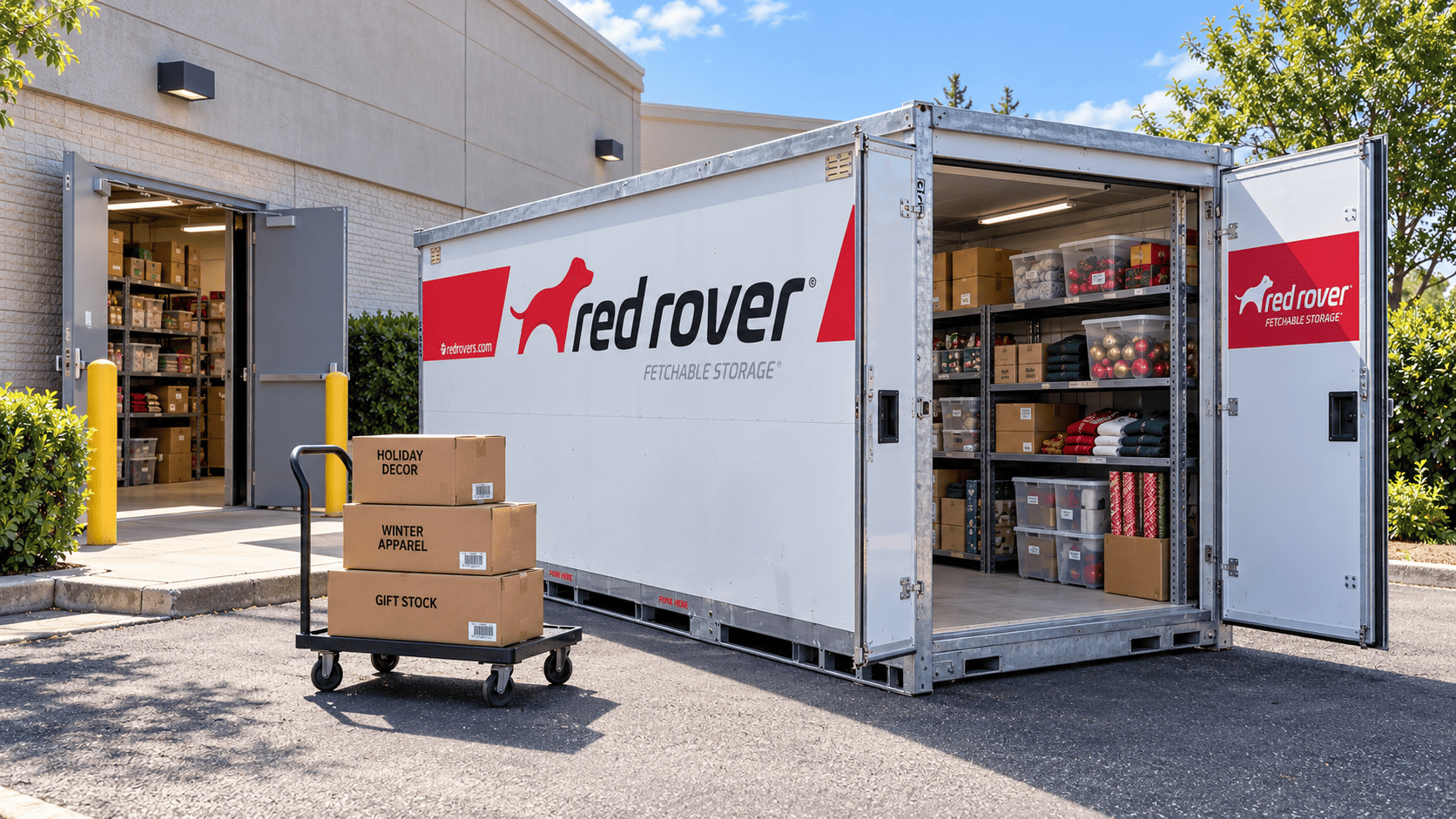
For retailers, the holiday season is not only the busiest time of year but also a make-or-break period for success. Industry data consistently indicates that the final quarter generates a significant share of annual retail profits. But that sales surge increases inventory, and most retail backrooms aren’t built to handle it.
If you own a retail business, whether it’s a boutique, an online shop, or a seasonal pop-up, you know the challenge. Inventory shows up months before the busy season. Your stockroom overflows, staff trip over boxes, and you pay for warehouse space you don’t need all year. But what if you could avoid both crowded backrooms and costly long-term leases?
Portable storage changes the equation. It gives retailers a flexible, on-site solution that scales with seasonal demand—without the overhead of traditional warehousing. This guide walks you through employing portable storage for seasonal retail inventory: what to store, how to organize it, and why it’s often the smarter financial move.
The Seasonal Retail Inventory Challenge: Why Traditional Storage Falls Short
Your Backroom Wasn’t Built for Peak Season
Most retail spaces get designed for average inventory levels. During peak season, you might receive double or triple your normal stock, and that inventory has to go somewhere. Typical solutions include cramming it into the backroom, renting a warehouse, or using an off-site self-storage unit. None of these are ideal, and each one creates its own set of problems that compound as the season progresses.
Cramming inventory into the backroom creates chaos and safety hazards for your staff. Renting a warehouse is expensive and inflexible, frequently requiring long-term commitments you don’t actually need. Off-site self-storage units are inconvenient, forcing staff to leave the store every time they need to restock a shelf.
The Hidden Costs of Warehouse Rentals
On paper, renting warehouse space for a few months seems simple. You pay for extra room when you need it, with no long-term commitment. However, a closer look shows the numbers may not always align.
What starts as a short-term solution can quietly spiral into a recurring cost. You pay base rent, often with minimum square footage requirements. You also pay admin charges and security bonds. You also pay forklift access fees and early termination penalties. Then add transportation costs—fuel, tolls, time, and vehicle wear—plus labor costs for staff driving to and from the warehouse.
And then there’s the efficiency problem. Stock sitting in an off-site facility doesn’t just tie up capital—it can also produce missed sales. If staff are constantly running between locations, they’re not spending that time serving customers or managing floor stock. For small and mid-sized retailers, that disconnect between product and point of sale can quietly erode profit margins week after week.
Why Off-Site Storage Slows You Down
When you store inventory off-site, every restock becomes a logistical operation. You notice you’re low on a popular item, so you assign a staff member to drive to the storage facility. They manage access hours and security, find the item in the unit, transport it back to the store, and finally restock the shelves. That’s hours of lost productivity—per restock.
During peak season, when demand changes by the hour, this lag can mean the difference between a sale and a stockout. Every minute your team spends driving to and from an off-site facility is a minute they’re not on the sales floor helping customers or managing the day-to-day operations that keep your business running smoothly.
How Portable Storage Solves the Seasonal Inventory Problem
What Is Portable Storage?
Portable storage flips the traditional storage model on its head. Instead of renting space at an off-site facility and driving your inventory there, a portable storage container is delivered directly to your business. You load it whenever you wish. When you’re done, the provider picks it up and either stores it or moves it elsewhere. It’s storage that comes to you—not the other way around.
This simple reversal changes everything about how retailers manage seasonal inventory. Instead of planning your day around trips to a storage facility, you keep your inventory on your property, accessible whenever you need it. You can restock shelves in minutes instead of scheduling warehouse runs, and your team can focus on selling instead of logistics.
On-Site vs. Off-Site: The Access Advantage
The deciding factor between portable storage and traditional warehousing comes down to one question: how often does your team need to access what’s stored? For retail seasonal overflow, portable storage wins almost every time.
With on-site portable storage, you walk over and grab what you need. Restocking takes three minutes. Labor costs are minimal. You have complete visibility and control over your inventory.
And you’re not locked into long-term lease commitments. With off-site warehousing, you schedule a trip and drive there. Restocking takes thirty minutes or more, plus travel time. Labor costs are high, including drive time, fuel, and wages. You have less control since it’s a shared facility. And you’re often locked into long-term lease commitments.
For retail seasonal overflow, portable storage is the clear winner. Retailers need frequent access to inventory in peak seasons, and on-site containers let them restock shelves in minutes, not schedule warehouse runs.
The Financial Case: Portable Storage vs. Warehouse
Let’s run a real-world comparison. Imagine a retail business needs approximately 300 square feet of storage for six months. With a warehouse option, monthly rent might range from $150 to $300. But that doesn’t account for weekly travel—roughly two hours per trip—and fuel and time costs that add up fast. Once you factor in labor, the total cost is significantly higher than the sticker price.
With portable storage, you rent one 20-foot container offering approximately 280 square feet of usable space. You get one delivery, one monthly rate, and one pickup—no travel time for your staff and no operational disruption. The real difference isn’t just the monthly rate—it’s how much time your team loses getting to the storage.
The “Overflow Warehousing” Solution
There’s a term for what portable storage does for retailers: overflow warehousing. Overflow warehousing uses temporary, semi-permanent, or flexible storage space to supplement your primary warehouse or stockroom. It’s ideal for businesses that experience seasonal peaks like holidays, back-to-school, or summer, as well as market transitions and unexpected surges in demand.
With overflow warehousing, you can handle demand changes without committing to long-term storage. It helps you avoid operational bottlenecks and better meet customer expectations. Instead of guessing how much space you’ll need six months from now, you can scale up when demand rises and scale down when the season ends.
The Four-Category System for Seasonal Retail Inventory
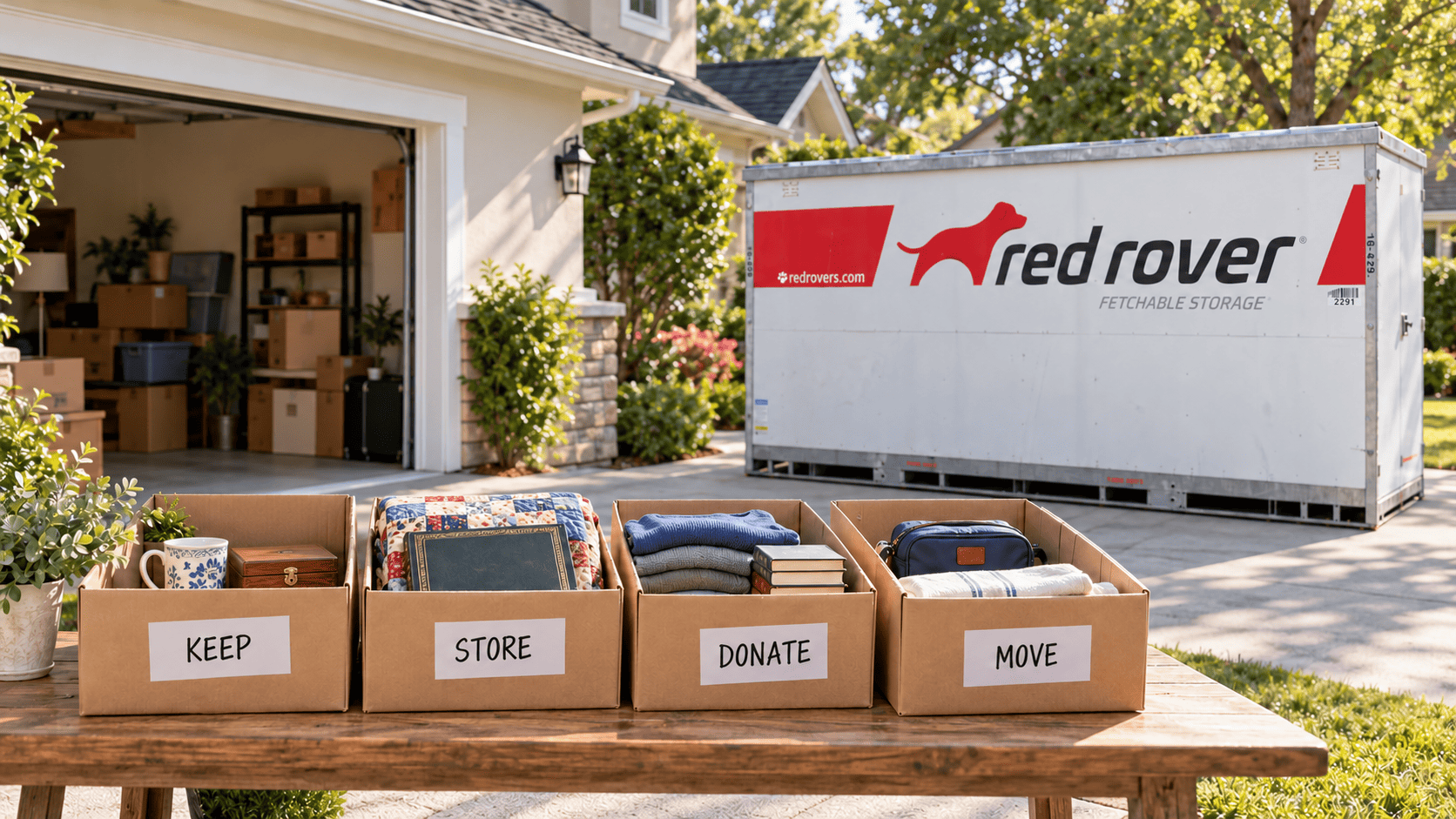
Like residential downsizing, managing seasonal inventory comes down to four essential decisions: store, rotate, sell or donate, and discard. Here’s how to use each category effectively.
Store: The Strategic Holding Zone
Store is your most powerful category. This is inventory that is seasonal and won’t sell for months, overflow from your primary stockroom, items being held for future promotions, or products being kept for warranty, returns, and exchanges.
With portable storage, “store” doesn’t mean “out of sight, out of mind.” Your container is on-site, so you can access it whenever you need to pull inventory forward. This transforms storage from a passive holding area into an active part of your inventory management strategy.
Rotate: Inventory That Moves In and Out
Rotate is your active seasonal inventory—the items you’re currently selling but that don’t all fit on the sales floor at once. For these items, organization is critical. Label clearly by product type, season, or promotion. Place items logically, with quick movers near the front of the container. Use a system to track what goes in and out so you always know what you have and where it is.
Sell or Donate: End-of-Season Decisions
When a season ends, you have three options for remaining inventory. You can sell at a discount, through a clearance event, or to a liquidator. You can donate for a tax write-off and community goodwill. Alternatively, you can hold onto them for next season if they aren’t tied to current trends. Your portable container gives you a place to stage these items while you decide, so you don’t have to decide immediately under pressure.
Discard: What Can’t Be Sold or Stored
Some items can’t be donated or stored. This includes damaged goods, expired products, and items that didn’t sell and have no future value. Be honest about what is truly unsellable. Holding onto dead inventory costs more than letting it go—it takes up space, creates clutter, and ties up resources you could use for products that actually sell.
What to Store in Portable Containers: A Category-by-Category Guide
Not all retail inventory is the same. Here’s how to store different product types in your portable container.
Seasonal Apparel and Accessories
Seasonal apparel presents one of the clearest use cases for portable storage. Winter coats and sweaters can be stored in containers during spring and summer, while summer dresses and shorts can be stored during fall and winter. Store holiday-themed clothing year-round and rotate it for seasonal promotions. Organize accessories like scarves and hats by season in labeled bins. Use vacuum-sealed bags for bulky apparel to increase space and fit more inventory into a smaller footprint.
Holiday and Seasonal Decor
Retailers who sell holiday decor face a unique challenge: their inventory is only relevant for four to eight weeks per year. Christmas decor can be stored for ten to eleven months and rotated in November. Store Halloween costumes for 10 to 11 months and rotate them in September. Store Easter and spring items for 10 to 11 months and rotate them in March. Store general seasonal decor by season with clear labels so you can find what you need when the season arrives.
Toys and Gift Items
Toy inventory often peaks around holidays and birthdays. Portable storage lets you stock up on popular items before peak season, store overflow without cluttering your sales floor, and rotate items based on current promotions. Instead of ordering conservatively and risking stockouts, you can order confidently, knowing you have room to store the overflow.
Electronics and Small Appliances
Electronics and small appliances require more care in storage. Store them in climate-controlled containers when possible. Keep items in their original packaging to protect them. Organize by SKU for effortless retrieval, and use desiccant packets to control moisture. These steps help keep your higher-value inventory in sellable condition during storage.
Pop-Up Shop and Event Inventory
If you run pop-up shops or attend markets, portable storage is a boon. Use containers as mobile inventory hubs and deliver stock directly to event sites. Store fixtures and displays between events, and keep signage and promotional materials organized and easy to access. This eliminates the need to coordinate third-party storage and gives you complete control over your event inventory.
Fixtures and Displays
When you’re not using seasonal fixtures, where do they go? Store holiday displays in containers and label them by holiday. Shelving units can be disassembled if possible and stored flat. Signage should be rolled or stacked carefully to prevent damage. Store mannequins upright when possible, and wrap them to protect them. Properly storing fixtures and displays ensures they’re ready to use when the next season arrives.
How to Organize Your Portable Storage Container for Maximum Efficiency
A portable container is only as useful as how you organize it. Here’s how to set it up right.
Use Vertical Space
Stackable totes and shelving maximize every cubic foot. Don’t just pile boxes on the floor—go up. Vertical organization increases storage capacity and makes it easier to find what you need without moving everything else.
Tag Everything
Label every box, bin, and tote with a label that answers three questions: What’s inside? What season is it for? When will we need it? Clear labeling eliminates the guesswork and saves hours of searching when you need to retrieve inventory quickly.
Create a Container Map
Keep a master list, either digital or physical, of what’s stored where. This prevents the “I know it’s in here somewhere” problem that wastes time and frustrates staff. A simple spreadsheet or inventory management app can serve as your container map.
Group by Season, Not Just Category
A common mistake is organizing by product type alone. Instead, organize by season first, then category. Position the current season items at the front of the container—these are what you need now. The middle section should hold next season’s items—what’s coming up. Use the back of the container for off-season items—what you won’t touch for months. This seasonal organization keeps your most-needed inventory easy to access.
Keep Fast-Movers Accessible
Place your highest-turnover items near the container door. Place slow-moving or off-season items deeper in the container. This simple principle keeps your most-needed items easy to reach, reduces restock time, and keeps your sales floor fully stocked.
Use the Right Containers
Clear plastic bins work best for small items you need to identify quickly. Stackable totes are ideal for general inventory and increasing space. Garment boxes protect apparel on hangers. Pallet racking handles heavy or oversized items. Shelving units organize smaller items vertically. Using the right container for each inventory type protects your products and makes your storage system more efficient.
The 30-Day Seasonal Inventory Prep Plan
Here’s a week-by-week plan to get your inventory organized before peak season.
During Week 1, focus on evaluating your needs. Calculate your overflow inventory, measure available space, and book your portable container. During Week 2, sort and categorize your inventory into Store, Rotate, Sell, Donate, and Discard. During Week 3, organize and load your container logically, tag everything, and create your container map. During Week 4, systemize and train your staff on container access, set up tracking, and establish restock procedures.
This timeline ensures you won’t scramble at the last minute when peak season arrives. Instead, you’ll be fully prepared with an organized, accessible inventory system that supports your sales goals.
Frequently Asked Questions
How much does portable storage cost for seasonal retail inventory?
Portable storage is typically billed monthly, with costs varying by container size and lease term. A 20-foot container offering approximately 280 square feet of usable space often costs less than equivalent warehouse space—without the hidden fees of travel, labor, and access coordination. Contact Red Rover for a customized quote based on your specific needs.
Can I access my inventory while it is in the container?
Yes. If your container is on-site, you have access anytime. Walk over and retrieve what you need. If your container is at a Red Rover Storage Center, you can schedule a visit to access your inventory. Portable storage means you’re never cut off from your products.
Is portable storage secure for valuable retail inventory?
Absolutely. Red Rover containers are made of corrosion-resistant steel with secure locking mechanisms. They protect contents from weather, pests, and tampering. For added security, you can add your own locks. Your inventory stays safe whether the container is on your property or at our Storage Center.
What size container do I need for my retail inventory?
It depends on your volume. As a general guide, an 8-foot container holds one to two rooms of inventory and is ideal for small boutiques or pop-up shops. A 16-foot container holds three to four rooms of inventory and suits larger retail operations. If you’re unsure, our team can help you assess your needs.
Can I use portable storage for my pop-up shop or event?
Yes. Portable containers are ideal for pop-up shops and events. They serve as mobile inventory hubs, delivering stock directly to event sites without third-party facility coordination. This gives you complete control over your inventory and eliminates the logistics issues of traditional storage.
What happens if I need more storage space mid-season?
Portable storage is flexible. You can add additional containers as needed or upgrade to a larger size. Red Rover offers month-to-month rentals with no long-term commitment, so you can scale your storage up or down as your business needs change.
Do I need climate-controlled storage for my retail inventory?
It depends on your products. Electronics, certain cosmetics, and perishables may require climate control. Red Rover’s containers are moisture-resistant and vented to help reduce moisture concerns. For highly sensitive items, ask about our climate-controlled storage centers.
Conclusion: Stop Renting Space You Don’t Need
Seasonal retail is a game of peaks and valleys. Your storage solution ought to match that rhythm—not lock you into year-round costs for space you only need a few months at a time.
Portable storage lets you scale up for peak season and scale down when it’s over. It keeps your inventory on-site and accessible, not across town. It saves you money with zero hidden fees, no wasted space, and no lost labor hours. And it gives you complete control and visibility over your stock.
Whether you’re preparing for the holiday rush, running a pop-up shop, or need overflow space for seasonal inventory, portable storage is a practical, affordable solution that traditional warehousing can’t match.
Ready to take control of your seasonal inventory? Reserve a portable container today and give your business the flexible storage it needs to flourish during peak season—without the overhead of warehouse space.
 Now Serving Orlando!
 Portable Moving & Storage Delivered to Your Door —
 Same-Day Delivery Available |
 We’ll Beat Any Competitor’s Price! -