
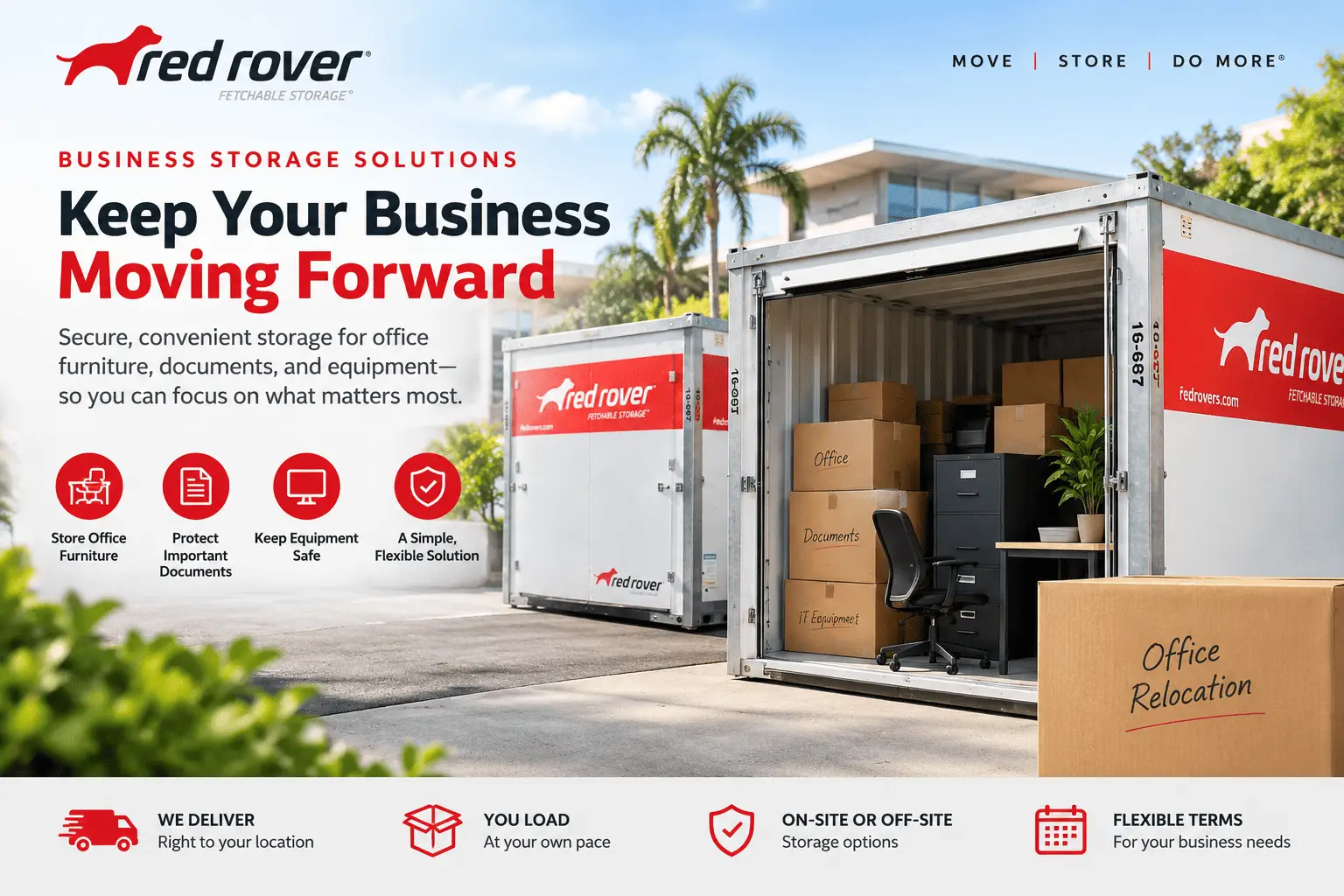
Office renovations, relocations, downsizing, and workspace upgrades often bring a sense of excitement and possibility—but they also raise a practical question: where will all your furniture, documents, electronics, and equipment go while work is underway?
Piling items in hallways, conference rooms, or spare offices can create clutter and make it harder for everyone to get work done. Traditional self-storage often means multiple trips, extra handling, and unnecessary stress.
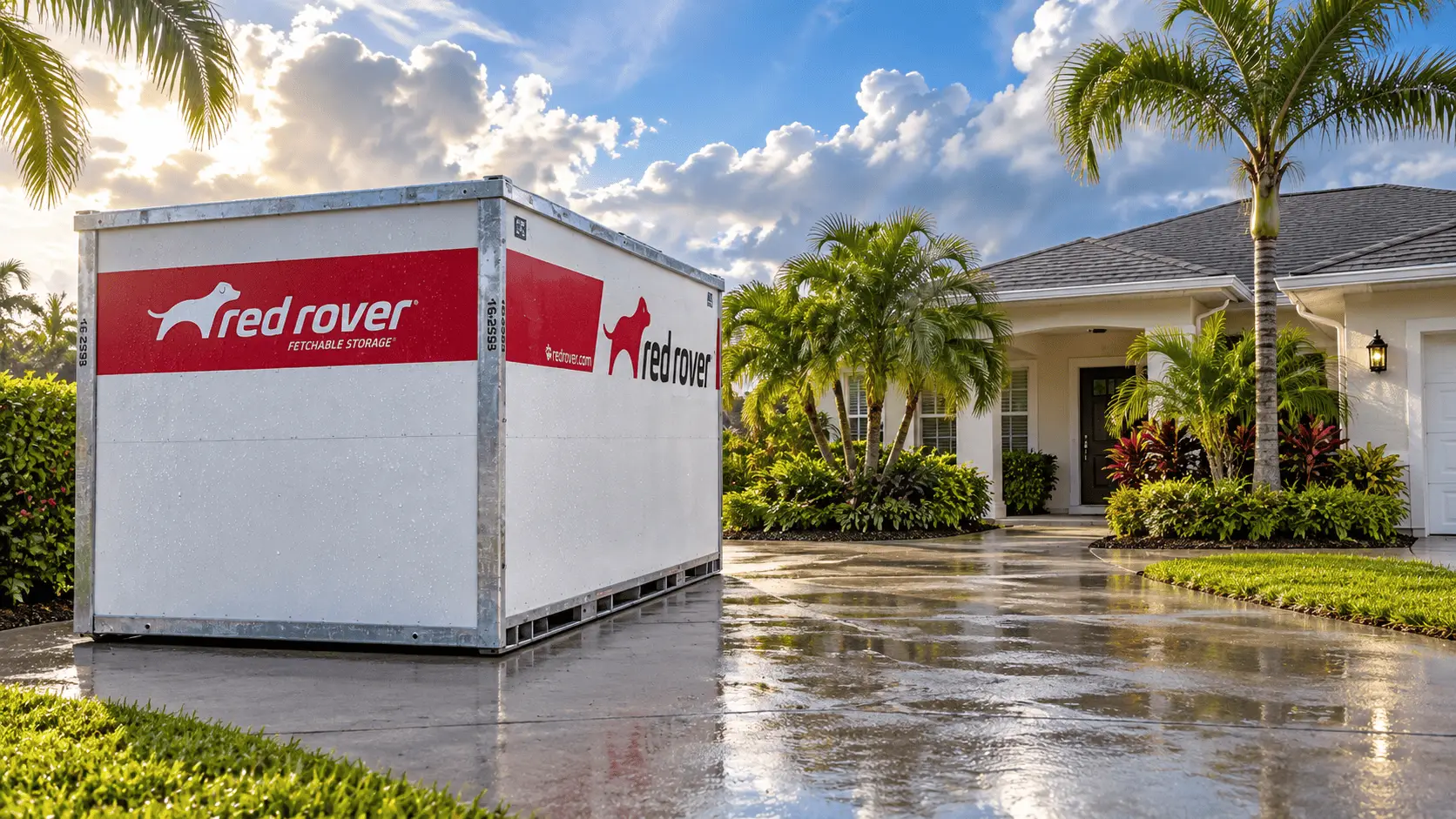
Portable storage offers a simple, stress-free solution. Imagine a storage container arriving right at your door—your team can load furniture, equipment, supplies, and documents at its own pace, without the hassle of repeated trips to a storage facility. Depending on your needs, you can keep the container on-site or arrange for off-site storage until you’re ready for everything to return.
With a thoughtful storage plan, you can protect valuable assets, keep your workplace organized, and make renovations or relocations much smoother for everyone involved.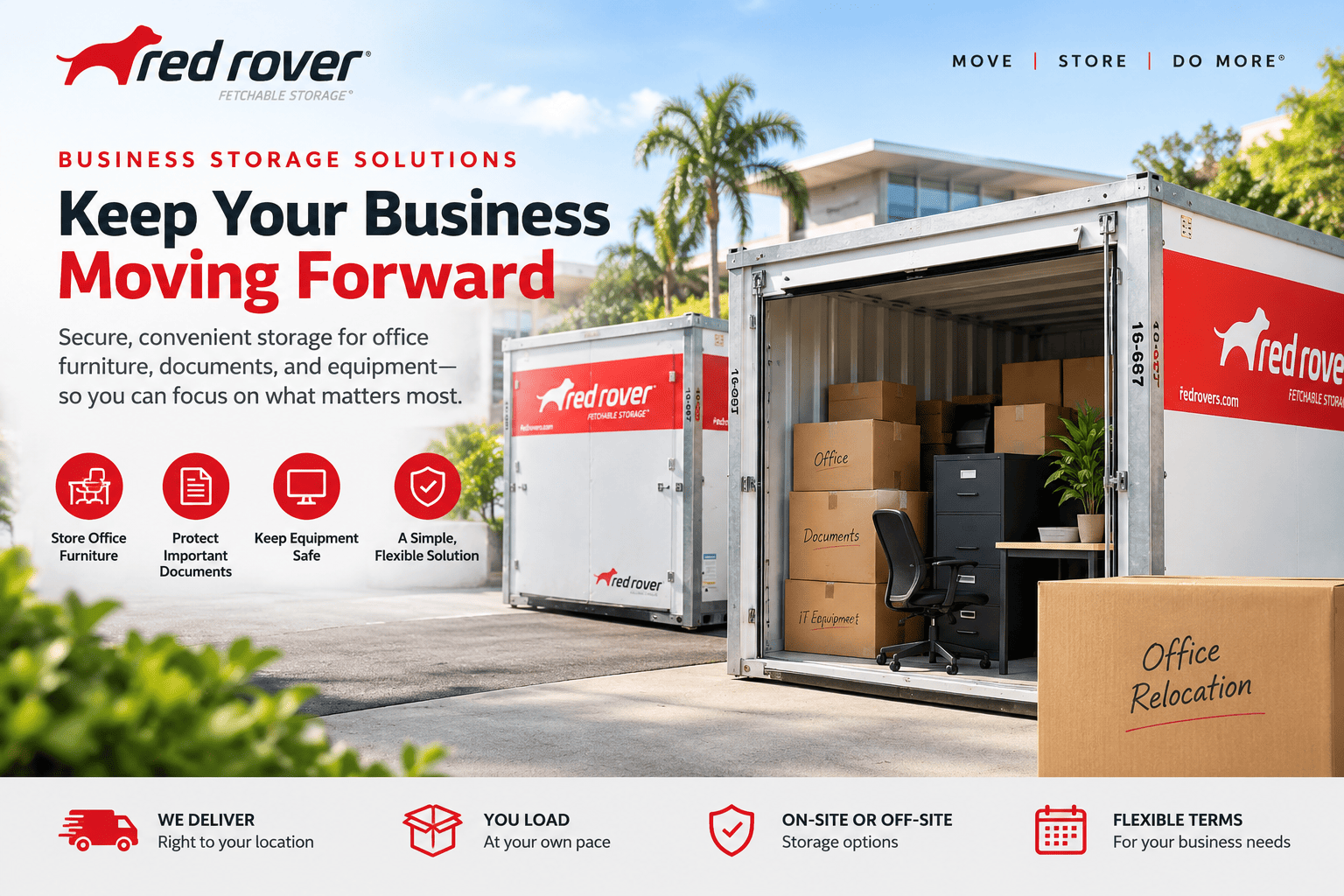
Why Businesses Need Secure Office Storage
Maybe you’re remodeling an office, replacing old flooring, moving departments around, updating furniture, opening a new location, or preparing for a complete relocation. Whatever the reason, temporary storage can bring welcome peace of mind.
Even small office projects can mean dealing with desks, chairs, shelves, cabinets, computers, printers, files, and supplies. Keeping all of this in your active workspace makes it tough for employees and contractors to move safely and stay productive.
A smart storage solution gives everyone room to work and keeps your business running smoothly, even when things are in transition.
Secure office storage frees up valuable workspace, keeps furniture and equipment organized, reduces unnecessary handling, protects items during renovations, simplifies office relocations, keeps project materials together, and lets you separate items by department or room. The best storage solution depends on your available space, what you need to store, and how often you’ll want to access it.
Best Storage Solution for Office Furniture
Office furniture can take up a significant amount of space. Desks, conference tables, office chairs, filing cabinets, shelving, reception furniture, and cubicle components can quickly fill spare rooms during a renovation or move.
Portable storage takes the headache out of storing office furniture. The container comes to you, so instead of shuttling truckloads back and forth, your team can load everything into one secure spot—saving time and reducing hassle.
Take a few moments to clean and dry each item before storage. Moisture or dirt left behind can cause odors, stains, or even damage down the road.
If possible, disassemble large desks, tables, shelves, and other bulky items. Keep screws, bolts, brackets, and other hardware in clearly labeled bags attached to the right piece of furniture—no more last-minute searches when you’re ready to reassemble.
Use moving blankets, furniture pads, or other protective materials around wood surfaces, glass panels, table corners, chair arms, cabinet doors, and painted finishes. Always keep heavy objects away from finished furniture to help prevent scratches, dents, or other damage.
How to Store Office Documents Safely
Documents require more planning than ordinary office furniture.
Before storing paperwork, determine whether records are suitable for portable storage. General business files, printed materials, archived documents, and approved paperwork are often appropriate, while confidential or regulated records may require special handling.
Sensitive materials, such as employee information, customer data, financial records, healthcare documents, and legal files, often have privacy, security, or retention requirements. Follow company document policies when selecting storage methods.
Choose sturdy file boxes or durable storage cartons for your documents, but don’t overload them—paper adds up quickly, and heavy boxes are difficult to lift safely.
Create a clear labeling system such as:
Accounting – Archived Records – 2025
Marketing – Printed Materials
Operations – Vendor Files – Box 2
For sensitive documents, keep exterior labeling minimal to protect privacy and prevent unnecessary exposure.
Keep paper records dry and organized. If you expect documents to stay in storage for a while, consider whether temperature or humidity control might be appropriate for long-term protection.
Best Storage Solutions for Office Equipment
Office equipment can include computers, monitors, printers, projectors, phones, networking devices, tools, and other business technology.
These items need more care than standard office supplies.
Back up your important data before storing computers or other electronic equipment. Physical storage protects the device, but only a proper backup protects your information if something unexpected happens.
Disconnect cables carefully and label them so you can reconnect everything without hassle later.
If you still have the original packaging for computers, monitors, printers, or other electronics, use it because those boxes are designed to protect the equipment. If the original packaging is unavailable, use sturdy boxes with adequate cushioning to protect screens, corners, and delicate components from pressure and movement.
Do not place heavy boxes or furniture on top of electronic equipment.
Check the manufacturer’s recommended storage conditions for valuable or sensitive technology, especially if high temperatures or humidity may affect it.
Why Portable Storage Works Well During Office Renovations
Office renovations often happen in stages.
One department may need to move while flooring is replaced. Conference rooms may need to be cleared for painting. Furniture may need temporary storage while new workstations are being installed.
Portable storage lets businesses create extra space without moving everything far away from the project.
A container can be delivered directly to your business, loaded at a convenient pace, and kept on-site where permitted. If you need more room around the property, the loaded container can also be moved to an off-site storage location.
This type of storage can work well for:
- Office renovations
- Business relocations
- Furniture replacement
- Flooring projects
- Department moves
- Building maintenance
- Temporary office closures
- New office openings
- Seasonal business storage
Portable storage can also reduce repeated handling because items can stay in the same container throughout different stages of a project.
How to Pack Office Furniture and Equipment in a Storage Container
Choosing the right storage solution matters, but learning how to pack your storage container safely also affects how well your items stay protected
Start with heavy, sturdy items on the bottom.
Spread weight evenly throughout the container instead of placing every heavy item on one side. This creates a more stable load and uses the available space better.
Use furniture pads or moving blankets between large pieces to prevent scratches.
Place lighter boxes above heavier items and avoid creating unstable stacks.
Keep electronics and fragile equipment in protected areas where heavy furniture cannot shift against them.
Use moving straps or rope when appropriate to secure large pieces and reduce movement during transportation.
Before closing the container, double-check that furniture can’t tip over, heavy boxes are secure, electronics are protected, document boxes stay dry, nothing blocks the doors, loose items are secured, and weight is spread out evenly. A few minutes of care now can save a lot of headaches later.
On-Site vs. Off-Site Storage
Both on-site and off-site storage can work well, depending on your project.
On-Site Storage
On-site storage may be the better option when employees, contractors, or facility teams need regular access to furniture, supplies, or equipment.
Keeping a container at your approved business location makes it easier to retrieve items without traveling to another facility.
This can be especially useful during phased renovations or maintenance projects.
Off-Site Storage
Off-site storage can make sense when you need to free up as much space as possible around your property.
Once the container is loaded, it can be moved away from the business location until you need the items again.
This option can work well for longer renovations, office relocations, major furniture changes, or projects where equipment will remain unused for an extended period.
Best Practices for Organizing Office Storage
Organization makes a major difference when it is time to retrieve your items.
Instead of loading boxes in random order, create a basic inventory and organize items by:
- Department
- Office
- Employee
- Project
- Item category
- Priority
- Return date
When possible, place items you may need first closer to the container door.
Number boxes and keep a simple digital list so your team knows exactly what is in storage.
For example:
Box 01 – Accounting Supplies
Box 02 – Conference Room Equipment
Box 03 – Marketing Materials
This small step can save time when the office reopens or the renovation is complete.
What Should You Avoid Putting in Office Storage?
Not every business item belongs in a portable storage container.
Before storing anything, consider whether it needs special security, temperature control, humidity control, insurance, or regulatory protection.
Some items—such as confidential records, medical files, hazardous materials, perishable products, temperature-sensitive equipment, irreplaceable documents, cash, or sensitive technology—may need special care. Always double-check your company’s policies and your storage provider’s rules for these types of items.
Choose a Storage Solution That Fits Your Business
The best secure storage solution for office furniture, documents, and equipment depends on your project, timeline, available space, and access requirements.
Portable storage can make office renovations and business relocations easier by bringing storage directly to your location. Your team can load items at its own pace, organize everything in one place, and choose between on-site or off-site storage depending on project needs.
Flexible business storage solutions can help companies manage office renovations, relocations, equipment storage, and temporary space needs with less disruption.
With a clear plan, proper packing materials, and an organized loading strategy, you can protect office furniture, equipment, and eligible documents while keeping your workspace clear and functional.
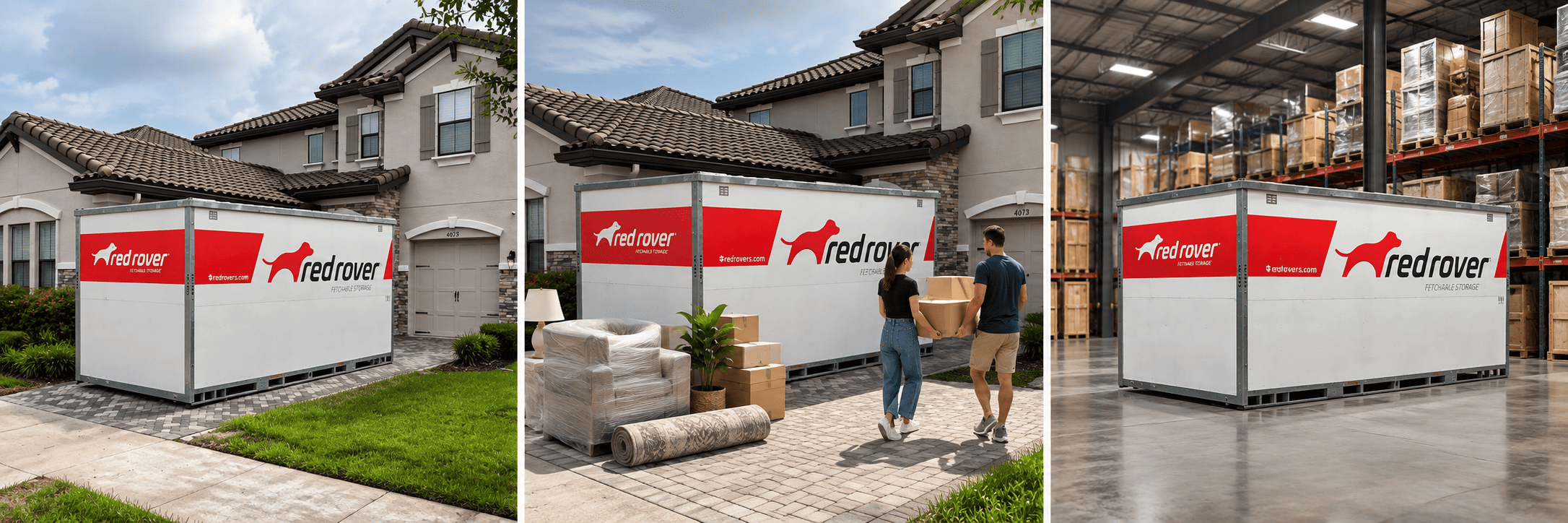

 Now Serving Orlando!
  Portable Moving & Storage Delivered to Your Door —
  Same-Day Delivery Available |
  We’ll Beat Any Competitor’s Price! -