
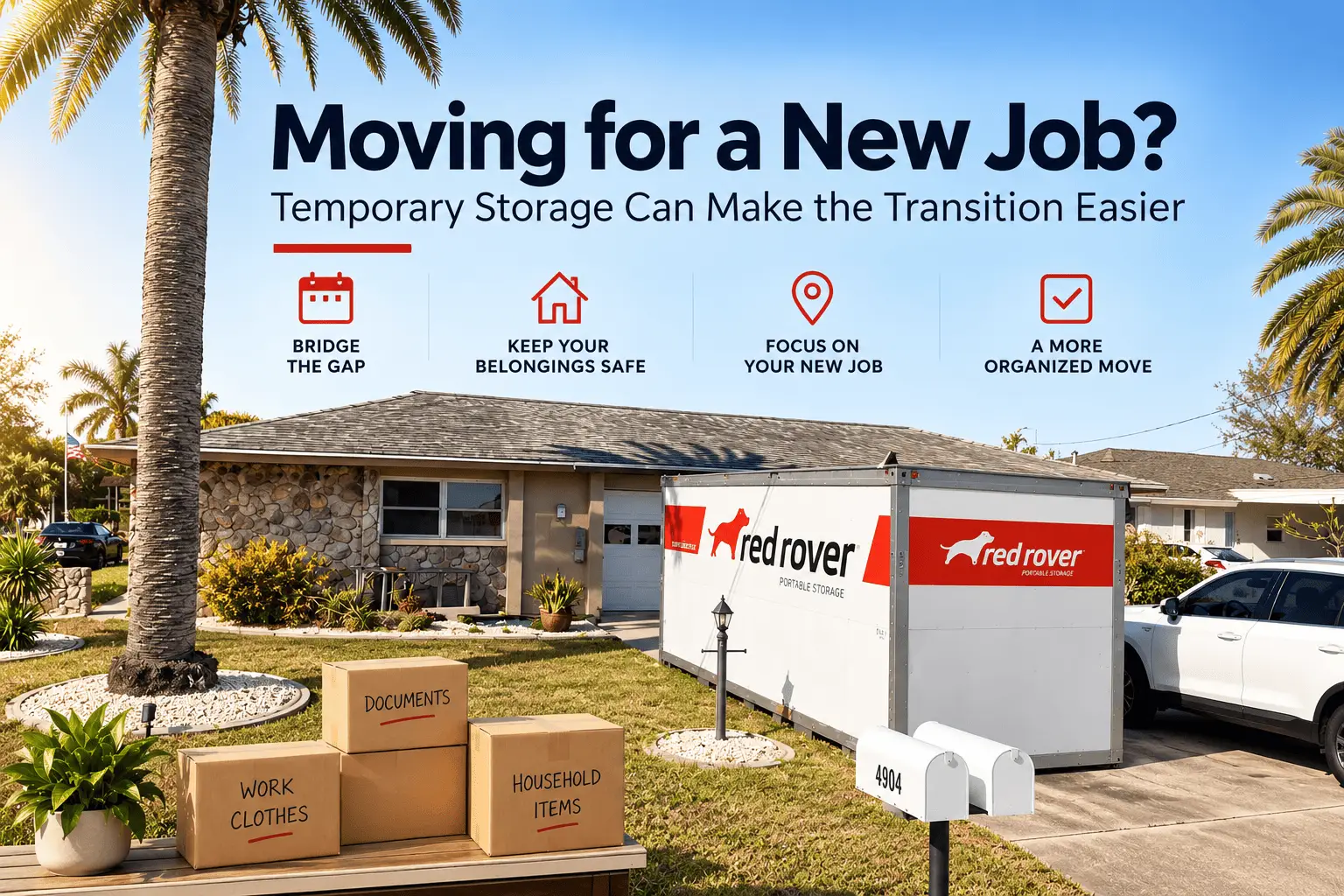
Effective planning can make your move to a new job easier, especially if you’re considering temporary storage.
First, identify the date you must start your new job. Then, work backward from that date to build your relocating an entire household when starting a new job presents a different set of challenges, ensuring each preparatory step is clearly planned in sequence.
If your new home isn’t ready when you arrive, consider short-term storage.
Instead, pack your work clothes, documents, medications, electronics, and other essentials, and avoid storing everything.
Before you make your decision, it is advisable to compare self-storage facilities, portable storage containers, and those moving companies that offer storage.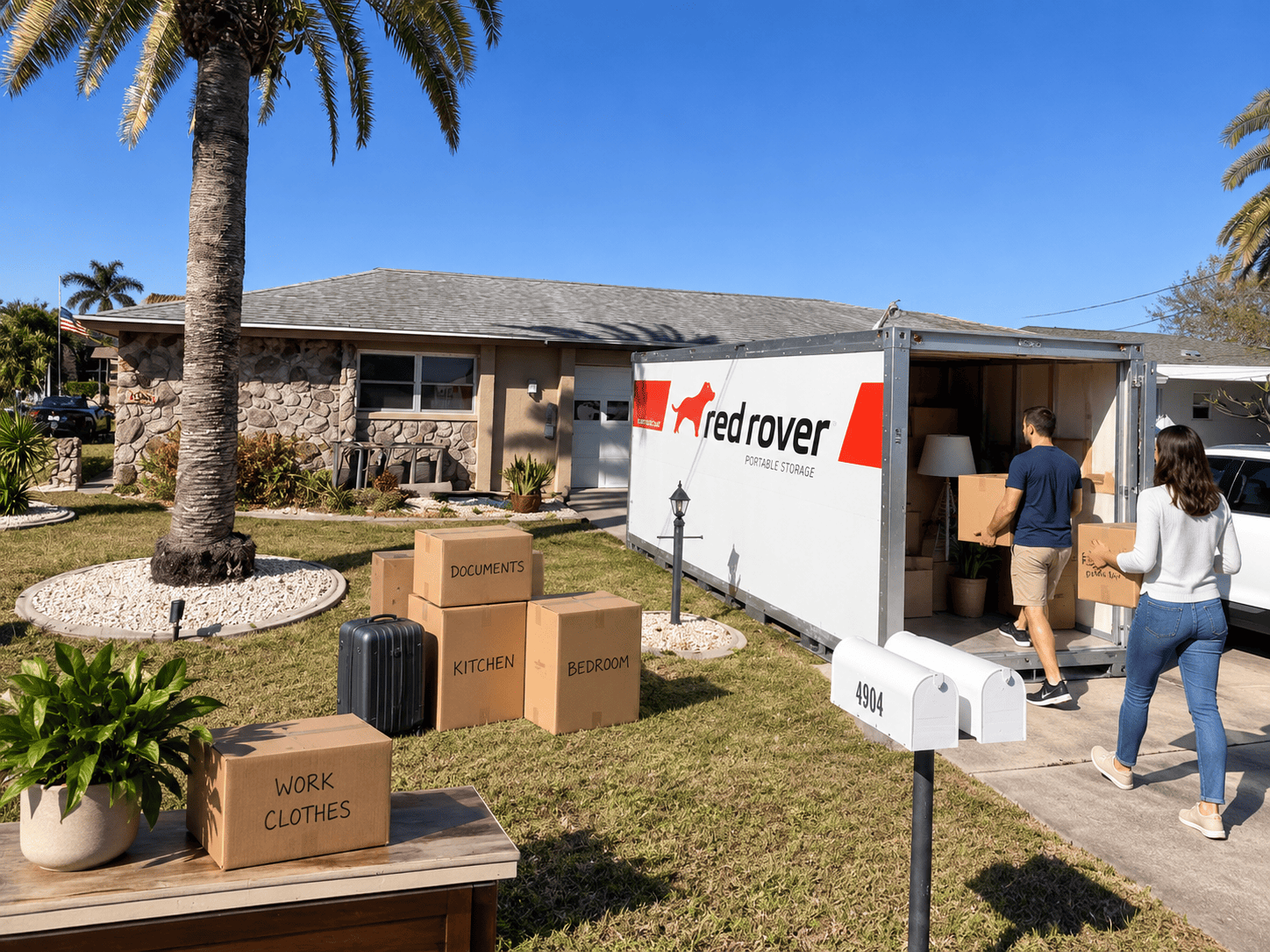
Ask your new employer about the details of any available relocation benefits, as these packages often vary in scope. While some employers may offer comprehensive assistance that includes coverage for moving expenses, temporary storage, travel costs, and temporary housing, others may provide more limited support or require pre-approval for certain expenses. Clarifying the exact terms and conditions of your relocation benefits will help you plan your move more effectively and ensure you take full advantage of any support offered.
A new job chance can arise very quickly; you might accept a job offer one week and then be looking for apartments in a new city the following week.
Coordinating the move is not always smooth.
Your move will start on October 1, but your apartment won’t become available until October 15; in the meantime you could stay in a hotel as you look for a neighborhood that you really like, or you could move before your family and thus not need the rest of the household for another month.
For instance, if you are moving to a new job in the Tampa Bay area, you might have to start working in Tampa before your final home is ready. Staying in temporary housing lets you adjust to your new job while your furniture and other items are in storage.
In certain situations, it is possible to make a job change easier by combining a move with temporary storage; instead of trying to match your start date at the new job with both your moving out time and your move-in date precisely, you can carry out the move in stages.
Before you start the packing, consider the following.
Start With the Date You Actually Have to Be There
In most cases, if you’re moving in connection with a new job, the date on which you start can’t be altered, and all the other arrangements have to be adjusted to fit around it.
So begin there.
On your first day at the new job, note the date you must leave your current home and the earliest date you can move into your new apartment. If necessary, include in your calendar the days taken for a job in the Tampa Bay area with travel, the times spent looking for an apartment, the closing dates, or any period during which you will be living in temporary accommodation.
Everything fits together exactly. Fortunately, the arrangement enables you to go directly from one house to the next.
It isn’t always the case that a job relocation works that way.
If your lease ends on the 25th, you must be in the new city by the 28th, but the new apartment won’t be ready until the 10th of the next month.
You will have roughly two weeks in which to make temporary living arrangements before you move into your new home.
Maybe you could take everything with you and then work out what to do when you get there, but really do you want to move a sofa, a bed frame, a dining table, and a dozen boxes into temporary housing?
Probably not.
In such cases, using a storage solution is a sensible option, as it enables you to safely keep your possessions until your new home is available. While this approach can increase overall moving expenses due to storage fees and potential additional handling, it frequently reduces both the immediate financial and logistical burden of transporting large or nonessential items to temporary accommodation. Therefore, short-term storage represents a practical trade-off between added cost and the flexibility and reduced effort required to coordinate move-out and move-in dates.
When Is It Possible to Use Temporary Storage While Relocating for a Job?
Storage space isn’t necessary in all cases; for instance, if you’re moving directly into your new home, then including a storage area would result in extra costs.
It is particularly useful in some instances where people are moving for work.
You’re Starting the Job Before You’ve Found a Home
It is generally assumed that this situation will occur less often than it really does.
If a promising opportunity arises, the company wants you to begin at once, since there won’t be enough time to fly back and forth and see the houses.
If the position is as described, it could be wiser to remain in a hotel, a furnished rental, a corporate apartment, or with friends or family for a few weeks.
Take all the things you’ll need for everyday life and work; you can leave your furniture and all other household possessions in storage until you have found a permanent home.
For example, someone who has taken a new job in Tampa might stay near their workplace at first while they figure out where their permanent home should be within the wider Tampa Bay area. If you keep your nonessential possessions in temporary storage, you will have more time to decide where to live without feeling pressured to make a quick decision.
A further advantage of this method is that you won’t feel under pressure to choose where to live simply because a moving truck with your belongings is on the way.
Your Move-Out and Move-In Dates Don’t Match
You don’t need a serious scheduling problem for storage to be useful, since a gap of one or two weeks between moves can still lead to embarrassment.
A storage unit gives you a place for your belongings while you wait.
Self-storage requires you to transport your items, while portable containers or moving-and-storage services keep them until you request delivery.
The main question isn’t simply whether I need storage.
How many times shall I have to look after everything?
You should consider your situation carefully before making a booking.
You’re Moving Before the Rest of Your Family
The person who has been hired is sometimes the first one to begin the new job.
Your spouse or partner may need a few weeks to carry out a particular task, just as the children are finishing their school term, and you too could take several weeks to find a house before moving the whole family.
For example, attempting to coordinate the packing, transport, and immediate relocation of all family members and household items on the same day can significantly increase logistical challenges, such as ensuring children’s school schedules align, arranging pet care, and managing the arrival of large furniture before the new home is prepared, all of which can intensify the stress of an already demanding transition.
Take what you need immediately, keep the rest for now, and relocate the household when it seems like the right time.
You Haven’t Seen Your New Home Yet
A problem when buying or renting something from a distance is that you can’t always be certain what will fit.
In the living room that you previously had, the sectional sofa might have looked entirely ordinary, but in a smaller apartment, it could feel different.
If you store some of the furniture temporarily, you can see how the new room looks before filling it.
You can then choose what to take to the new house and what to sell, donate, or store.
What other types of storage are available if you are moving for work?
The first planning guide examined three primary methods: traditional self-storage, portable moving and storage containers, and full-service movers who provide storage. Traditional self-storage requires individuals to personally transport and access their belongings at a facility, making it a suitable option for those needing regular access or greater control over their items. Portable moving and storage containers offer greater flexibility, as containers are delivered to the current residence, packed on-site, and then transported to a storage facility or the final destination as needed, reducing the number of times items are handled. In contrast, full-service movers with storage handle all aspects of packing, transport, and storage, which can be particularly beneficial for those seeking a hands-off, time-saving approach, albeit often at a higher cost.
By comparing these methods, individuals can select the storage solution that best aligns with their specific relocation needs, desired level of involvement, and budget.
No single relocation method works for every situation; consider how long you’ll need to keep your belongings, how much manual work you’re willing to do, and whether you’ll need access to them.
Self-Storage
With traditional self-storage, it’s simple: you rent a unit and then put your belongings into it.
It would be suitable in the case where you need frequent access to your belongings. Having the opportunity to go to the facility would then be convenient if you suddenly required a box that you had packed away.
You should bear in mind how long the loading process will take.
You can move everything to your old house, store it, then load it again when your new house is ready and unload it there.
Even a small move is worth considering if you have the whole house.
Portable Moving and Storage Containers
With a portable container the process is different.
The container is delivered to your address for loading, then transported or stored, depending on the service you booked.
For example, suppose an employee takes up a job in the Tampa Bay area but their new apartment will not be ready for several weeks after the start date. In this case, the employee can pack up and safely store their household goods at the present home before moving. While they live temporarily close to the new workplace, the items can stay in the storage container. When the permanent home is ready, the container can be taken to the final address for unloading.
This method makes it less inconvenient to move the furniture and boxes into temporary accommodation and then move them once again a few weeks later.
That doesn’t mean you have to store an entire household’s possessions just to retrieve them a few weeks later.
Before you choose this option, check whether the moving service is available at both the start and end of your move. You should also ask about delivery requirements and make sure a container can be positioned at both your current and future addresses.
Full-Service Movers With Storage
Isn’t it possible for you to take the time—or indeed want the time—to do all the lifting yourself?
Professional moving companies often offer storage services as well; if the service you choose includes storage, the movers will handle the loading, transport, storage, and final delivery to your new home.
It may be attractive if the new job you’ve got doesn’t leave you much time to make arrangements for moving.
Check the full quote, not just the first charge, to see what’s included and how storage and final delivery will be billed.
Don’t Put Everything in the Unit
It seems obvious at first, until you end up in an empty hotel room and realize your work shoes are in a box somewhere in town.
When you move, divide up your belongings into two groups: the items you will need soon and those you can put off.
Bring the first group with you.
That will usually include:
- Work clothes and shoes
- Laptop and chargers
- Identification and important paperwork
- Medications
- Toiletries
- Everyday clothing
- Basic bedding, if necessary
- Children’s essentials
- Pet supplies
- Valuable or irreplaceable personal belongings
The exact list will differ from person to person.
For example, someone living in a furnished corporate apartment would only need clothes and personal belongings, such as toiletries, work clothes, and important documents. On the other hand, someone who rents an unfurnished apartment monthly will need a wider range of essentials. In these cases, it’s a beneficial idea to make a checklist that covers bedding, basic kitchen utensils, cleaning supplies, everyday clothing, toiletries, and any necessary electronics.
Omitting furniture, books, decorations, seasonal clothing, extra dishes, and all other items used only occasionally is much easier.
Here’s a simple test: if you lost access to storage for the next three weeks, would you be okay without this item?
If the answer is no, then keep it.
Pack for Your First Weeks at the New Job
If you’ll be away from your household possessions for several weeks, a single overnight bag will not be enough.
Get ready for the situation you’re about to enter.
Imagine a normal workweek. What kind of clothes will you wear? What steps must you go through each morning? Will you be working from home at all? Will you need a monitor, a headset, a notebook, or some other equipment?
Consider the first several days following your time at work.
You’ll have to run various errands, look at different apartments, shop for groceries, attend to all sorts of paperwork, and carry out a large number of other small tasks.
You should buy the items from the ‘open first’ box or suitcase, as they are clearly marked.
If you know that you’ll need the coffee maker on Monday morning, then don’t keep it in the back of the storage area.
Label Boxes for the Person You’ll Be a Month From Now
It’s easy, while you’re packing, to think you’ll remember what’s in each box.
You probably won’t.
Instead of labels such as:
Bedroom
Try:
Main Bedroom—winter clothes—not urgent
Or instead of:
Kitchen
Write:
Kitchen—plates and everyday dishes—open first
When a large number of boxes—most of them very similar—arrive at your new house, the small details have a great impact.
You could also assign numbers to your boxes and keep a simple list on your phone indicating what is in each box.
The same first plan also recommends taking photographs of valuable belongings and keeping a record of them, particularly if the items may remain in storage for several months.
Keep Important Documents With You
It would be inappropriate for your passport to be at the bottom of a storage container when you begin a new job.
This rule also holds true for any documents you may need when seeking employment, securing housing, dealing with banking, obtaining insurance, or traveling.
When you are moving, be sure to take all important papers, medications, valuable jewelry, irreplaceable personal items, and essential electronics.
Check the storage company’s prohibited-items policy before packing if you’re unsure whether something can be stored legally or safely, as the rules vary by provider.
Give Yourself More Storage Time Than You Think You’ll Need
Making plans based on the best-case scenario is easy.
You’ll be there on Saturday, check the apartments on Sunday, find the right one immediately, sign the papers on Monday, and be completely settled by the following weekend.
Maybe.
Perhaps the apartment you want won’t be available for three weeks.
It takes a while to carry out housing searches, and the lease start dates may be altered as well as the home closings, which are often delayed. And when you do start your new job, you could find that spending each evening looking at apartments isn’t really all that appealing.
This is especially important if you are moving to a big metro area like Tampa Bay, as you may want to spend time comparing the commute, housing, and everyday convenience before deciding where to live.
Before you go ahead and book temporary storage, refer to your original timeline.
Ask:
- How is storage billed?
- Can you keep your rental longer?
- Does storage have a minimum term?
- How much notice is needed in order to collect or hand over your items?
- Can you access your belongings while they are in storage?
- Is there any extra cost for transportation or delivery?
- Would it be possible to change the final delivery address?
The same factors are emphasized in the original planning guide to show how important it is to be adaptable and make practical decisions when moving to a new area, since flexible arrangements can handle unexpected changes and help ensure a smoother transition.
Avoid choosing a move that will only work if each part happens exactly on time.
Ask Your New Employer What They’ll Pay For
It would be beneficial to seek advice from your employer before arranging the mover, storage unit, hotel, and flight on your own.
Some companies do offer help with relocation to new employees. The specifics of this assistance will vary depending on the employer and the terms of your agreement, but expenses involving moving, storage, transportation, temporary accommodation, and other relocation costs may be covered or reimbursed.
Ask your HR officer or recruiting representative for the relocation policy in writing.
More importantly, ask for permission before spending the money.
For approved firms, the amounts you can spend, the required documentation, and the expenses may all need prior approval.
Keep your quotes and receipts as you go.
Moving for a New Job With Your Family
Moving one person is one thing, but moving an entire household when starting a new job is quite another.
Think about your partner’s work schedule, since the children might have to finish school or start at a new one, and you could also have childcare, pets, a vehicle, and a house to sell.
You don’t need to cope with all of those problems in the same weekend.
A step-by-step approach could be more effective.
The new hire could start by bringing only the essentials for a few weeks, then the rest of the family and household could move in once housing, schools, and other arrangements were settled.
Short-term storage can be useful since you don’t have to decide immediately where each chair, table, box, and piece of furniture will finally go.
Why not consider moving out of state for a new job?
Preparation should receive more consideration when moving long distances.
The fact that a company provides local storage doesn’t mean it is the right one to move your belongings hundreds or thousands of miles.
Before you book, confirm the provider can meet your requirements for origin, storage, and final destination.
Find out the cost of transportation, the expected travel times, the storage alternatives available close to your destination, the delivery scheduling arrangements, the protection offered, the legal requirements concerning moves between states, and the details and scope of the insurance coverage in relation to any loss or damage that might occur during transit and storage. You should also find out how altering your final delivery address might impact your contractual obligations or result in extra fees.
For instance, if you’re moving from elsewhere to the Tampa Bay area, make sure the service provider can handle the entire journey and can still take your case even if your final delivery address hasn’t been decided when the move starts.
Record the main points.
If possible, arrive a few days early to buy groceries, plan your commute, find a pharmacy, unpack essentials, and familiarize yourself with the area.
That’s a much better use of a Sunday evening than having to get there at midnight in order to face your first Monday morning.
Moving and Temporary Storage for a New Job — FAQs
Should I take out temporary storage when I move for a new job?
It needn’t be that way; if you can go directly from your current home to your new one, arranging storage might be an unnecessary extra step.
It is most useful if there is a gap between houses, if you are staying in a place temporarily, if you are moving before your family, or if you have not yet secured a permanent home.
How long should I contract temporary storage?
It all comes down to your situation and the provider you choose; rather than booking a room for the exact date you want to move in, you might consider needing a few extra weeks.
Before signing the agreement, make sure you know the tenancy period, whether it can be extended, the required notice period, and any additional charges.
When moving, what is the correct way to store furniture?
You can use self-storage, portable storage containers, or storage spaces offered by moving companies.
If you intend to use the furniture frequently, traditional storage is probably the better choice when considering access, the way the furniture is handled, and cost. On the other hand, if your primary concern is avoiding repeated loading and unloading, a different kind of moving and storage service might be more suitable.
Should I apply since I still don’t have a permanent address?
You certainly can live in temporary accommodation as you search for a permanent home and make arrangements for storing the items that you don’t need right away.
If you’re going to use a moving or storage company, make sure they will agree to a destination address that hasn’t been decided yet.
What ought I to avoid putting into temporary storage?
Take all documents, medications, valuables, essential electronics, and any other items you will need right away with you.
Storage companies usually ban hazardous, flammable, perishable, or otherwise restricted items. So, before you pack or hand over your belongings, be sure to check your storage provider’s list of prohibited items and their storage policies.
Will the company I have been offered a job with pay for my moving expenses and storage?
Relocation packages can vary from one employer to another.
Ask HR or your recruiter whether your benefits include costs for moving services, temporary storage, transportation, temporary housing, or other relocation expenses, and also find out whether you need permission before spending money.
Should I then go for the cheapest storage option?
Even though price is important, you shouldn’t base your decision solely on the monthly storage rate.
When you’re looking, consider transportation costs, loading and unloading, delivery charges, access fees, rental minimums, and how often you’ll need to handle your belongings. Just because a storage unit has a low advertised price doesn’t mean the total moving cost will be lower.
Make the Move Fit Your New Job—Not the Other Way Around
Starting a new job is a significant change, and you don’t have to move the whole household on the same day.
If the apartment isn’t ready, then allow yourself a bit of time. If you’re still deciding on where to live, keep the furniture where it is while you look around the area. If your family needs to move later, move in stages.
For someone relocating to Tampa Bay, that can mean beginning the new job first and using the following weeks to finalize housing before arranging delivery of the rest of the household.
Temporary storage isn’t meant to complicate your move; it’s to hold your possessions when your life situation doesn’t allow move-out and move-in dates to match.
Before you select a provider, compare the total cost of moving and storage, access rules, storage terms, transport arrangements, and final-delivery options. Afterward, keep the items you will need right away and let the rest arrive when you actually need them.
In summary, proactive planning and strategic use of temporary storage can significantly ease the challenges associated with job-related relocation.
By reducing logistical complications and allowing for greater flexibility in move-in and move-out dates, these approaches help ensure that you can concentrate on settling into your new role and environment during the initial, and often most demanding, weeks of employment.
The dining table doesn’t have to be one of them.


 Now Serving Orlando!
  Portable Moving & Storage Delivered to Your Door —
  Same-Day Delivery Available |
  We’ll Beat Any Competitor’s Price! -