
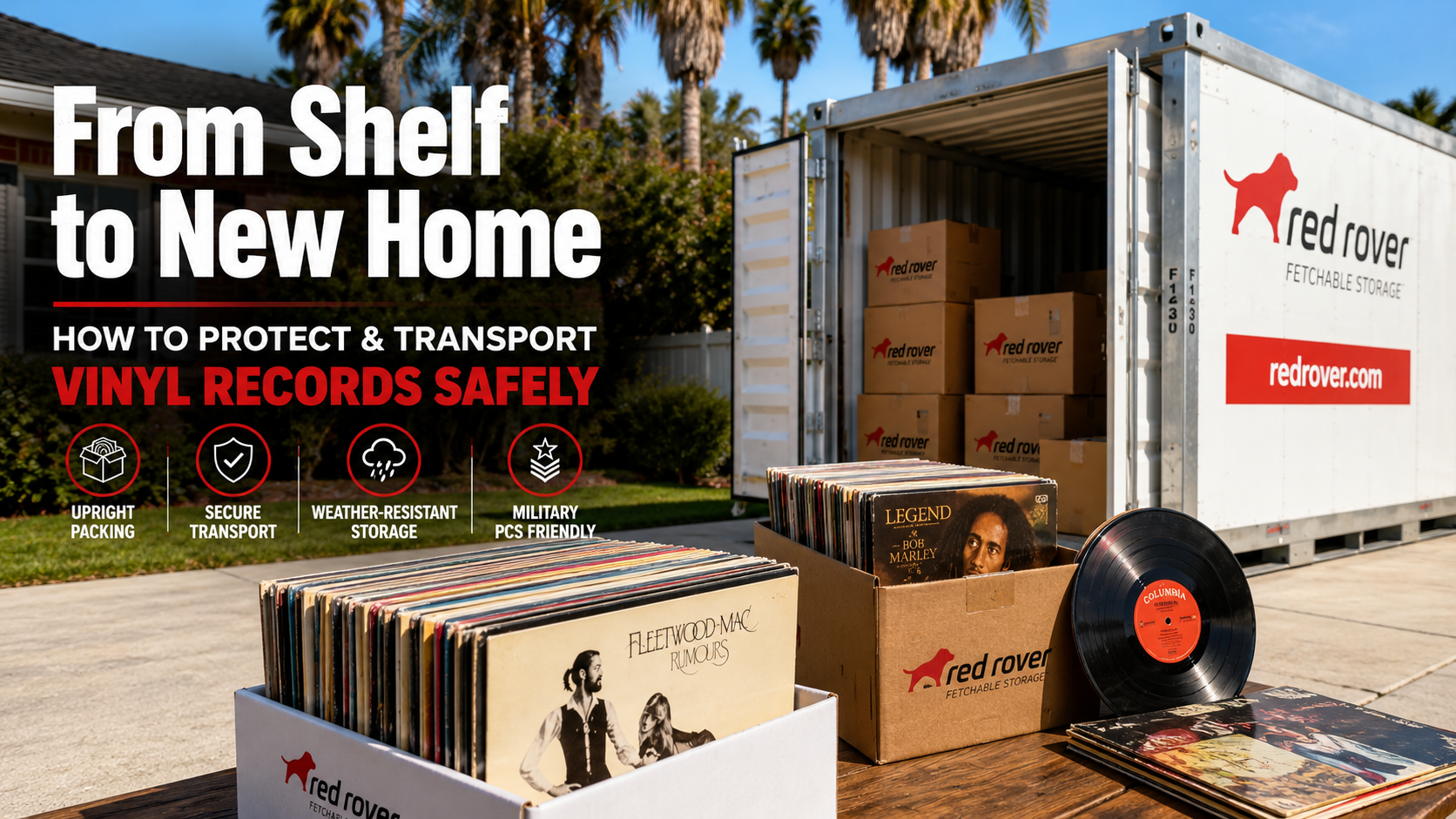
A vinyl collection often includes rare pressings, inherited albums, and signed covers, representing years of effort. Moving can be stressful because records are heavy, prone to scratches, and sensitive to heat, moisture, pressure, and rough handling.
Protecting records does not require specialized equipment. Handle each record by its edges, use clean protective sleeves, pack albums upright in small reinforced boxes, prevent movement inside cartons, and keep boxes cool and secure during transport.
This guide explains how to move vinyl records locally, ship individual albums, manage large collections, and prepare for a military PCS move.
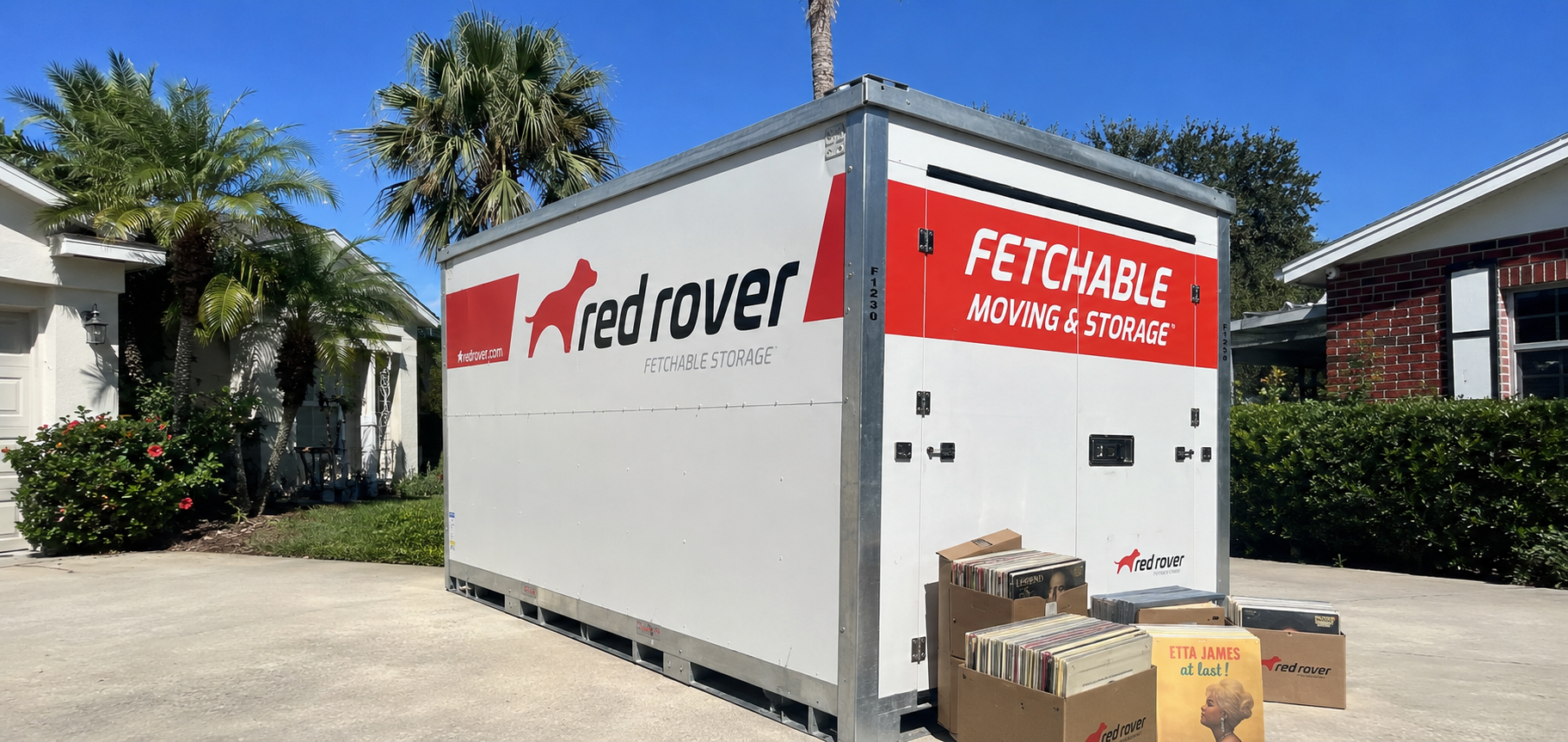
The Quick Answer: How Do You Protect Vinyl Records During Transport?
Use sturdy record or book boxes rather than large moving cartons. Reinforce the bottom, add a flat layer of cushioning, and place records vertically as on a shelf. Fill gaps so albums stay upright without being compressed. Seal and label each box, and transport it on a flat surface away from sunlight, moisture, and heavy items.
For rare or sentimental records, create an inventory and consider keeping the most valuable box with you in a climate-controlled area. Insuring valuable albums is also wise, as it protects your investment and provides peace of mind if anything goes wrong during the move.
Handle Every Record Safely Before Packing
Wash and dry your hands before handling records. Hold each record by the outer edge and center label, avoiding the grooved surface to prevent oil and dust buildup. The Library of Congress recommends storing grooved discs upright in a cool, dry, clean, and stable environment. Aim to maintain a temperature between 60 and 70 degrees Fahrenheit and relative humidity around 40 to 50 percent. These conditions help prevent warping, mold, and other damage caused by improper storage.
Remove loose dust with a record-safe brush, and never pack a damp record or jacket. Inspect for cracked sleeves, split seams, bent covers, and warps. Photograph valuable items and document their condition before boxing.
Gather the Right Packing Materials
Gather small record or book boxes, clean anti-static inner sleeves, protective outer sleeves, corrugated dividers, packing paper or foam, heavy-duty tape, and a permanent marker.
Small boxes matter because vinyl becomes heavy quickly. Multiple manageable cartons are less likely to bow, split, or be dropped than one oversized box. Moving guides recommend close-fitting reinforced boxes, upright placement, padding, and clear labels.
1.Sort and Document the Collection
Organize records by size, artist, genre, or shelf order. Keep 7-inch, 10-inch, and 12-inch records in separate groups to prevent smaller discs from leaning inside boxes designed for LPs.
For valuable collections, create a basic inventory. Include photos, catalog numbers, and notes on limited editions to assist with organization, insurance, and post-move condition checks.
2. Protect the Disc and Jacket
Place eaPlace each record in a clean inner sleeve. If the original paper sleeve is collectible, keep it with the jacket and use an archival-style sleeve for the disc. normal local move, a properly sleeved record can remain inside a sound jacket. For long-distance transport, shipping, or covers with delicate seams, place the sleeved disc beside the jacket inside a protective outer sleeve. This reduces movement inside the cover and helps prevent the record edge from splitting the jacket seam. Detailed moving and shipping guides commonly recommend this method.
3. Reinforce and Cushion the Box
Tape the center bottom seam andTape the center bottom seam and both edge seams to form an “H.” Add another layer if the box feels flexible. Place a flat cardboard stiffener or thin foam sheet on the bottom, then cushion the sides. Avoid bending the jackets. Avoid wrapping albums so tightly that pressure transfers to the records.
4. Pack Records Upright
Place albums vertically, as you would on a shelf or in a store bin. Never stack records horizontally, as weight can damage lower jackets and increase the risk of warping.
Records should be snug enough to stay upright but loose enough to remove easily. Use full-height dividers between sections and fill open spaces with packing paper or foam. Nothing should lean, slide, or hit the box walls.
5. Test, Seal, and Label
Gently tilt the box a few degrees before sealing. Add padding if items move. Close the carton with strong tape and label at least two sides: P — DO NOT STACK
Add the destination room or shelf group to the label for easier unpacking. Always lift the box from the bottom rather than using cardboard handles.
How to Store Vinyl Records in a Box
Whether storing for a day or several weeks, keep records upright, supported, clean, and dry. Do not leave a half-full carton with albums leaning. Add dividers or filler, but avoid packing so tightly that jackets bow.
Keep boxes off damp floors and away from attics, garages, windows, vents, and areas with temperature swings. For long-term storage, a stable indoor environment is safer than a hot vehicle or outdoor space.
Red Rover offers weather-resistant, vented portable containers. Where available, loaded containers may also be kept at Red Rover Storage Centers in a climate-controlled environment.
Best Way to Transport Vinyl Records
Transport record boxes upright on a flat, stable base. Block or strap them to prevent sliding. Keep them away from items that could tip over, and never place heavy boxes on top.
For small or valuable collections, use the passenger area of a climate-controlled vehicle. Avoid closed trunks or parked vehicles on hot days. If records must travel in a moving truck or portable container, load them last and unload them first. Place them in a stable location, not under other cargo or against hot metal walls. Moving guides recommend securing boxes, keeping heavy items away, and protecting records from heat and sunlight.
How to Pack Vinyl for Shipping
Use a corrugated LP mailer with rigid cardboard stiffeners. Place the clean record in an inner sleeve. For better seam protection, position the sleeved disc outside the jacket, keeping both together inside an outer sleeve. A “Fragile” label is helpful, but the package itself must withstand normal handling. For shipping valuable records, choose trusted carriers such as USPS Media Mail with insurance, UPS, or FedEx, which provide tracking and options for declared value. Specialty services like Pirate Ship, ShipStation, or record-focused couriers may also offer enhanced protection for high-value shipments. Always keep shipping receipts and tracking information until your record safely arrives.
Seal all openings, use tracking, and consider insurance for rare or expensive albums. Easyship recommends snug mailers, protective sleeves, stiffeners, secure tape, tracking, and insurance for high-value records.
Vinyl Collecting Tips for Military PCS Moves
A standard PCS move may involve changing orders, temporary housing, multiple handoffs, or storage gaps. Build flexibility into your plan and avoid packing the collection at the last minute.t minute.
Create a digital inventory and identify a small group of rare, signed, or irreplaceable records. When possible, keep that box with your personal belongings. Label other cartons clearly, but do not indicate their value on the outside.
Ask where household goods will be staged and if the environment is climate-controlled. If the new home is not ready, choose storage that limits exposure to heat and humidity.
Red Rover’s military moving and storage options have been designed for relocation gaps and changing timelines, with portable storage that service members can load at their own pace.
Unpack and Inspect Promptly
Bring boxes into a stable indoor environment as soon as possible. If exposed to extreme temperatures or humidity, let the closed cartons adjust gradually before opening.
Check for moisture or damage, compare valuable albums with your inventory, and return records to sturdy shelving in an upright position. Do not leave them boxed in uncontrolled areas longer than necessary.
Move Your Collection With More Control
The best way to transport vinyl records is to pack them carefully and minimize unnecessary handling. Red Rover provides durable, weather-resistant portable storage containers delivered to your location so that you can load at your own pace.
When ready, the container can be transported to your next address or stored at a Red Rover Storage Center, depending on local availability.
With each album upright, cushioned, labeled, and secured, your collection will be ready to provide the soundtrack for your next home.


 Now Serving Orlando!
  Portable Moving & Storage Delivered to Your Door —
  Same-Day Delivery Available |
  We’ll Beat Any Competitor’s Price! -