
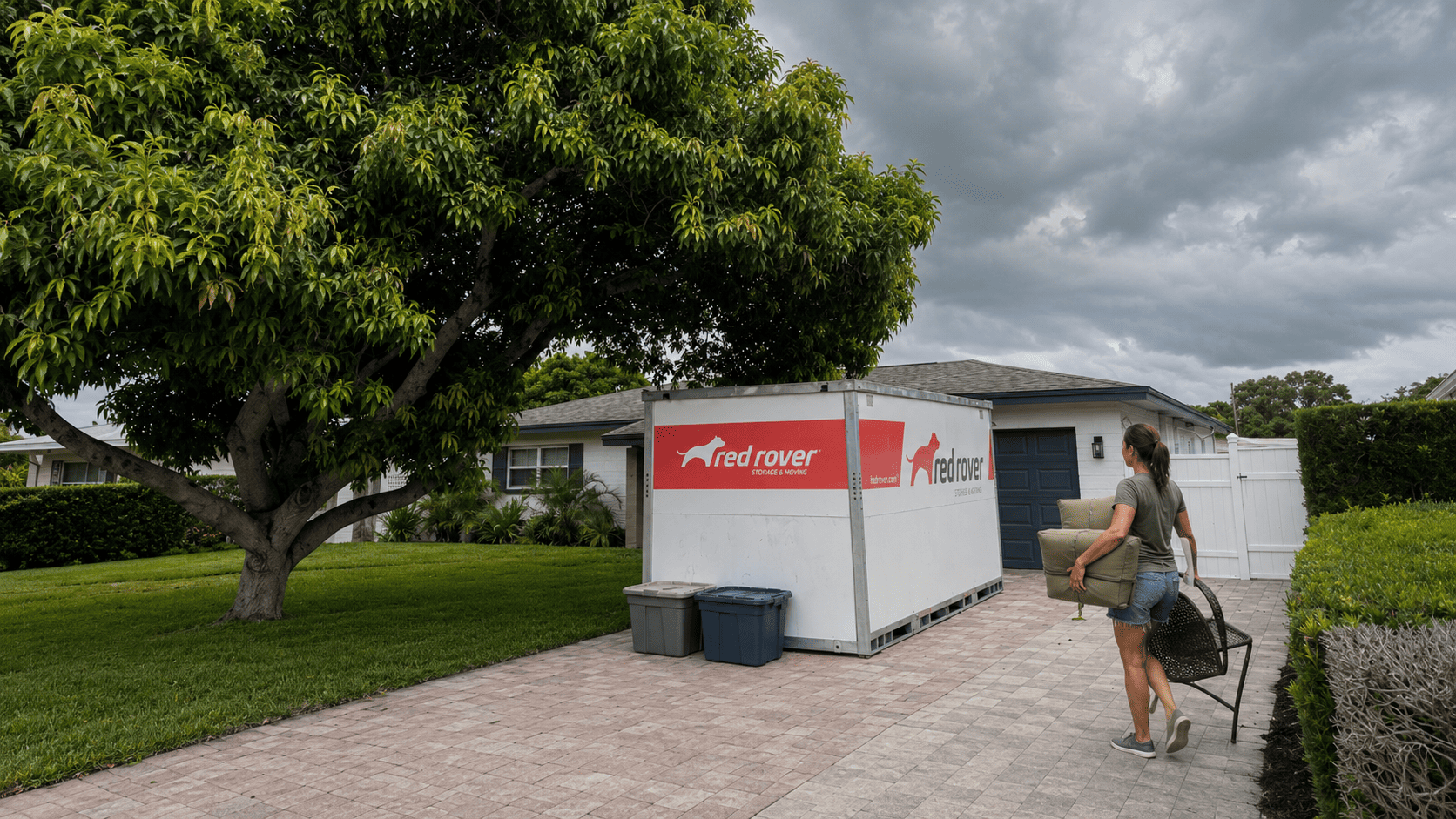
Hurricane preparation is about more than buying water and charging flashlights. Florida homeowners also need a plan for the belongings outside and inside their homes—especially items that could become windblown debris, block a safe exit, or be damaged by rain, flooding, humidity, or an extended power outage.
The best time to make those decisions is before a storm is approaching. A clear storage plan gives you time to sort what should come indoors, what belongs in temporary storage, what needs climate-controlled care, and what must remain with your family.
Use this hurricane storage checklist to prepare your property without a last-minute rush. Remember that storage is only one part of storm readiness. Always follow evacuation orders and instructions from your local emergency management officials.
Why Florida Homeowners Need a Hurricane Storage Plan
The Atlantic hurricane season runs from June 1 through November 30, but severe weather can develop outside those dates. Waiting for a hurricane watch or warning can leave too little time to move bulky furniture, reserve storage, document valuables, or clear outdoor areas safely.
A storage plan helps you:
– Remove loose objects that could become dangerous in high winds
– Protect selected belongings from wind-driven rain and construction-like debris
– Keep doors, hallways, garages, and evacuation routes clear
– Organize emergency supplies so they remain easy to reach
– Reduce clutter if part of your home needs repairs after a storm
– Avoid making storage decisions while conditions are already deteriorating
Start at the beginning of hurricane season and review the plan whenever your household, property, or evacuation needs change.
Hurricane Storage Checklist: What to Store
Not every belonging needs the same type of protection. Work through the property by category and decide where each item will be safest.
1. Patio Furniture and Outdoor Décor
Bring in or store anything that is not permanently anchored. Common examples include:
- Patio chairs, tables, loungers, and umbrellas
- Outdoor cushions and rugs
- Planters and hanging baskets
- Grills and grilling accessories after they are cool and clean
- Garden tools, hoses, and watering cans
- Trash and recycling bins
- Bicycles, scooters, and sports equipment
- Pool toys, floats, skimmer poles, and removable accessories
- Lanterns, signs, flags, and seasonal decorations
Do not assume that a heavy object will stay in place. If an item cannot be safely stored, follow the manufacturer’s instructions or ask a qualified professional how it should be secured.
2. Garage and Shed Contents
Garages and sheds often contain a mix of useful, fragile, and hazardous items. Move appropriate tools, shelving contents, boxed seasonal items, and clean equipment into organized storage. Keep heavier items low and protect anything that could be damaged by moisture.
Do not place gasoline, propane cylinders, paint thinner, fireworks, corrosive chemicals, or other flammable or hazardous materials in a portable storage container. Follow local guidance for safe handling and storage. Never run a generator inside a home, garage, shed, or storage container.
3. Furniture and Household Items in Vulnerable Areas
If your home has a room that has flooded before, sits at a low elevation, or may be exposed through windows and exterior doors, consider relocating suitable belongings before the storm. These may include:
- Sofas, chairs, and small tables
- Rugs and floor coverings
- Freestanding shelves and cabinets
- Mattresses and bed frames
- Lamps and decorative objects
- Books and boxed household goods
- Small appliances that are clean, dry, and unplugged
Temporary storage can also create room to elevate or reposition items that need to remain in the house. However, no portable container should be treated as flood-proof. If your property is in a storm-surge or flood-prone area, ask the storage provider about moving the loaded container to a storage center well before severe weather arrives.
4. Business, Hobby, and Home-Office Items
Florida homeowners who work from home or operate a small business may need to protect inventory, tools, files, and equipment. Back up essential digital records and make an inventory before moving anything.
Computers, cameras, artwork, photographs, musical instruments, and other temperature- or humidity-sensitive belongings may be better suited to a climate-controlled storage option. Confirm availability with the storage provider before packing.
What Should Stay With You
Some belongings should never be packed deep inside a storage container or sent to a facility when a storm is approaching. Keep the following accessible and ready to travel with your household:
- Prescription medication and medical equipment
- Identification, passports, insurance information, and financial records
- Evacuation documents and printed contact information
- Cash, keys, phones, chargers, and backup power banks
- Food, drinking water, flashlights, batteries, and a weather radio
- Pet food, medications, carriers, leashes, and veterinary records
- Irreplaceable photographs, jewelry, and small valuables
- Clothing, hygiene products, and other evacuation essentials
Florida emergency officials recommend building a disaster supply kit for at least seven days and keeping important documents protected from water. Your storage plan should support that emergency kit—not separate you from it.
How to Prepare Belongings for Hurricane-Season Storage
Moving an item out of the house is only the first step. Proper packing helps reduce moisture, scratches, shifting, and confusion when you need everything again.
Clean and Dry Everything
Never pack damp furniture, wet rugs, pool equipment with standing water, or dirty outdoor cushions. Florida’s heat and humidity can turn trapped moisture into odors, stains, mildew, or mold. Clean items according to their care instructions and allow them to dry completely before packing.
Use Sturdy, Clearly Labeled Containers
Plastic bins with secure lids can provide an extra layer of protection for many non-fragile household goods. Use boxes that are in good condition, avoid overloading them, and label at least two sides.
A simple label can include:
- Room or category
- General contents
- Fragile or heavy warning
- Priority for unpacking
Do not write detailed descriptions of expensive items on the outside of a box.
Protect Furniture Correctly
Use moving blankets, furniture pads, corner guards, and breathable covers. Disassemble large pieces when practical, and place screws and fittings in labeled bags attached to the corresponding item.
Avoid placing plastic wrap directly against delicate wood, leather, or painted finishes for an extended period. Put a protective layer between the surface and the wrap to reduce trapped moisture and finish damage.
Create a Photo Inventory
Photograph valuable belongings and record serial numbers for electronics, tools, and appliances. Save the inventory somewhere you can access even if your home loses power or internet service. This record can also make it easier to locate stored items and document their pre-storm condition.
Keep Items Off the Floor When Practical
Use appropriate pallets, shelving, or stable supports where permitted. Do not create an unstable stack, overload shelving, or block the container door. Keep fragile and moisture-sensitive items away from the entrance, where they could be exposed when the door opens.
How to Load a Portable Storage Container
A well-planned load protects belongings and makes better use of the available space.
- Load heavy items first. Place sturdy furniture and dense boxes on the bottom.
- Distribute weight evenly. Avoid concentrating everything on one side of the container.
- Fill gaps carefully. Use soft, clean items or suitable packing material to reduce movement without forcing boxes into unsafe positions.
- Protect sharp edges. Keep them away from upholstery, screens, and cartons.
- Place lighter items on top. Never stack heavy boxes on furniture, electronics, mirrors, or fragile pieces.
- Keep essential stored items near the door. Mark their location on a simple loading map.
- Secure the load. Use suitable tie-downs where provided, following the container provider’s loading instructions.
- Lock the container. Ask the provider which lock type and quantity are required for your container.
Red Rover offers 8-foot and 16-foot portable storage containers. An 8-foot container generally holds about one to two rooms of belongings, while a 16-foot container generally holds about three to four rooms. Actual capacity depends on the size of your furniture and how efficiently the container is loaded.
On-Site or Storage Center: Which Option Is Better Before a Storm?
Red Rover offers flexible storm and hurricane preparedness storage, including portable containers delivered to your property and storage-center options. The right choice depends on the forecast, your location, the items being stored, and how soon you may need them.
On-Site Storage May Work When:
- You need convenient access while preparing
- The weather is still calm and there is enough lead time
- The container can be placed in a provider-approved location
- Your property is not in a vulnerable placement area
- You plan to have the container collected before dangerous conditions arrive
Storage-Center Storage May Be Better When:
- Your property is in a low-lying or flood-prone area
- Local officials have announced an evacuation order
- You want the loaded container removed from the property before the storm
- Driveway access must remain clear
- You are storing belongings that need a climate-controlled option
Weather-resistant does not mean hurricane-proof, wind-proof, or flood-proof. Ask Red Rover about placement requirements, pickup lead times, facility options, and service availability in your area. Arrange delivery and pickup early; transportation may be limited or suspended as unsafe weather approaches.
A Simple Hurricane Storage Timeline
At the Start of Hurricane Season
- Review your evacuation zone and local emergency plan
- Photograph your home and important belongings
- Make a room-by-room storage list
- Measure bulky outdoor furniture and equipment
- Confirm what your storage provider prohibits
- Gather bins, labels, furniture blankets, and tie-downs
- Decide what must stay with you during an evacuation
When a Storm Is Being Monitored
- Follow updates from the National Hurricane Center and local officials
- Charge devices and back up important files
- Clean and dry the items you plan to store
- Bring in outdoor décor and lightweight objects
- Pack nonessential belongings first
- Confirm storage delivery or pickup while safe operations are still available
When a Watch or Warning Is Issued
- Prioritize people, pets, medications, and evacuation supplies
- Follow local evacuation instructions immediately
- Stop loading or moving heavy items if conditions are unsafe
- Do not wait for tropical-storm-force winds to begin before taking action
- Never let a storage task delay evacuation
After the Storm
- Wait for officials to say it is safe to return
- Check the property for downed power lines, floodwater, gas odors, and structural damage
- Photograph damage before cleanup when it is safe to do so
- Inspect stored items for moisture before moving them indoors
- Dry damp materials promptly and avoid placing wet items into storage
- Schedule container return or extended storage based on repair needs
Prepare Early With Flexible Storage From Red Rover
The most effective hurricane storage plan is the one completed before the forecast becomes urgent. Clearing outdoor areas, protecting suitable household items, and keeping your emergency essentials accessible can make preparation more organized and help you focus on your family’s safety.
Red Rover provides weather-resistant, all-steel portable containers in 8-foot and 16-foot sizes, with flexible options to keep the container on-site or have it transported to a Red Rover Storage Center. Availability and pickup timelines can change as a storm approaches, so planning early matters.
Find a Red Rover location near you or request a quote to reserve hurricane-season storage before demand increases.
 Now Serving Orlando!
  Portable Moving & Storage Delivered to Your Door —
  Same-Day Delivery Available |
  We’ll Beat Any Competitor’s Price! -