

A commercial renovation should leave your business with a better space—not damaged furniture, missing equipment, or a difficult reopening.
Before contractors remove the first fixture, decide what will happen to everything already inside. Reception seating, display units, workstations, conference tables, and business equipment all need somewhere to go. Moving them into another room may solve today’s problem, but what happens when that room becomes the next work area?
Secure storage starts with a plan that connects three things: what your business needs to keep operating, how each item should be protected, and when it must return.
Decide What Must Stay Available
Not everything should disappear into storage for the entire renovation.
Speak with the people who use the space before arranging removal. Identify the equipment needed for daily operations, furniture that can leave temporarily, and items that will not return to the finished building.
Keep essential business equipment in an approved working area rather than packing it behind furniture. Arrange disposal, resale, or donation separately for items you have decided to replace.
This approach also helps you avoid paying to store furniture that no longer fits your plans. Base your storage requirements on what the business will actually reuse, not simply everything currently occupying the building.
Coordinate Removal With the Construction Schedule
Work backward from the contractor’s first day.
Allow time to disconnect equipment, protect furniture, reserve building access, and move items before demolition or surface preparation begins. Renovation work can expose furnishings to dust, paint splashes, and debris, so covering everything in place may not provide enough separation from the work.
Discuss loading arrangements with the property manager. Confirm where a container or moving vehicle can stand, which entrance crews should use, and whether elevators or loading areas need reservations.
For phased renovations, arrange removal around the areas being worked on. Clearing everything at once may be unnecessary when only part of the property is closing.
Match the Storage Environment to the Contents
Convenient access matters, but it should not outweigh the needs of the items being stored.
Weather-resistant storage does not automatically mean temperature-controlled storage. Conditions inside an outdoor container can change with the weather, and prolonged heat or humidity can affect wood, upholstery, and electronics.
Check furniture care instructions and equipment storage requirements before selecting a location. Ask the provider what environmental controls are available and whether they apply to the specific storage arrangement you are booking.
You do not have to use one solution for everything. Suitable furniture may go into a portable container, while sensitive equipment may need a separate, controlled environment. Choose protection according to the asset, not just the available space.
Protect Furniture Before It Leaves the Building
Start with clean, completely dry furniture. Disassemble pieces where the design allows, and keep the hardware together in labeled bags. Store those bags securely rather than taping them directly to finished surfaces.
Use furniture pads or moving blankets around desks, cabinets, tables, and other finished pieces. Protect upholstered seating with suitable breathable coverings, and avoid sealing damp materials inside plastic. Separate removable glass components and pack them with appropriate cushioning.
Take photographs before wrapping valuable furnishings. Include existing scratches, loose fittings, and damaged corners so your team has a clear record of their condition.
Do not treat a wrapped tabletop as an extra loading shelf. Protective coverings help against contact damage; they do not make furniture suitable for supporting heavy equipment.
Prepare Equipment for Restarting, Not Just Moving
Packing business equipment should include a plan for getting it working again.
Ask your IT team or equipment technician to oversee shutdowns where necessary. Confirm backups, record cable connections, and keep compatible accessories together. Avoid disconnecting shared systems until the people who depend on them have an alternative.
Follow the manufacturer’s transportation instructions for each device. Equipment can have requirements that ordinary furniture does not. Epson, for instance, specifies packaging, orientation, and preparation steps for particular printers before transportation or extended storage.
Use the original protective packaging when available, or a suitable equivalent. Arrange specialist handling for large or delicate equipment rather than expecting general moving crews to improvise.
Set Clear Rules for Access
Secure storage needs more than a closed door.
Assign one person to coordinate access, approve removals, and communicate with the storage provider. Decide who holds keys or access codes, and avoid passing them between employees and contractors without recording the handover.
Ask the provider which locks are suitable, who supplies them, and how access works when the container is away from your property. Do not assume storage includes unrestricted entry, surveillance, or other features unless the provider confirms them.
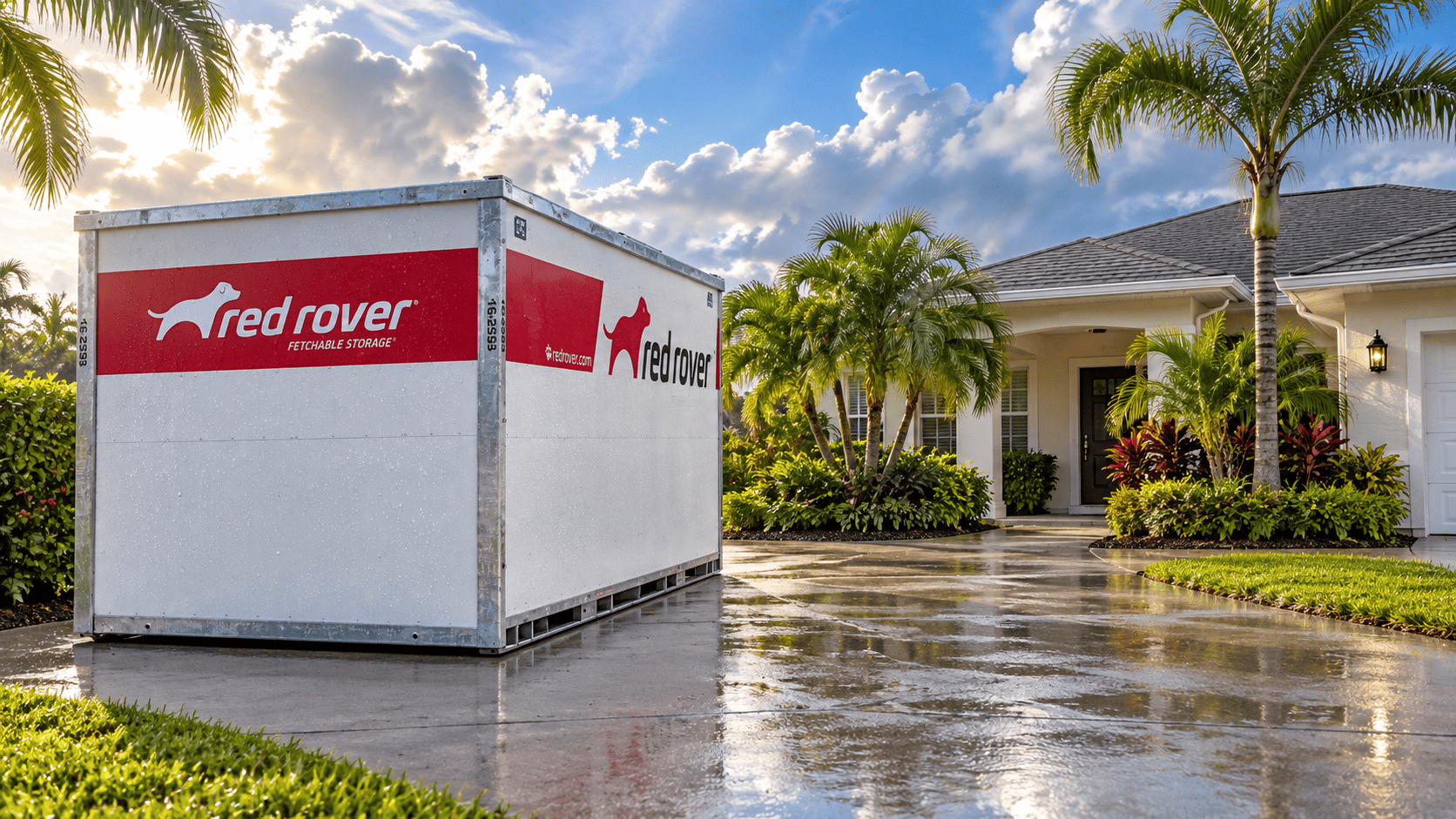
Red Rover containers feature steel construction, an industrial-grade latching and locking system, and interior D-ring tie-down points. Those features support physical protection, while your business remains responsible for managing authorized access and preparing its contents.
Make the Load Stable Without Sacrificing Access
A container should not become a tightly packed puzzle that must be dismantled whenever someone needs a tool.
Plan around the items you expect to retrieve during the renovation. Keep them reachable without climbing over furniture or moving fragile equipment.
Place heavy belongings low, distribute weight across the container, and secure items against shifting. Keep delicate boxes away from unstable furniture and avoid tall stacks without a strong base. Red Rover’s packing guidance also recommends using straps or rope and checking the container’s weight limit before loading.
After removing anything during the project, check the remaining load again. An arrangement that was stable when full may need adjustment before transportation.
Leave Room for Schedule Changes
Build some flexibility into the storage booking rather than tying collection to an optimistic completion date.
Before confirming the arrangement, ask about rental extensions, access appointments, transportation charges, and notice requirements. Clarify how changes to the renovation schedule would affect pickup or return.
Also ask your insurer what protection applies while business property is being moved or stored. Confirm the details rather than assuming existing cover follows every item automatically.
These conversations belong before loading day. They give your team a clearer basis for comparing storage options and handling changes without rushed decisions.
Bring Everything Back When the Space Is Ready
Arrange the return with the contractor, not just the calendar.
Confirm that the receiving areas are ready, cleaning is complete, and the access route is suitable before scheduling delivery. Follow the contractor’s instructions for placing furniture on newly finished surfaces.
Unpack in manageable stages. Inspect furnishings against the earlier photographs, confirm all components are present, and have the appropriate technician reconnect equipment.
Red Rover provides portable business storage for office renovations, furniture, equipment, and temporary commercial storage needs. Discuss your contents, location, and project schedule to identify a suitable arrangement.
Planning a commercial renovation? Request a Red Rover storage quote before work begins, and make protecting your existing assets part of the upgrade.


 Now Serving Orlando!
  Portable Moving & Storage Delivered to Your Door —
  Same-Day Delivery Available |
  We’ll Beat Any Competitor’s Price! -