
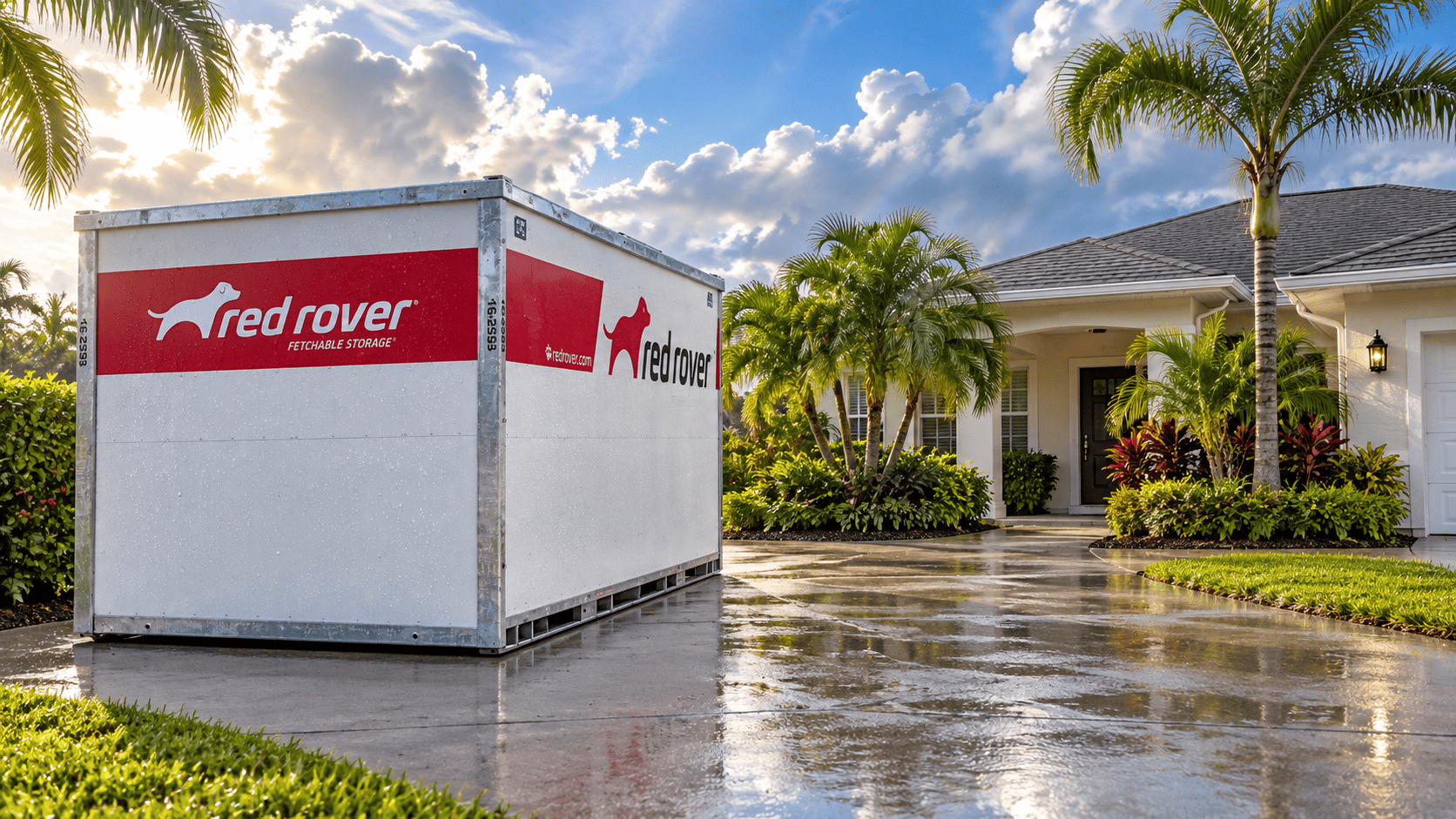
When you leave furniture, equipment, or household belongings inside a portable storage container, you want to know what happens when the weather changes. Will rain get inside? Can summer heat affect your belongings? Does a steel container protect against humidity as well as water?
Weather-resistant portable storage containers are designed to protect belongings from ordinary outdoor exposure, including rain. However, weather-resistant does not mean completely waterproof, climate-controlled, or suitable for every severe-weather situation. The container’s design, condition, placement, and contents all matter.
Understanding those differences helps you choose the right storage arrangement without expecting the container to do more than it was built to do.
Weather-Resistant Does Not Mean Floodproof
A container that keeps out falling rain is not necessarily designed to withstand rising floodwater.
Weather resistance describes protection against typical outdoor conditions. It should not be treated as a promise that water cannot enter under any circumstances. Even providers that build containers for outdoor use distinguish weather resistance from complete waterproofing.
That distinction matters when choosing where your container will stay. A convenient parking space may not be a suitable storage location if water regularly collects there.
Ask your provider what the container is designed to withstand and whether the proposed location raises any concerns. Do not assume that steel walls alone establish protection against flooding, hurricane winds, or every type of storm damage.
What Helps a Container Keep the Weather Outside?
The container’s construction provides its first layer of protection.
Red Rover’s portable containers feature solid steel construction, galvanized steel frames, barn-style doors, and an industrial-grade latching and locking system. The company describes its containers as weather-resistant and includes vents in the design.
Those features do not remove the need to check the individual container before loading.
Inspect the interior, floor, visible wall seams, and door openings. Look for damp patches, obvious damage, or doors that do not close properly. Ask the provider to investigate anything concerning before placing your belongings inside.
Keep packing materials clear of door openings, and follow the provider’s instructions for closing and securing the container. Report damage rather than attempting repairs or modifications yourself.
Why Moisture Can Appear Without a Leak
Finding water droplets inside a container does not automatically mean rain entered through the roof.
Moisture can also come from condensation. When a surface becomes cold enough relative to the surrounding moist air, water vapor can condense into liquid droplets. The temperature at which this happens is called the dew point.
Inside storage, damp belongings can introduce additional moisture. A recently cleaned sofa, wet garden equipment, or unfinished appliance drainage can create problems even when the container itself keeps rain outside. Red Rover’s storage guidance therefore emphasizes loading only clean, fully dry items.
If you notice moisture, investigate both possibilities: water entering from outside and moisture already inside. Do not assume every damp patch has the same cause.
Controlling moisture also matters because persistent dampness can encourage mold growth. The EPA identifies moisture control as the key to preventing mold.
A Steel Exterior Does Not Control the Temperature
Protection from direct sunlight is different from protection against heat.
An outdoor metal container can become warmer inside during sunny weather and cool again overnight. A weather-resistant exterior does not automatically maintain a steady indoor temperature.
This deserves extra attention when storing electronics, wooden furniture, musical instruments, photographs, or other sensitive possessions. Heat and humidity can affect these materials differently, so one storage arrangement may not suit everything you own.
Check the manufacturer’s storage recommendations for valuable equipment and the care requirements of delicate belongings. Ask about insulation and environmental controls separately from weather resistance.
A useful question is: “Will this arrangement protect my items from the conditions they are sensitive to?” That is more helpful than asking only whether the container can sit outside.
Where You Place the Container Matters
Choose the delivery position with your provider rather than selecting whichever space happens to be empty.
Portable-container delivery guidance commonly favors paved, level surfaces and requires discussion before placement on uneven or unpaved ground. Requirements depend on the provider and delivery equipment.
Tell the delivery team about areas that collect water, soft ground after rainfall, nearby drainage routes, and overhead obstacles. Ask them to confirm a suitable position with enough clearance for delivery, access, and pickup.
Do not try to raise, tilt, or reposition a loaded container yourself. Contact the provider when placement needs to change.
Planning the position before delivery is easier than trying to solve access or drainage concerns after everything is packed.
Keep Moisture Out of Your Packing Materials
Good packing should protect belongings without trapping moisture against them.
Clean furniture before storage, then allow it to dry completely. Use suitable furniture covers and protective padding, and avoid tightly enclosing damp upholstery or wood in plastic. Furniture-storage guidance warns that trapped moisture can contribute to damage during storage.
Apply the same approach to boxes, rugs, bedding, and equipment. Do not load them wet simply because the container is ready.
Keep built-in ventilation unobstructed and follow the provider’s loading guidance. Ventilation should not be mistaken for temperature or humidity control.
Moisture absorbers may provide supplementary help, but they do not repair leaks or turn outdoor storage into a controlled environment. Red Rover recommends checking and replacing these products according to their manufacturer’s instructions.
Severe Weather Requires a Separate Plan
Routine weather resistance should not replace storm preparation.
Before severe weather approaches, ask your provider about its procedures, the suitability of your container’s location, and whether any change in storage arrangements is advisable. Request documentation for any wind-resistance claim relevant to the specific container rather than assuming all models perform alike.
Make these decisions early. Monitor official forecasts and follow local emergency instructions. NOAA advises people to stay away from flooded or damaged areas and evacuate when directed.
Never use a portable storage container as a storm shelter. The National Park Service warns that sheds and storage facilities are not safe shelter locations during severe weather. Personal safety comes before checking or retrieving stored belongings.
Does Moving the Container Off-Site Add Protection?
That depends on where it goes.
Off-site storage does not automatically mean indoor or climate-controlled storage. Confirm whether the container will remain outdoors, sit inside a building, or be stored in an environment with specific temperature and humidity controls.
Red Rover’s available arrangements vary by location. Its Orlando-area storage page, for instance, specifies outdoor storage and states that climate-controlled storage is unavailable at that location.
Describe your belongings and expected storage period before booking. Ask whether the available environment matches those requirements, especially for sensitive or irreplaceable items.
The right choice combines a suitable container, an appropriate location, dry contents, and realistic expectations about weather protection.
Planning a move or storage project? Request a Red Rover quote and discuss the storage options available for your belongings, location, and timeline.
 Now Serving Orlando!
  Portable Moving & Storage Delivered to Your Door —
  Same-Day Delivery Available |
  We’ll Beat Any Competitor’s Price! -