
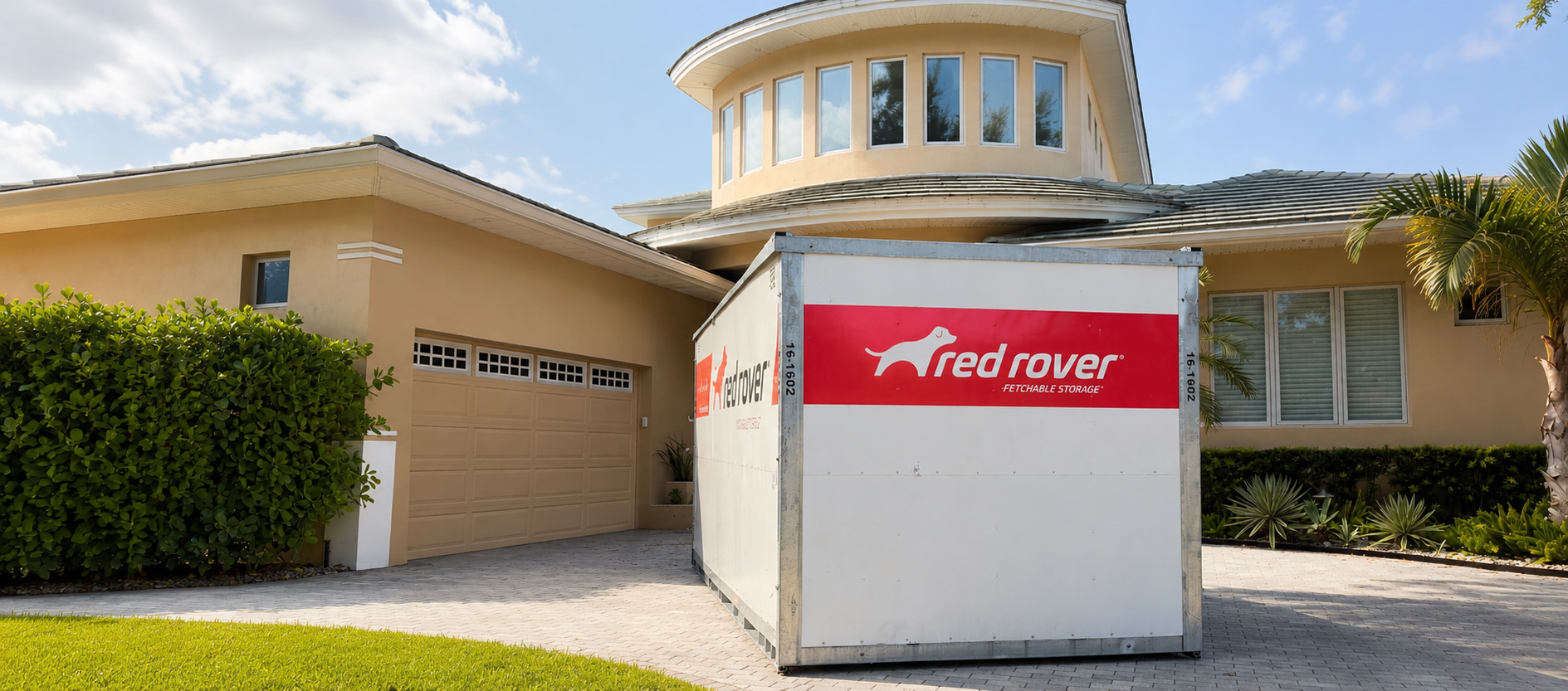
The contractor says that the living room must be entirely empty by Monday.
The sofa cannot be placed in the guest room since the garage already contains the renovation materials, and moving the dining table from one room to another for the next six weeks also doesn’t seem very attractive.
It is typically at this point that furniture storage is included in the renovation plan.
For the majority of renovation jobs, the most suitable portable moving container isn’t just the largest one on offer; it should be the one that is able to hold the furniture you need to take away yet still fit within the boundaries of your property, renovation timetable, and access requirements.
Red Rover provides Florida home owners with portable storage containers that are 8 feet and 16 feet in size. Rather than begin by considering the size of the container, you should start with your renovation.
Start With the Room You’re Renovating, Not the Container
Before you measure the sofas or count the boxes, check how much of your home the contractor needs clear.
Carrying out a kitchen remodel presents storage problems that differ significantly from those encountered when replacing the flooring throughout the entire house.
Here’s a practical starting point:
Bedroom or home office Bed frame, dresser, desk, chairs, boxes Start by considering an 8-ft container. For the kitchen remodel, consider including dining furniture, stools, small appliances, and pantry overflow items. An 8-ft one may work; larger projects may need a 16-ft one. Living room remodel Sofa, chairs, tables, entertainment furniture Compare 8-ft and 16-ft based on furniture dimensions. Flooring replacement furniture from several connected rooms A 16-ft container may provide more practical space. Multi-room renovation Furniture, décor, and household belongings from several rooms Consider a 16-ft multiple-container. Whole-home renovation Most household furniture and boxed belongings Multiple containers may be necessary.
The examples here are not guarantees; the size, arrangement, weight, and loading of the furniture will all affect how much fits.
The key point is straightforward in that you shouldn’t rent storage simply on the number of bedrooms your house has; instead, you should rent it according to what needs to leave the construction site.
Make a Furniture Exit List Before Demo Day
Walk through the renovation area with one question:
Shall this item remain in place during the work? Should this item remain in place while the work is being done?
Sort your belongings into four groups.
1. Leave the work area.
Begin with the large pieces, since they will obstruct the way of the contractors or collect construction dust.
That may include:
- Sofas and sectionals
- Dining tables and chairs
- Dressers
- Bed frames
- Bookshelves
- Coffee and end tables
- Cabinets
- Rugs
- Lamps and décor
It is usually better to move the item if the contractors need the floor, the walls, the ceiling, the cabinets, or the electrical areas surrounding it.
2. Keep Accessible
It is still possible that you will need some of your existing possessions during the renovation.
Rather than putting these items deep in the container, group them so you can access them more easily.
Think about:
- Seasonal clothing
- Frequently used kitchen items
- Children’s belongings
- Work-from-home equipment
- Tools or household supplies you may need
3. Store With Extra Care
Some items may require storage conditions beyond what a standard on-site container provides.
The current remodeling advice for Red Rover suggests it may be worth keeping electronics and appliances in a climate-controlled environment and considering off-site storage for fragile, valuable items. Before storing delicate possessions, verify the suitable storage conditions.
4. Don’t Pay to Store It
When renovating, consider whether each item of furniture deserves to be brought back.
The large entertainment unit may not fit in the new room, and the dining chairs may already be part of the scheme to replace them.
Before renting storage space, sell, donate, recycle, or get rid of any items you no longer need.
The lowest cost for a cubic foot of storage is one you never needed to rent.
Choose Container Size Based on Your Bulkiest Furniture
Boxes stack neatly.
Sofas don’t.
That difference matters when you are selecting a portable storage container for furniture.
Instead of sizing your containers based on the number of boxes you have, start by identifying your largest items.
Measure:
- Sectionals
- Sofas
- Dining tables
- Dressers
- Headboards
- Mattresses
- Large shelving units
- Cabinets
Next, choose items that can be safely disassembled.
Taking apart the legs of a table or dismantling the bed frame can greatly affect how efficiently you use the available space. How efficiently you use the available space can be impacted. Taking apart the legs of a table or dismantling the bed frame can greatly impact how efficiently you use the available space. You can achieve this goal by taking apart the legs of a table or dismantling the bed frame.
When an 8-Foot Container Makes Sense
Red Rover’s 8′ x 8′ x 8′ container offers about 431 cubic feet of storage, a weight capacity of 5,500 pounds, and usually holds roughly one to two rooms’ worth of possessions.
Instead of referring to it as just a “small container,” view it as a container for focused projects.
It may work well when you’re
- Clearing one bedroom
- Renovating a home office
- Moving furniture for a smaller kitchen project
- Emptying one living area
- Storing selected furniture during painting
- Clearing part of your home for new flooring
The 8-foot container on the Red Rover also has doors at both ends, which, if you carefully plan the loading, can facilitate access. The 8-foot container on the Red Rover can facilitate access if you carefully plan the loading, as it has doors at both ends. The 8-foot container on the Red Rover has doors at both ends, which can facilitate access if you carefully plan the loading. If you carefully plan the loading, the 8-foot container on the Red Rover, which has doors at both ends, can facilitate access.
When a 16-Foot Container Makes More Sense
The 8 by 8 by 16-foot container offered about 866 cubic feet of storage space, had a weight limit of 7,700 pounds, and usually fit around three to four rooms’ worth of belongings.
It might be more reasonable to consider a 16-foot container if the renovation involves adjacent spaces or multiple rooms at the same time.
Examples include:
- Living and dining room renovations
- Flooring projects across several rooms
- Multi-bedroom projects
- Major kitchen renovations with nearby furniture
- Large remodeling projects
- Renovations that require you to clear much of the home
For big projects you can likewise combine different container sizes rather than attempting to fit everything into a single unit.
Think About the Driveway Before Delivery Day
This topic is a point that many renovation-storage articles rarely address, even though it plays a crucial role in an actual remodel. Many renovation-storage articles overlook this important topic, even though it plays a crucial role in an actual remodel.
Both your container and your contractor could require the same space.
Before arranging the delivery, discuss it with your contractor regarding the following weeks.
Ask:
- Will a dumpster require access from the driveway?
- Are material deliveries coming?
- Shall the contractors park their work vehicles there?
- Does equipment that is heavy need access?
- Will the location Will the exterior renovations impact the location? by the exterior renovations?
- Shall you need continual access to the container?
A perfect container in the wrong place can very soon turn into a headache.
Include the selection of the placement area within your renovation logistics rather than treating it as a last-minute decision.
Before you place a portable container on your property, you should also check the relevant requirements of the HOA, the community, the property management company, or the local authorities.
Load for the End of the Renovation, Not Just the Beginning
Most people load a storage container with one goal:
Make everything fit.
For a renovation, use a second goal:
Ensure that everything is completed in the correct order.
Picture your project. Visualize your project as a series of stages. in stages.
The bedrooms may finish first, followed by the living room, while the kitchen still needs another week.
The best method is to start by considering your renovation timetable.
Thinking backward from your renovation schedule is a better way to approach it.
If possible:
- Load furniture for the last-finished rooms first.
- Keep furniture for the first-finished rooms closer to the doors.
- Group boxes by room
- Clearly label disassembled furniture
- Keep hardware with the furniture it belongs to.
- With a little planning, move-back day can be much easier.
This small amount of planning can make moving-back day much easier.
Do not handle all pieces of furniture in the same manner.
Before you store them, vacuum sofas and chairs and make sure they are dry.
Upholstered Furniture
To protect the furniture, use appropriate furniture protection to keep the surfaces clean and minimize scuffs when loading.
Use appropriate furniture protection to keep surfaces clean and reduce scuffs during loading.
You shouldn’t use a sofa as a shelf for heavy boxes just because there is open space above it.
Wood Furniture
Before storing them, make sure the wooden pieces are clean and dry.
To protect the corners and finished surfaces, use furniture pads or moving blankets and don’t place heavy objects directly on any surfaces that might dent or scratch.
Glass and Mirrors
Provide extra protection for glass tabletops, mirrors, and other similar items.
Use the right packing materials and keep them away from falling objects.
Disassembled Furniture
Put the screws, bolts, brackets, and other hardware into bags that are labeled.
Instead, keep each bag with the appropriate piece of furniture and don’t put all the screws from the house into a single mystery box.
Your future self will thank your present self for this decision.
Should the Container Remain at Your House?
It ought to be based on access rather than on habit.
Keep It On-Site When You Need Regular Access
On-site storage can work well when:
- You’re living in the home during the renovation.
- The project affects only part of the house.
- You may need belongings during construction.
- You have suitable space for the container.
- The container won’t interfere with the crew.
It is possible to take the furniture straight from the house and retrieve items as each room is completed.
Consider Off-Site Storage When the Property Needs to Stay Clear
Off-site storage may work better when:
- You’re renovating most of the home.
- You’re moving out temporarily.
- The contractors require access to the driveway or the designated placement area.
- You don’t expect to need the furniture during construction.
- The project may last for an extended period.
Red Rover currently offers remodeling customers the choice between on-site portable storage and a storage center, provided the location and availability permit.
Use the Renovation Timeline to Control Storage Costs
Construction schedules change.
However, you can prevent the need for extra storage time before the project even starts.
Arrange for container delivery to coincide with the date your contractor needs the room cleared.
Please coordinate container delivery with the date your contractor actually needs the room cleared.
If demolition takes place on Monday, you will not need the container that was outside three weeks earlier.
Likewise, please avoid scheduling the return of all your furniture for the moment the contractor indicates they are “almost finished.”
Ask whether:
- Paint has dried
- Flooring is ready for furniture.
- Final cleaning is complete.
- Contractors still need clear access
- Punch list work remains
A little bit of planning will stop you from having to move the same furniture twice.
Three Furniture-Storage Mistakes That Make Renovations Harder
Mistake 1: Moving Everything Into Another Room
It functions like a temporary storage area until the contractor also needs the room.
Then you move everything again.
When several areas end up being included in the project, draw up a storage plan before work starts.
Mistake 2: Ordering Storage Before Measuring the Furniture
A count of the number of rooms provides you with a starting point, but the size of the furniture affects how efficiently you can use the space.
Measure first.
Mistake 3: Filling the Container Without a Return Plan
It doesn’t follow that the renovation will come to an end in the order in which it began.
Please keep the move-back sequence in mind when loading.
A Simple 48-Hour Pre-Renovation Furniture Plan
Two days prior to the room clearance, please review this checklist:
Start by checking the work area and find out from your contractor which rooms, hallways, doorways, and access routes must remain clear.
Now, you should determine which of the furniture is leaving the house, and even if an item is close by, don’t move it since it wouldn’t interfere with the project.
Measure the bulky pieces. This helps you choose the right container size.
Get rid of any furniture that you don’t want anymore and avoid spending money on storing items that will be donated. Dispose of any unwanted furniture and avoid spending money on storing items that will be donated. be donated.
Make sure the furniture is clean and prepared, and allow it to dry out completely.
Take apart the practical components and give the hardware its label right away.
Separate the essentials, and don’t accidentally keep something you’ll need tomorrow.
Keep essentials separate. You’ll then be in a position to carry out the demolition without turning the rest of your home into a furniture warehouse.
Build the Storage Plan Before the Renovation Starts
The best portable moving container for a home renovation is not necessarily an 8-foot or a 16-foot container.
It depends on what you’re renovating, how much furniture needs to move, which pieces take up the most space, whether you need regular access, and how your contractor will use the property during the project.
Red Rover’s 8-foot container could provide the space you need for a one- or two-room renovation.
Decide beforehand, not after the contractor asks where the sofa is going.
The important part is making that decision before demo day, not after the contractor asks where the sofa is going.
Red Rover brings you portable storage containers so that you can clear the work area and load up at a pace that suits you. Depending on your location and storage needs, you can keep the container on site or ask about Red Rover Storage Center alternatives.
If you’re planning a home renovation in Florida, get a quote from Red Rover and choose the container that fits your furniture, project size, and renovation timeline.
Frequently Asked Questions
Do I need to remove all furniture during a renovation?
Not always. Focus first on furniture inside the active work area and along routes contractors need to use. Large multi-room or flooring projects may require you to clear more of the home than a single-room renovation.
Is an 8-foot container large enough to hold furniture?
The 8-foot container Red Rover uses usually accommodates between one and two rooms’ worth of possessions. Whether your furniture fits depends on its size, shape, number of pieces, and how you load it.
What size container should I use for a whole-home renovation?
One container might not have enough room for all the furniture in a house, so consider using a 16-foot container, several containers, or a mix of different sizes depending on the inventory of items you want to store.
Is it advisable to leave my renovation container in the driveway?
Although a driveway may offer convenient access, talk to your contractor about placement, since dump trucks, material deliveries, work vehicles, or equipment may also need room.
When should I have the storage container delivered?
Coordinate delivery with your contractor’s actual start date and the time you need to clear the work area. This can help you avoid renting the container significantly earlier than necessary.
Can Red Rover store my furniture away from the renovation site?
Red Rover offers storage center options within its service network. Availability and facility features vary by location, so confirm your specific options when requesting a quote.


 Now Serving Orlando!
  Portable Moving & Storage Delivered to Your Door —
  Same-Day Delivery Available |
  We’ll Beat Any Competitor’s Price! -