
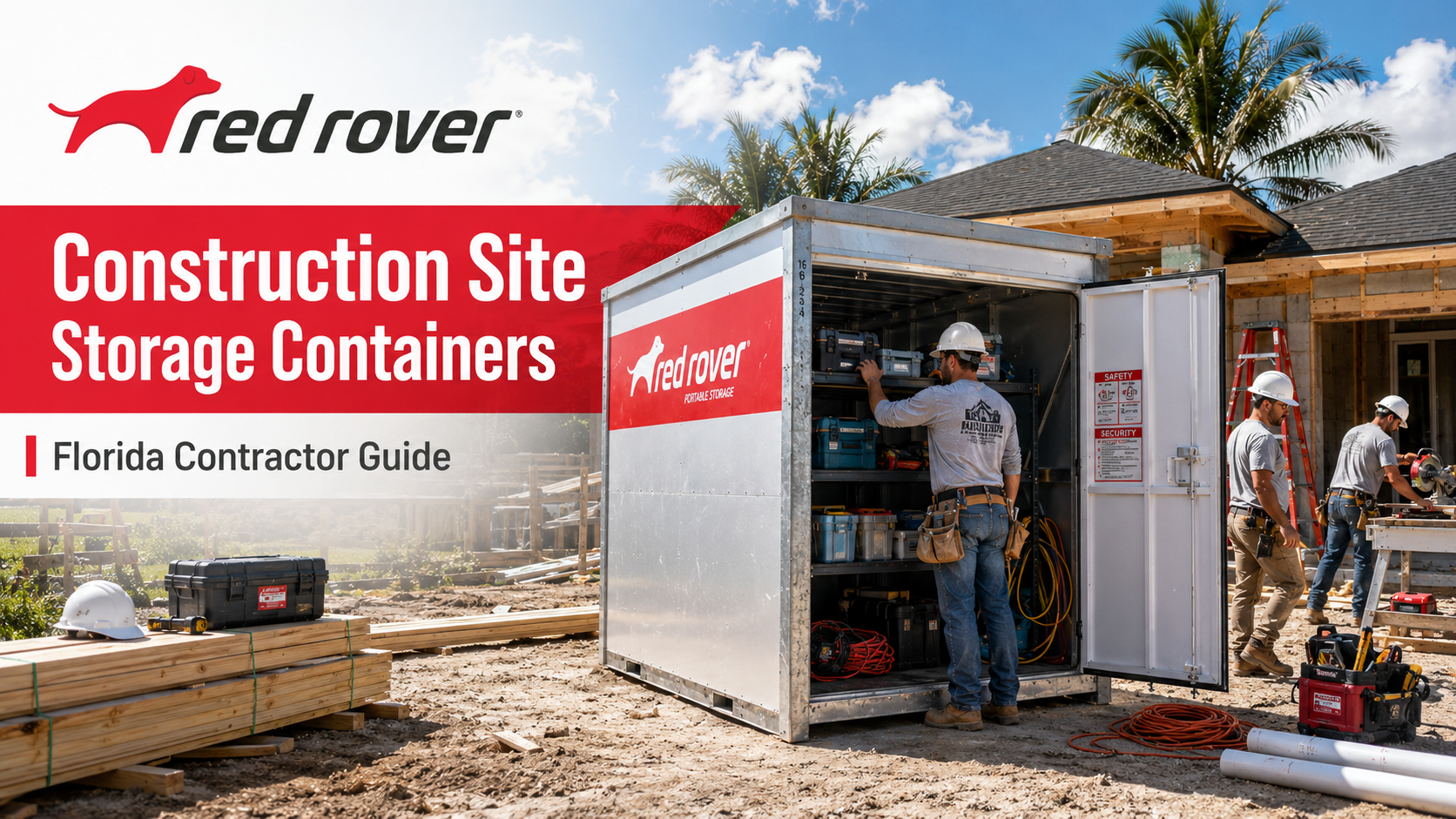
A construction site storage container gives contractors a central location for organizing tools, safety equipment, fixtures, replacement parts, and approved building materials. Keeping essential items close to the work area can reduce unnecessary travel, improve job-site organization, and help crews begin work more efficiently each day.
For Florida construction projects, storage planning should account for container size, delivery access, summer heat, heavy rainfall, humidity, security, material requirements, and how frequently each item will be used.
Contractors should also check local building regulations, fire codes, property restrictions, and storage-provider policies before selecting a container location or deciding what to store. Requirements may vary by county, municipality, project type, and job-site conditions.
Florida’s summer weather creates additional considerations. Sudden thunderstorms may cause standing water around the container, while high temperatures can affect adhesives, coatings, electronics, and other sensitive materials. Coastal locations may also expose tools and fasteners to greater humidity and salty air. On narrow residential lots or properties with limited driveway access, delivery and pickup planning becomes especially important.
Why Are Construction Site Storage Containers Valuable?
Construction crews can lose valuable time when tools and supplies are spread across vehicles, trailers, workrooms, and off-site storage facilities.
A well-organized job-site storage container can help contractors:
- Keep frequently used tools close to the work area
- Reduce morning loading and end-of-day unloading
- Organize materials by trade or project phase
- Limit unauthorized access to expensive equipment
- Keep indoor workspaces and walkways clear
- Reduce unnecessary trips to off-site storage
- Protect approved items from routine outdoor exposure
- Improve inventory control
- Reduce clutter around active construction areas
- Maintain a more professional and organized job site
Red Rover provides portable construction storage solutions for short-term renovations, residential projects, commercial buildouts, and longer construction schedules across Florida.
Why Is July Storage Planning Different in Florida?
July construction projects in Florida must account for heat, humidity, and frequent thunderstorms.
Contractors should prepare for:
- Sudden afternoon rain
- Wet or soft ground around the delivery area
- High humidity inside non-climate-controlled containers
- Heat-sensitive tools and materials
- Lightning-related work delays
- Reduced visibility during storms
- Water collecting near doors or access points
- Greater heat exposure for crews loading and unloading the container
Heat and humidity can also increase the risk of heat-related illness. Employers should include access to drinking water, scheduled rest breaks, shaded or cooled recovery areas, worker acclimatization, and emergency-response procedures in their summer safety planning.
Crews should also be trained to recognize possible symptoms of heat stress.
A storage container may improve organization, but it should never become a hot, overcrowded workspace where employees remain for extended periods. Workers should enter only as needed to retrieve or store materials and equipment.
What Can Contractors Store in a Job-Site Container?
Suitable items may include:
- Hand tools
- Power tools
- Ladders
- Extension cords
- Air compressors
- Safety gear
- Personal protective equipment
- Fasteners and hardware
- Plumbing fixtures
- Electrical components
- Flooring tools
- Cabinet components
- Packaged tile
- Approved building supplies
- Construction signage
- Safety barriers
- Cleaning equipment
- Replacement parts
- Empty tool cases
- Nonhazardous maintenance supplies
Always check the manufacturer’s storage instructions before placing materials inside a container. Products protected from direct rain may still be damaged by heat, moisture, condensation, or temperature fluctuations.
Which Items May Require Another Storage Solution?
A standard construction container should not be treated as a universal storage space.
Items that may require approved, regulated, climate-controlled, or specialized storage include:
- Gasoline
- Propane cylinders
- Flammable liquids
- Paints and solvents
- Corrosive chemicals
- Pressurized containers
- Wet materials
- Temperature-sensitive adhesives
- Certain coatings and sealants
- Sensitive electronics
- Batteries with specific storage requirements
- Documents requiring climate control
- Irreplaceable records
- Items prohibited by the storage provider
Flammable liquids and other regulated products must be handled and stored according to applicable regulations, product labels, safety data sheets, fire codes, and site-specific requirements.
Florida counties and municipalities may impose additional rules concerning chemical storage, fire access, setbacks, and container placement. Contractors should contact the relevant building department, fire marshal, property manager, or project authority when clarification is needed.
How Do You Choose the Right Container Size?
Choose the container based on the volume, shape, and accessibility requirements of the stored equipment—not only the expected length of the project.
Typical considerations include:
Small Bathroom or Kitchen Remodel
A smaller container may provide enough room for tools, boxed fixtures, protective materials, and limited construction supplies.
Specialty Subcontractor
Electricians, plumbers, flooring installers, and other specialty trades may need a compact storage solution for trade-specific tools and replacement parts.
Whole-Home Renovation
A larger container or phased storage plan may be needed for tools, fixtures, demolition equipment, cabinetry, flooring, and protective materials.
Commercial Buildout
Commercial projects may require separate zones for tools, personal protective equipment, fixtures, signage, and approved materials.
Multi-Trade Project
Projects involving several subcontractors need clearly marked storage sections to prevent tools and materials from becoming mixed or misplaced.
Long-Term Construction Project
Longer projects may require a larger container, multiple containers, or storage organized by construction phase.
Container capacity should be reviewed throughout the project. As work progresses, the types and quantities of tools and materials on site may change.
Choosing a container that is too small may create unsafe stacking and difficult access. Choosing one that is unnecessarily large may use valuable job-site space and increase costs.
Where Should the Container Be Placed?
Container placement affects delivery, crew access, drainage, security, and overall site safety.
Before delivery, evaluate:
- Driveway width
- Gate clearance
- Overhead power lines
- Tree branches
- Roof overhangs
- Underground utilities
- Septic systems
- Drainage patterns
- Ground stability
- Fire access
- Emergency routes
- Neighboring properties
- Space required for delivery equipment
- Future access for pickup or relocation
The container should be placed on a stable, level surface whenever possible.
Avoid locations where water regularly collects after rain. If the site is vulnerable to standing water, discuss suitable placement and support options with the storage provider.
Do not block:
- Fire lanes
- Emergency exits
- Utility panels
- Fire hydrants
- Sidewalks
- Public rights-of-way
- Required parking spaces
- Access for emergency vehicles
- Material delivery routes
- Crew evacuation paths
On residential projects, contractors should also consider homeowner access, neighborhood restrictions, homeowners’ association rules, and local parking requirements.
How Should the Container Be Organized?
A container should be arranged so that crews can retrieve frequently used items without unloading other equipment.
Create Storage Zones
Separate the container into clearly identified sections, such as:
- Carpentry tools
- Electrical equipment
- Plumbing supplies
- Safety equipment
- Fasteners and hardware
- Fixtures
- Cleaning materials
- Frequently used tools
- Materials reserved for later project phases
Keep Frequently Used Items Near the Entrance
Tools and supplies used every day should remain near the door. Materials needed later in the project may be stored farther inside.
Use Shelving Where Appropriate
Heavy-duty shelving can improve visibility and keep smaller items off the floor. Shelving should be stable, properly assembled, and suitable for the weight being stored.
Label Containers and Shelves
Clear labels can reduce search time and help subcontractors return items to the correct location.
Maintain a Center Walkway
Keep a clear path through the container. Avoid stacking materials in a way that forces workers to climb over tools, boxes, or equipment.
Store Heavy Items Low
Place heavier equipment near the floor and distribute weight evenly. Do not place heavy tools or materials on unstable stacks.
How Can Contractors Protect Tools From Florida Humidity?
High humidity can contribute to rust, corrosion, odors, and moisture buildup.
To help protect stored equipment:
- Dry tools before placing them in storage
- Remove mud, concrete residue, and moisture
- Keep tools off the container floor
- Use shelving or raised platforms
- Store small metal parts in sealed, labeled containers
- Inspect tools regularly for signs of corrosion
- Avoid placing wet tarps or clothing inside
- Keep the door closed when the container is not in use
- Follow manufacturer guidance for sensitive equipment
Contractors working near the coast should inspect metal tools, fasteners, and equipment more frequently because salt in the air may accelerate corrosion.
A standard container is not the same as a climate-controlled environment. Items that cannot tolerate heat or humidity may require another storage solution.
How Should Contractors Prepare for Heavy Rain?
Florida thunderstorms can develop quickly, particularly during the summer.
Before severe weather:
- Check that the container doors close correctly
- Inspect door seals and locking hardware
- Remove debris from the entrance
- Confirm that water drains away from the container
- Move moisture-sensitive items away from the floor
- Protect boxed materials with suitable coverings
- Secure loose materials around the job site
- Avoid leaving tools outside the container
- Suspend loading when lightning or unsafe conditions develop
Do not place wet tools, soaked protective equipment, or damp materials inside with dry supplies. Moisture trapped inside the container may create condensation, odors, corrosion, or mold concerns.
How Can Contractors Improve Container Security?
Construction tools and equipment can be expensive and difficult to replace quickly. A storage container should be included in the project’s overall security plan.
Consider:
- A provider-approved lock
- Restricted key or access-code distribution
- Exterior lighting
- Security cameras
- Fencing
- Job-site access logs
- Equipment identification numbers
- Tool inventories
- Photographs of high-value equipment
- End-of-day security checks
Keep an updated record of stored equipment, including serial numbers where available.
Avoid placing keys or lock combinations in unsecured site offices, vehicles, or visible locations. When workers or subcontractors leave the project, update access permissions when necessary.
Should Tools Be Stored Overnight?
Many tools may be stored overnight when the container is secure and the storage provider permits them. However, contractors should consider:
- Tool value
- Site security
- Insurance requirements
- Weather conditions
- Container location
- Project access
- Manufacturer instructions
- Whether the equipment contains fuel or hazardous materials
Equipment containing gasoline, propane, or other regulated substances may require separate handling. Remove fuel or follow approved storage procedures where required.
How Often Should the Container Be Inspected?
The container and its contents should be inspected regularly throughout the project.
Check for:
- Water intrusion
- Standing water near the entrance
- Rust or corrosion
- Damaged locks
- Door alignment problems
- Unstable shelving
- Unsafe stacking
- Blocked walkways
- Missing tools
- Pest activity
- Wet or damaged materials
- Items stored in the wrong section
- Prohibited materials
Inspections are especially important after heavy rain, high winds, site work that changes drainage, or a major change in the project phase.
Construction Site Storage Container Checklist
Before Delivery
- Confirm the required container size
- Review provider restrictions
- Check local placement requirements
- Confirm property-owner approval
- Measure driveway and gate access
- Inspect the ground and drainage
- Identify overhead and underground hazards
- Confirm delivery and pickup access
During Setup
- Place the container on a stable surface
- Keep emergency routes clear
- Confirm that doors open fully
- Install approved security measures
- Create tool and material zones
- Establish a clear center walkway
- Add shelving when suitable
- Post storage and safety rules
During the Project
- Keep an updated inventory
- Return tools to assigned areas
- Remove wet materials
- Inspect for leaks or corrosion
- Keep frequently used tools accessible
- Check locks at the end of each day
- Remove prohibited materials
- Reorganize storage as project phases change
Before Severe Weather
- Review weather alerts
- Secure loose outdoor materials
- Confirm proper drainage
- Elevate moisture-sensitive supplies
- Close and lock the container
- Remove hazardous or prohibited items
- Suspend access during lightning or dangerous conditions
At Project Completion
- Remove tools and equipment
- Check for missing items
- Dispose of debris properly
- Sweep the container
- Remove labels and temporary shelving
- Inspect the surrounding area
- Confirm pickup access
- Schedule removal promptly
Keep the Job Site Organized, Secure, and Productive
A properly selected and organized construction storage container can help Florida contractors protect approved tools and materials, reduce unnecessary travel, and maintain a cleaner, more efficient job site.
The most effective setup begins with careful planning. Choose the container according to equipment volume, access needs, project phases, weather exposure, and the frequency with which each item will be used. Place it on stable ground, maintain clear walkways, keep high-use tools near the entrance, and inspect the container regularly.
Florida’s summer heat, humidity, thunderstorms, and coastal conditions make proper storage especially important. Materials that are hazardous, flammable, moisture-sensitive, or temperature-sensitive may require a different solution.
By combining the right container size with safe placement, clear organization, strong security, and regular inspections, contractors can improve productivity while keeping essential tools and approved materials readily accessible throughout the project.

 Now Serving Orlando!
  Portable Moving & Storage Delivered to Your Door —
  Same-Day Delivery Available |
  We’ll Beat Any Competitor’s Price! -