
A Practical Guide for Local Moving, Temporary Storage, Remodeling, and Extra Space
Let’s be honest: moving is rarely as simple as putting boxes in a truck and calling it done.
Most people start with a plan. Then the closing date changes. Or the new place is not ready yet. Or the renovation takes longer than expected. Sometimes you just need the garage cleared out before guests arrive, or you need a safe spot for furniture while the floors are being replaced.
That is when a portable storage container can be an absolute lifesaver.
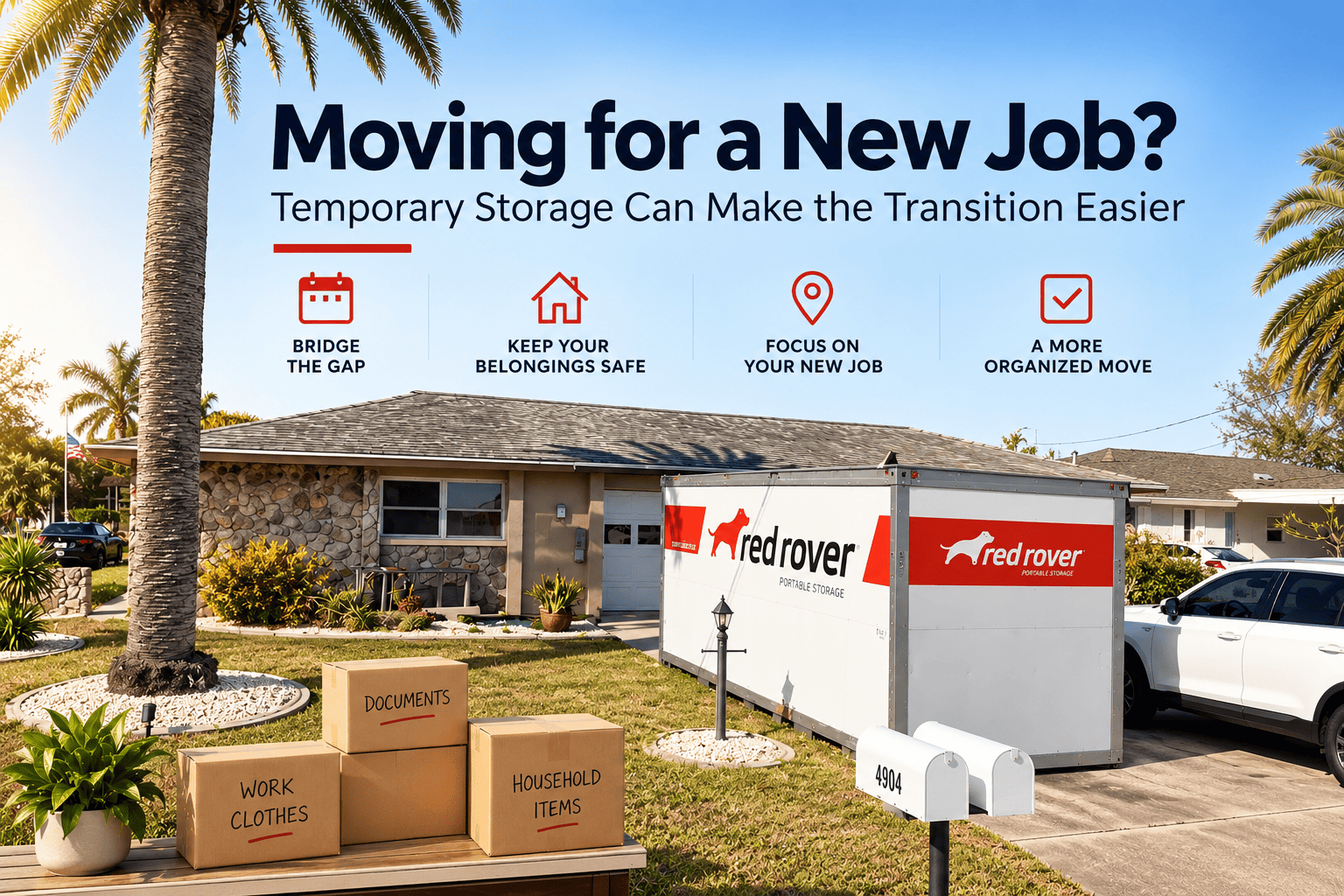
Instead of rushing everything into a truck or making several trips to a storage unit, you can have a container delivered right to your home, business, or job site. You load it when you have time. You keep it nearby if that helps best. And when you are ready, it can be picked up or moved.
Of course, one of the first questions people ask is
How much does a portable storage container cost per month?
The simple answer is it depends.
Not the most exciting answer, but it is the honest one. The cost might vary based on your location, container size, how long you need it, and what you plan to do with it. A family using a container during a local move may have a different price than a contractor keeping tools on a job site. If you’re remodeling your kitchen for three weeks, you might need something different than if you’re storing household goods for several months.
This guide will lead you through the main things that determine pricing, when portable storage makes sense, and how to avoid paying for more than you need.
What Is a Portable Storage Container?
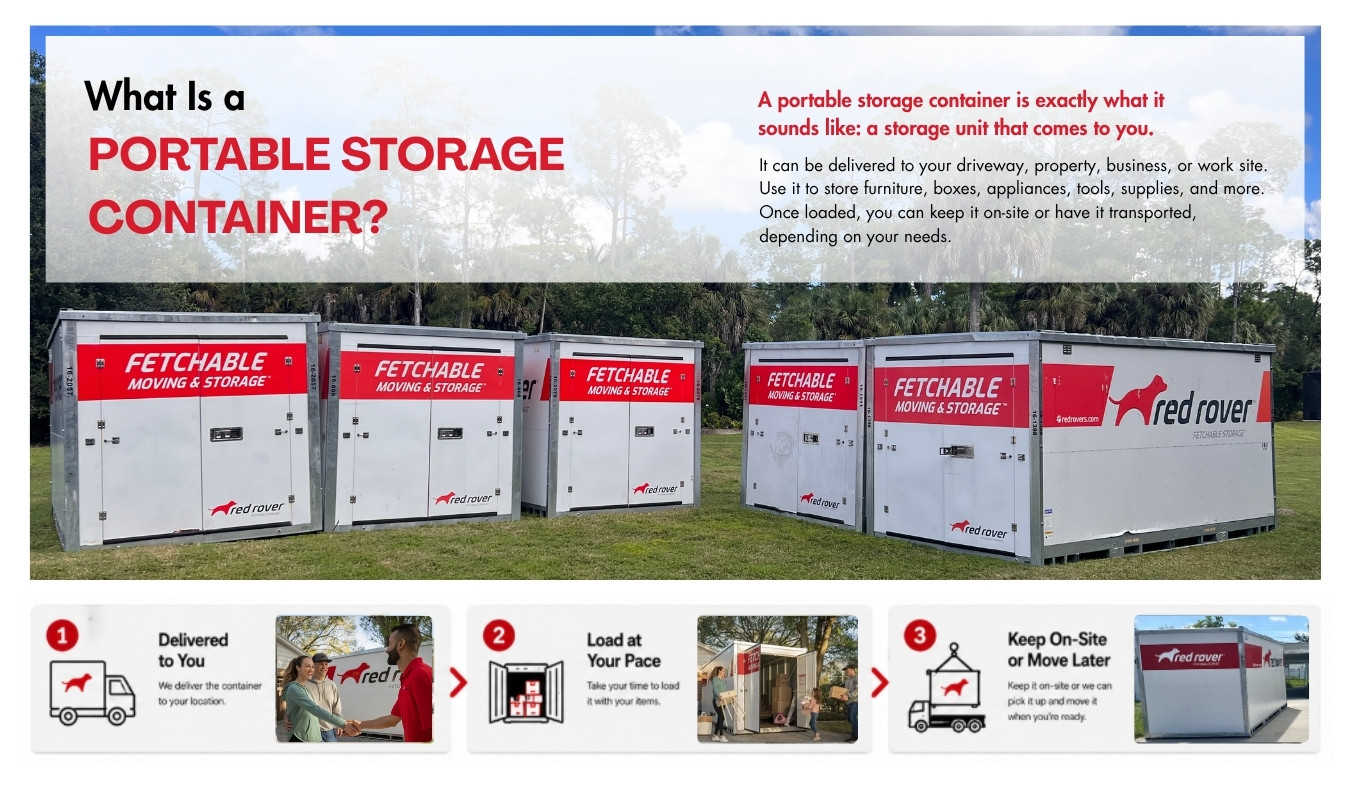
A portable storage container is exactly what it sounds like: a storage unit that comes to you.
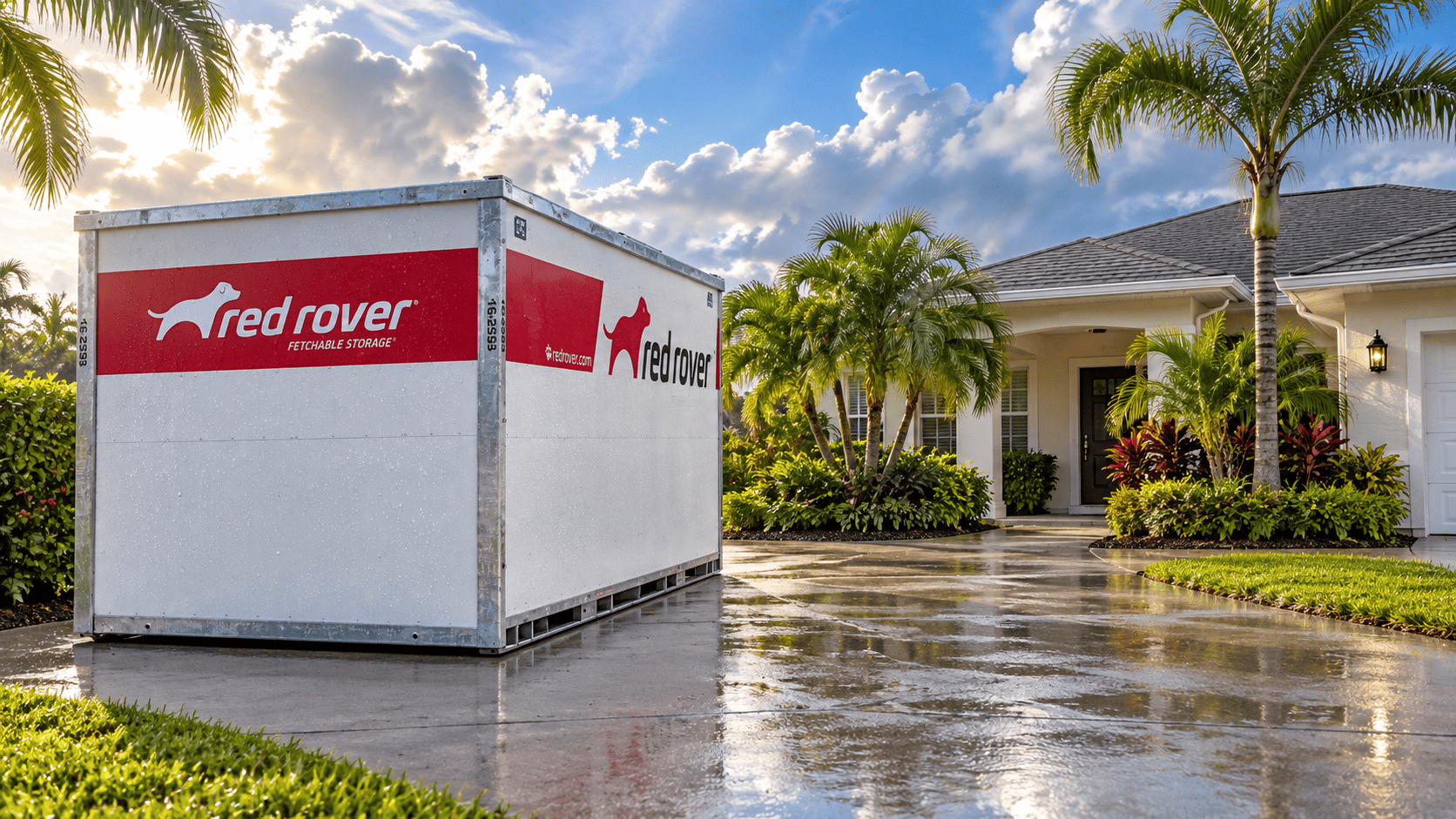
It is delivered to your driveway, property, business, or work site. You can use it to store furniture, boxes, appliances, tools, supplies, or other belongings. Once it is loaded, you can usually keep it on-site or have it transported, depending on the service you choose.
People use portable storage containers for all kinds of reasons, including local moves, home renovations, garage clean outs, decluttering before selling a home, temporary storage between move-out and move-in dates, company inventory, contractor equipment, seasonal storage, office projects, and extra household space.
The big advantage is convenience. You are not hauling everything across town just to put it into storage. The storage comes to your door.
That can make a big difference when you are dealing with heavy furniture, a busy schedule, or a move that isn’t happening all in one day.
How Much Does Portable Storage Cost Per Month?
Portable storage container prices vary. Most companies base prices on different factors, so the monthly cost can vary.
In many cases, the monthly rental is just one part of the total price. You may also need to consider delivery, pickup, transportation, and any storage or service options you choose.
That is why it is always smart to ask for a full quote rather than just the monthly rental amount.
For example, two people may both rent a container for one month, but their final costs may differ.
One person may keep the container in the driveway. Another person may need it moved to a new address. Someone else may need the container delivered to a work site with limited access. Each situation is different.
So instead of looking for one fixed price, it is better to understand what goes into the cost.
What Affects the Cost of a Portable Storage Container?
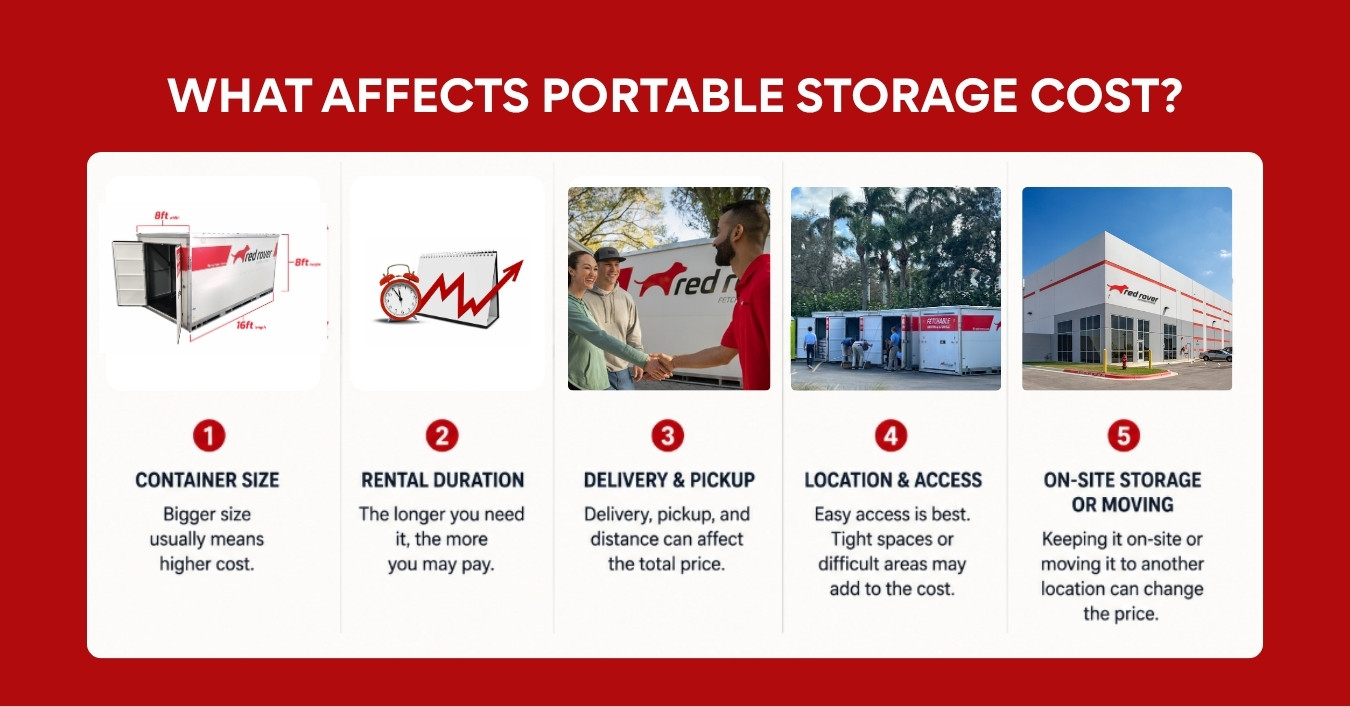
Several things can change the final price. Here are the main ones to keep in mind.
1. The Container Size
Size is usually one of the biggest factors.
If you are storing a few boxes, small furniture, or items from one room, you may not need a large container. But if you are moving a whole house, clearing several rooms for remodeling, or storing business equipment, you may need more space.
It is easy to underestimate how much room your belongings take up. A sofa, a mattress, a dining table, and a few dressers can quickly fill space.
Before you book, walk through your home or work area and make a quick list of the larger items. Then add boxes, tools, outdoor items, and anything else going into the container.
This helps you avoid two common mistakes: renting a container that is too small and needing another solution later, or renting one that is much larger than you need and paying for space.
A reputable storage provider should be able to help you choose the right size based on what you are storing.
2. How Long You Need the Container
Most people rent portable storage containers on a monthly basis.
Some people only need short-term storage. Others need a container for several months because their project or move is taking longer than expected.
That is one of the best things about portable storage. It gives you time.
You do not have to pack your entire house in one night. You do not have to move everything over a single weekend. You can load a little at a time and work around your real schedule.
However, the longer you retain the container, the more the total cost may accumulate. If you are trying to stay within a budget, it helps to plan your timeline before the container arrives.
You do not need every detail to be perfect, but having a rough schedule can help.
3. Delivery and Pickup
Before you book a container, it is worth asking what the full price includes. The final total can change once you factor in delivery, pickup, the moving distance, or extra time, even if the monthly rental seems straightforward.
This does not mean the service is expensive. It just means every move and storage situation is a little different. A container in your driveway for a month is different from one that needs to be moved.
Ask about delivery, pickup, transportation, and what happens if your timeline changes. If your project runs longer than expected, it is better to know the extension process in advance.
A clear quote makes the whole thing easier. You can plan your budget, avoid surprises, and decide which option actually works best for your move or storage needs.
4. Where Will the Container Be Placed?
The spot where the container goes matters more than people think.
A wide, level driveway is usually the easiest option. A parking area or open space can also work well. But if the area is narrow, uneven, soft, blocked by trees, or close to overhead wires, delivery may take a little more planning.
Before delivery day, take a quick look at the space. Make sure there is enough room for the container and that the truck can get in and out safely. Also, examine for low branches, fences, slopes, sprinkler heads, or anything else that could get in the way.
If you live in a neighborhood with an HOA, rent your home, or plan to place the container on shared property, check the rules first. Some communities have limits on how long a container can stay outside.
A few minutes of planning before delivery day can prevent a lot of frustration.
5. Will You Keep It On-Site or Use It for a Move?
Not everyone uses a storage container the same way.
Some people keep it in the driveway while they remodel, clean out the garage, or make space inside the house. Others use it as part of a local move. They load the container at one address, then have it moved when they are ready.
Those two situations can be priced differently.
If the container stays in one place, your cost may be based mostly on rental time and delivery. If it needs to be transported to another location, distance and scheduling may also affect the quote.
This is why it helps to explain your plan when requesting pricing. Are you storing items for a few weeks? Moving across town? Waiting for a home project to finish? The more accurate your details are, the easier it is to get the right quote.
Why Portable Storage Works So Well for Local Moves
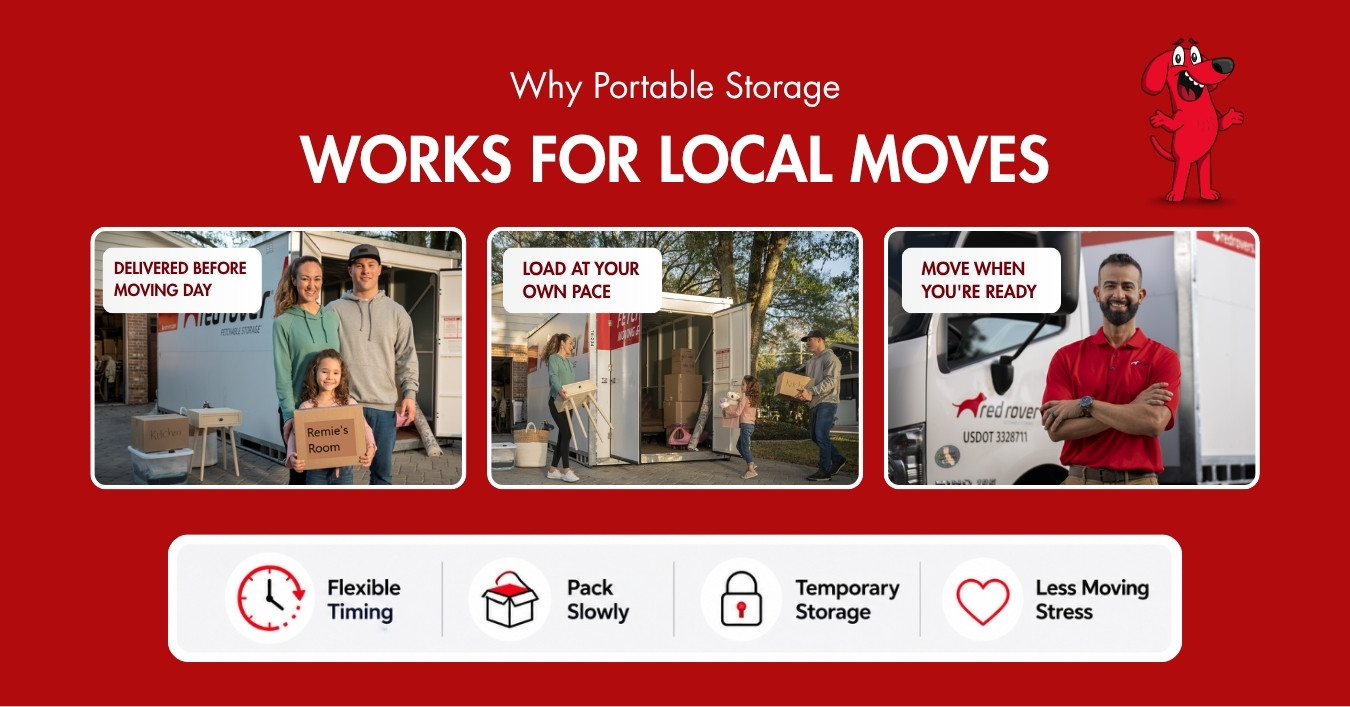
A local move sounds easy because the new place may only be a few miles away.
But anyone who has done it knows that “local” does not always mean simple.
Maybe your new home is ready on Friday, but your lease ends on Monday. Maybe you need to paint before moving furniture in. Maybe you are trying to pack while working, taking care of kids, and handling everything else life throws at you.
A portable storage container gives you more control.
You can have it delivered before moving day. You can load boxes as you pack. You can take your time with heavier furniture. Then, when the timing fits, the container can be moved or picked up.
This can be especially helpful if your move-in and move-out dates do not line up, you need extra time to pack, you are downsizing, you are staging a home for sale, you want to avoid renting and driving a moving truck, or you need temporary storage during the move.
For many people, that flexibility is the biggest benefit.
A Smart Option During Home Remodeling
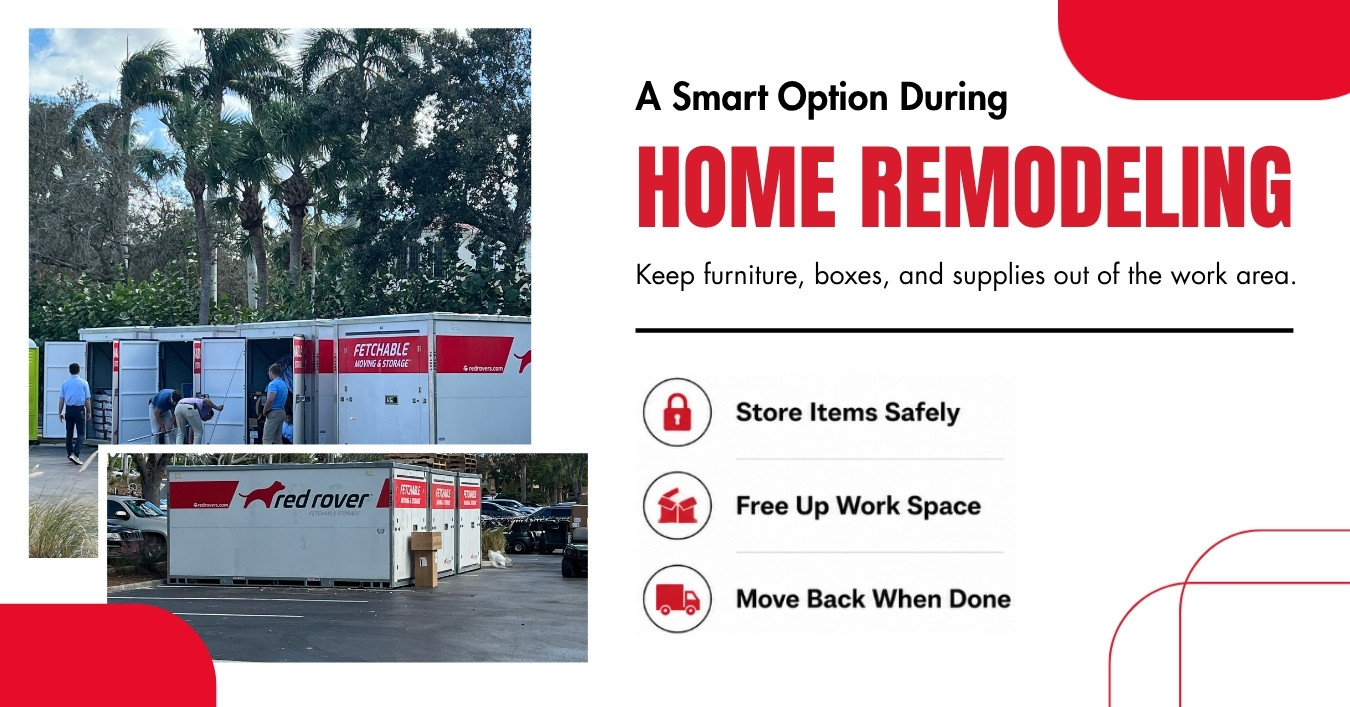
Renovation projects have a way of spreading into every room.
You start with one project, and suddenly furniture is stacked in the hallway, boxes are in the bedroom, and dust is everywhere.
A portable storage container offers a convenient solution for storing your belongings during the renovation process. You can keep furniture, appliances, tools, décor, and boxes outside the work area without having to move everything to a faraway facility.
This is helpful for kitchen remodeling, bathroom renovations, flooring replacement, interior painting, roof work, garage projects, whole-home updates, and restoration cleanup.
It also gives contractors more room to work, which can make the project go more smoothly.
Instead of shifting furniture from room to room, you can keep it in one place until the job is finished.
Business and Job-Site Storage
Portable storage is not only for homeowners.
Businesses, contractors, landscapers, retail shops, property managers, and real estate teams often need extra space too.
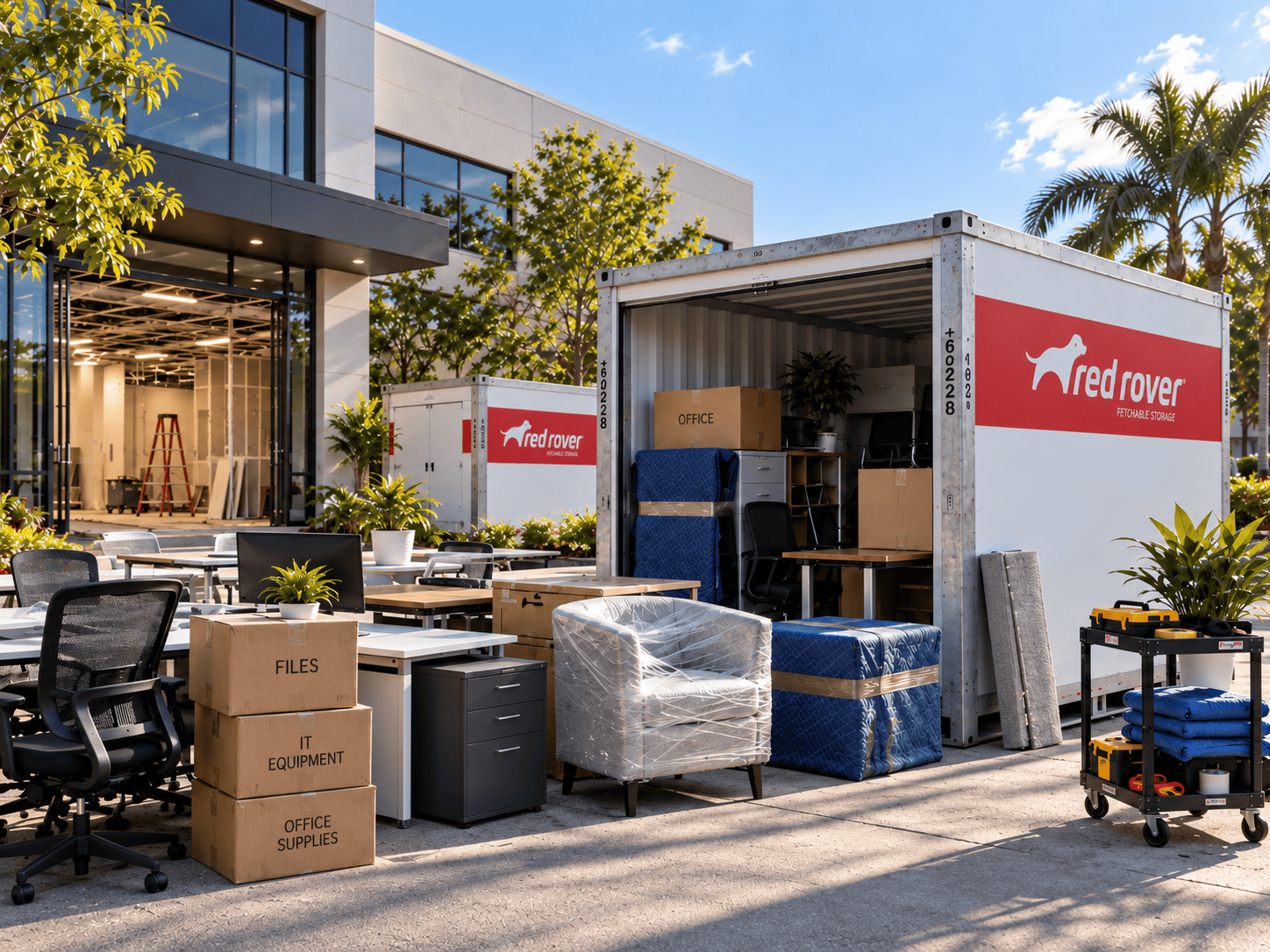
A portable container can be used for tools, supplies, inventory, furniture, files, equipment, or materials. For job sites, it is helpful because everything stays close to where the work is happening.
That can save time every day.
Portable containers can be used for construction materials, tools and equipment, retail overflow, seasonal inventory, office renovations, event supplies, landscaping equipment, real estate staging items, and maintenance supplies.
If your business is short on space or your team needs secure storage nearby, a portable container can be a sensible option.
Portable Storage vs. Traditional Self-Storage
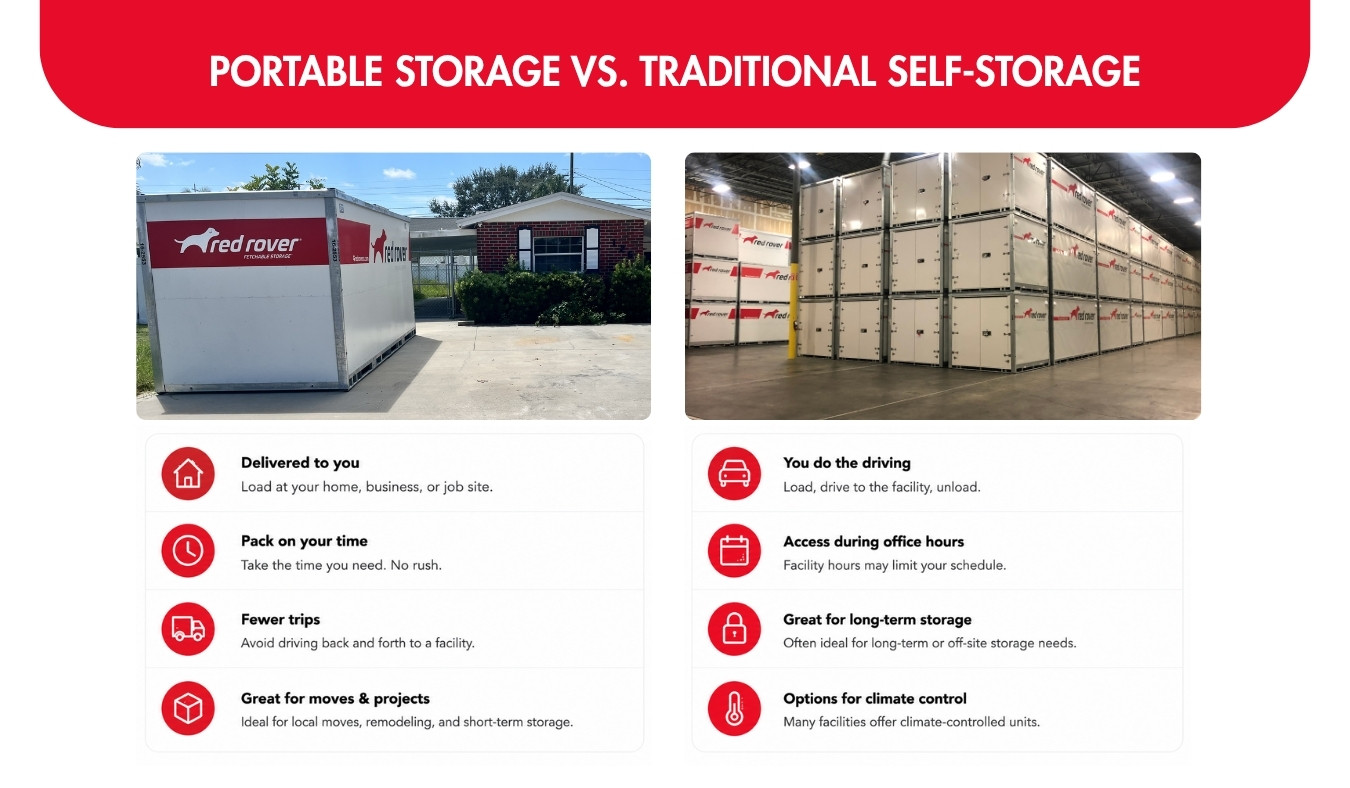
Both portable storage and traditional self-storage can work. It really depends on how you want to handle the job.
With a regular storage unit, you usually have to do the driving. You load your things into a truck, take them to the facility, unload them into the unit, and then repeat the process when you need everything back.
Portable storage eliminates much of that back-and-forth. The container is delivered to you, so you can load it right from your home, business, or job site.
That can be an enormous help if you have heavy furniture, a busy schedule, or a move in stages.
Portable storage may make more sense when you want the container nearby, need time to pack, or want to avoid multiple trips to a storage facility. It is also useful for remodeling, local moves, garage cleanouts, and short-term storage.
Traditional self-storage can also be a good fit if you need climate control, a very small unit, long-term storage away from your property, or access to a facility.
Both options can be useful. The right choice depends on what you are storing, how often you need access, and whether you prefer on-site convenience or facility-based storage.
What Can You Put in a Portable Storage Container?
Most people use portable containers for everyday household or business items.
Furniture, boxes, mattresses, appliances, patio furniture, tools, office furniture, seasonal decorations, and business supplies are all common examples. Contractors may use containers for materials and equipment. Homeowners may use them for furniture during a remodel or boxes during a move.
The main thing is to avoid storing anything unsafe or perishable. Items such as gasoline, paint thinner, propane tanks, chemicals, spoiled food, plants, animals, or anything that requires special climate control should not go inside.
If you are unsure about a specific item, ask before loading it. It is much easier to check ahead of time than to unload something later.
How to Keep Costs Under Control
Portable storage can be affordable when you plan ahead. A few simple steps can help you avoid spending more than you need to.
Choose the Right Size
Do not guess if you are unsure. Share your item list with the provider and ask what size makes sense.
Pack Before Delivery
You do not need to have everything packed, but having boxes ready helps you use the container time better.
Use the Space Carefully
Put heavier items on the bottom. Stack boxes neatly. Wrap furniture. Use blankets or padding when needed. Effective packing maximizes the available space.
Know Your Timeline
If you only need storage for a short time, plan your loading and unloading dates. If your project might run longer, ask about variable rental options.
Ask for the full price.
Do not only ask for the monthly rate. Ask about delivery, pickup, moving, storage, and any other possible fees.
Work With a Local Storage Provider
A local provider can often make the procedure seem easier because they know the area, the neighborhoods, and the kinds of moving and storage problems people deal with nearby.
For a local move, that can be helpful. For a remodeling project, it can be helpful too. You are not trying to fit into a one-size-fits-everyone process. You can talk through what you need and find an option that makes sense for your space, schedule, and budget.
Is a Portable Storage Container Worth It?
For many individuals, the answer is affirmative, particularly when timing is a major obstacle.
If you are moving, renovating, cleaning out a space, or trying to organize a busy home, having storage right outside can make the project appear more manageable. You can load a little at a time. You can keep items close. You do not have to keep driving across town every time you need to store or grab something.
Portable storage is more than having extra space. It is about making the whole process less rushed.
That is often what people appreciate most.
Why Choose Red Rover?
Red Rover makes local moving and storage simpler for homeowners, renters, businesses, and contractors who need extra space without the hassle.
Maybe you are moving across town. Maybe your house is being remodeled. Maybe your garage is packed, your business needs overflow storage, or your job site needs a secure place for tools and materials.
Whatever the reason, Red Rover gives you a practical way to keep your belongings close and organized.
You can use a Red Rover container for local moving, temporary storage, on-site storage, home projects, business needs, job-site storage, decluttering, or simply making more room when life gets crowded.
The goal is simple: bring the storage to you, let you load on your schedule, and help make the process easier from start to finish.
No rushing through everything in one day. No, never-ending trips back and forth. Just a flexible storage option that fits real life.
More About Portable Storage Container Cost
How much does a portable storage container cost per month?
The cost can change based on your location, container size, rental time, delivery, pickup, and whether the container needs to be moved. The most accurate way to know your price is to request a quote for your exact situation.
Can I use a portable container for a local move?
Yes. Many people use portable containers for local moves because they can load on their own schedule instead of trying to finish everything in one day.
Is portable storage useful during remodeling?
Yes. It is a convenient way to keep furniture, boxes, appliances, and household items out of the work area during the project.
Can businesses use portable storage?
Yes. Businesses and contractors often use portable containers for tools, equipment, inventory, supplies, records, or temporary overflow storage.
Portable Storage vs Self-Storage: Which is Right for Me?
Both portable storage and self-storage offer unique benefits. The right choice depends on your storage needs, timeline, accessibility preferences, and project requirements. Red Rover offers both options and can help you choose the best solution for your situation.
How do I choose the right container size?
Start with the biggest items first, such as furniture, appliances, mattresses, and equipment. Then think about boxes and smaller items. If you are not sure, ask the provider to help you estimate the right size.
Ready to Get Started?
Need extra space for a move, remodel, business project, or short-term storage? Red Rover can help you choose a portable storage option that works with your schedule.
Request a quote today and make your next move or storage project a little easier.
 Now Serving Orlando!
  Portable Moving & Storage Delivered to Your Door —
  Same-Day Delivery Available |
  We’ll Beat Any Competitor’s Price! -