
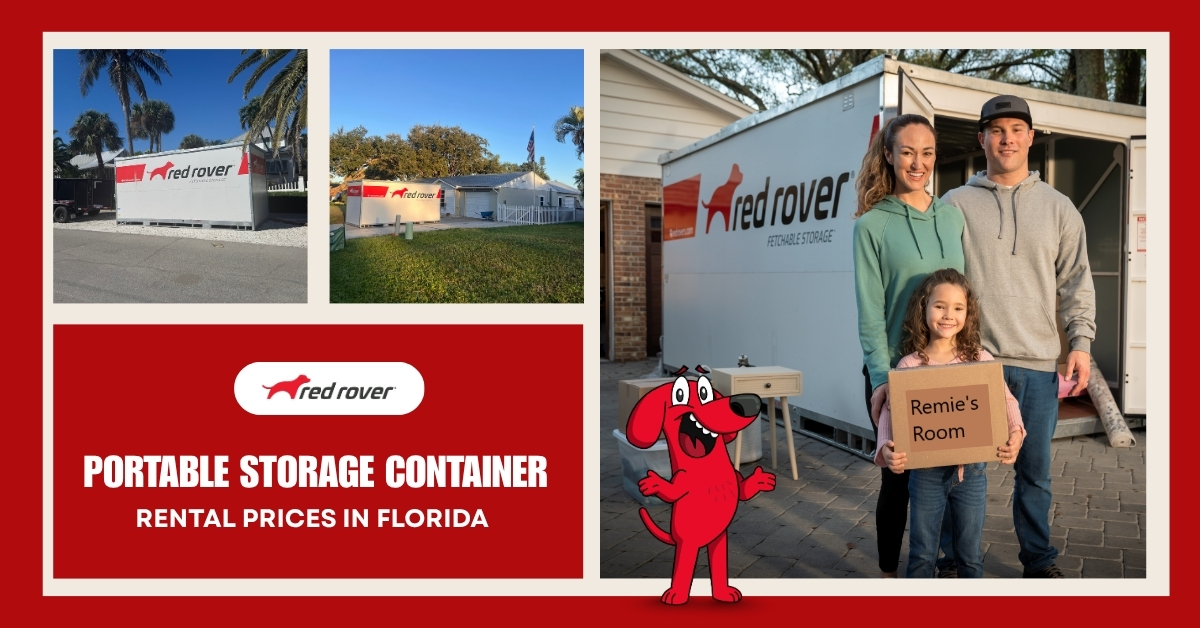
A portable storage container can make moving, cleaning, remodeling, or creating extra space much easier. Instead of driving back and forth to a storage unit, the container is delivered to your location. You load it at your pace, then decide whether to keep it on your property or have it moved to a storage center.
Before booking, most people want to know one thing first: how much is the service going to cost?
That answer can vary depending on what is included in the quote. Some prices cover only the monthly rental, while others may include delivery, pickup, transportation, or use of a storage center. So when you are comparing prices for renting storage containers in Florida, it is important to look beyond the first number and understand what the full service includes.
For Red Rover customers, pricing starts at $99 for an 8-foot container and $119 for a 16-foot container. These starting prices are helpful for basic planning, but the final quote may vary based on delivery, pickup, rental length, location, and whether the container stays on-site or is moved to a storage center.
Once you understand these details, it becomes much easier to compare your options and avoid surprise costs later.
Monthly Price Is Only the Starting Point
The monthly rental price is usually the first thing people notice. But it does not always show the full cost of the project.
A small storage job is different from a full move. If you are storing a few items during a flooring project, the setup is fairly simple. If you are packing an entire home, moving across town, and storing the container for a while, there are more steps involved.
Container size, rental time, delivery area, and service type can all affect the total. A container sitting in your driveway for two weeks is different from one that needs delivery, pickup, transportation, and facility storage.
Location can also make a difference in Florida. Distance from the service center, busy moving periods, and storm seasons may affect availability and scheduling. During hurricane season or after severe weather, demand for temporary storage can rise quickly, so planning ahead can help you secure better options.
When you see a monthly price, ask what it includes. Does it only cover the container rental? Is pickup included? What about storage at a facility? Clearing up these details early helps you understand the real cost before you decide.
Delivery and Pickup Charges
One of the biggest reasons people choose portable storage is convenience. The container is brought to your home, business, or job site, so you do not need to rent a truck or make repeated trips to a storage facility.
That convenience is included in the price.
For a simple job, the container may be dropped off at your driveway and picked up when you are done. Larger projects may involve additional steps, such as moving the container to another address, storing it at a storage center, or delivering it again later. Each extra step can change the quote.
Your ZIP code, delivery date, pickup timing, and distance from the service location can all matter. Property access is also worth mentioning early. Narrow driveways, gates, parking rules, apartment loading areas, or HOA restrictions may not constantly change the price, but they can affect scheduling.
A low monthly rate can look good at first. However, if you later add delivery and pickup fees, the total cost could exceed your expectations.
On-Site Storage Cost vs. Storage Center Cost
Where the container stays is another important pricing factor.
On-site storage means the container stays at your property. This is helpful when you want your belongings close by. It works well for renovations, garage cleanouts, roof repairs, decluttering, business overflow, and local moves.
For example, if you are remodeling your living room, you can move furniture into the container and keep it nearby until the work is complete. You do not have to drive across town every time you need something.
Storage center storage works differently. The container is picked up and taken to a storage facility. This option may improve if you have limited space at home, your HOA does not allow containers, or you do not want the container outside for a long time.
Off-site storage may include transportation, facility storage, and access arrangements. Some customers prefer having the container nearby. Others need to clear space at home. The better choice depends on your project, your property, and how often you need access to your belongings.
8-Foot vs. 16-Foot Container Pricing
Container size directly affects price.
Red Rover offers portable storage containers in both 8-foot and 16-foot sizes. Pricing starts at $99 for an 8-foot container and $119 for a 16-foot container, providing customers with a simple starting point for planning. You can compare the available options on the portable storage containers page.
An 8-foot container is a sensible option for smaller jobs. It can work well for a studio apartment, a one-bedroom storage unit, seasonal items, appliances, boxes, a small office, or a few pieces of furniture. It can also help when you need to move things out of the way during a small home project.
A 16-foot container gives you more room. It is often a better fit for multi-room storage, larger apartment moves, business inventory, garage cleanouts, renovation projects, or household items from several rooms.
Choosing the smaller size to save money can make sense occasionally. But if the container fills up too quickly, you may need another container or another storage plan. That can add cost and stress.
Before choosing a size, think about what you are storing. Boxes stack easily, but sofas, mattresses, appliances, and odd-shaped items can take up space faster than expected. Too little space can create extra work, while too much space can mean you are paying for room you do not really need.
Short-Term vs. Long-Term Storage Costs
How long you keep the container also affects the total price.
Short-term storage is common for home projects. You may be painting, replacing floors, remodeling a kitchen, or waiting a few weeks before moving into a new place. In these cases, a short-term container may be enough.
Long-term storage usually comes up during bigger transitions. You may be downsizing, waiting to close on a home, storing business equipment, handling estate items, or keeping belongings safe during a longer move.
Storage timelines do not always go as planned. A two-week renovation can turn into a month. A move-in date can change. A closing can be delayed. That is why it is smart to ask in advance what happens if you need the container longer than expected.
Florida Pricing Considerations
Florida has its own storage patterns.
The storm season is major. Homeowners may need portable storage while preparing for hurricanes, cleaning up after heavy rain, repairing roofs, or protecting belongings during home repairs. Portable containers can also help with condo moves, seasonal residents, remodeling projects, construction storage, and business overflow.
Demand can rise during busy times of the year. Summer is often active for moving. Storm season can create sudden storage needs. In growing areas, delivery schedules can fill up more quickly.
If your dates are already clear, it is better to plan early. Getting a quote in advance can provide you more scheduling choices and help you avoid last-minute stress.
Extra Charges Worth Asking About
A good quote should be clear before the container arrives.
When requesting pricing, ask about delivery, pickup, monthly rental fees, transportation to another address, storage center fees, extra rental time, facility access rules, lock requirements, and service area charges. Not all of these may apply to your project, but it is better to know upfront.
This information matters when comparing companies. Two quotes may look similar, but one may include delivery and pickup, while the other lists them separately. One company may include certain storage steps, while another may charge each time the container is moved.
The lowest number is not always the most helpful. What matters is the real cost from start to finish.
How to Get an Accurate Quote
The best way to know your actual price is to request a quote for your specific project. General price ranges can give you a rough idea, but they do not include your exact address, timeline, access details, or storage plans.
When asking for a quote, share your current ZIP code. If you are moving, include the destination ZIP code too. Mention your preferred service date, the container size you want, and how long you expect to need it. Also, say whether you need moving, storage, or both.
If the container will stay on-site, mention that. If you want it moved to a storage center, mention that too. Access details are also helpful. Gates, narrow driveways, parking rules, HOA restrictions, apartment loading zones, or limited space for container placement can affect scheduling.
The more clearly you explain your project, the easier it is for Red Rover to provide a quote that fits your needs.
You can request pricing through Red Rover’s Get a Quote page.
How to Compare Rental Prices Fairly
When comparing rental prices for storage containers, do not judge everything by the starting rate.
Look at the full service. What size container do you get? Is delivery included? Is pickup included? Can the container stay at your property? Can it be moved to a storage center? What happens if your project takes longer than planned?
Portable storage can save time because you can load at your own pace. It also helps you avoid repeated trips to a self-storage unit. That convenience matters, especially during a move, renovation, or stressful home project.
If your needs are simple, the lowest quote might be enough. If your project has more moving parts, the better value may be the quote that makes the process easier.
Why the Lowest Price May Not Be the Best Value
Everyone wants to save money. That is completely normal. But with portable storage, the lowest price does not always mean the best value.
If the container is too small, you may need another one. If delivery and pickup are not included, the final bill could be higher than expected. If the storage setup is hard to access, you may end up wasting time working around it.
The better choice is the one that fits your project. You need enough space, clear scheduling, a rental timeline that works, and a storage plan that suits your property or move.
This matters even more when life is already busy. Moving, remodeling, storm cleanup, and unexpected repairs can be stressful. A simple storage setup can make the process easier.
Before You Book
By the time you compare a few quotes, one thing becomes clear: portable storage pricing is not only about the container itself. The final cost usually depends on the size you choose, how long you keep it, where it needs to be delivered, and whether you want it kept at your property or moved to a storage center.
For a smaller project, an 8-foot container may be enough. For a larger move, renovation, or business storage need, a 16-foot container may be the better choice. On-site storage works well if you want easy access. Storage center storage may make more sense if you need to clear space at home or cannot keep a container on your property.
The best way to avoid confusion is to get a quote based on your real situation, not a general estimate.
Red Rover Moving & Storage offers portable storage options for Florida customers, including container solutions for homes, businesses, moves, renovations, and temporary projects. To plan your storage or moving project, you can compare available container sizes and request a personalized estimate through the Get a Quote page.

 Now Serving Orlando!
  Portable Moving & Storage Delivered to Your Door —
  Same-Day Delivery Available |
  We’ll Beat Any Competitor’s Price! -