
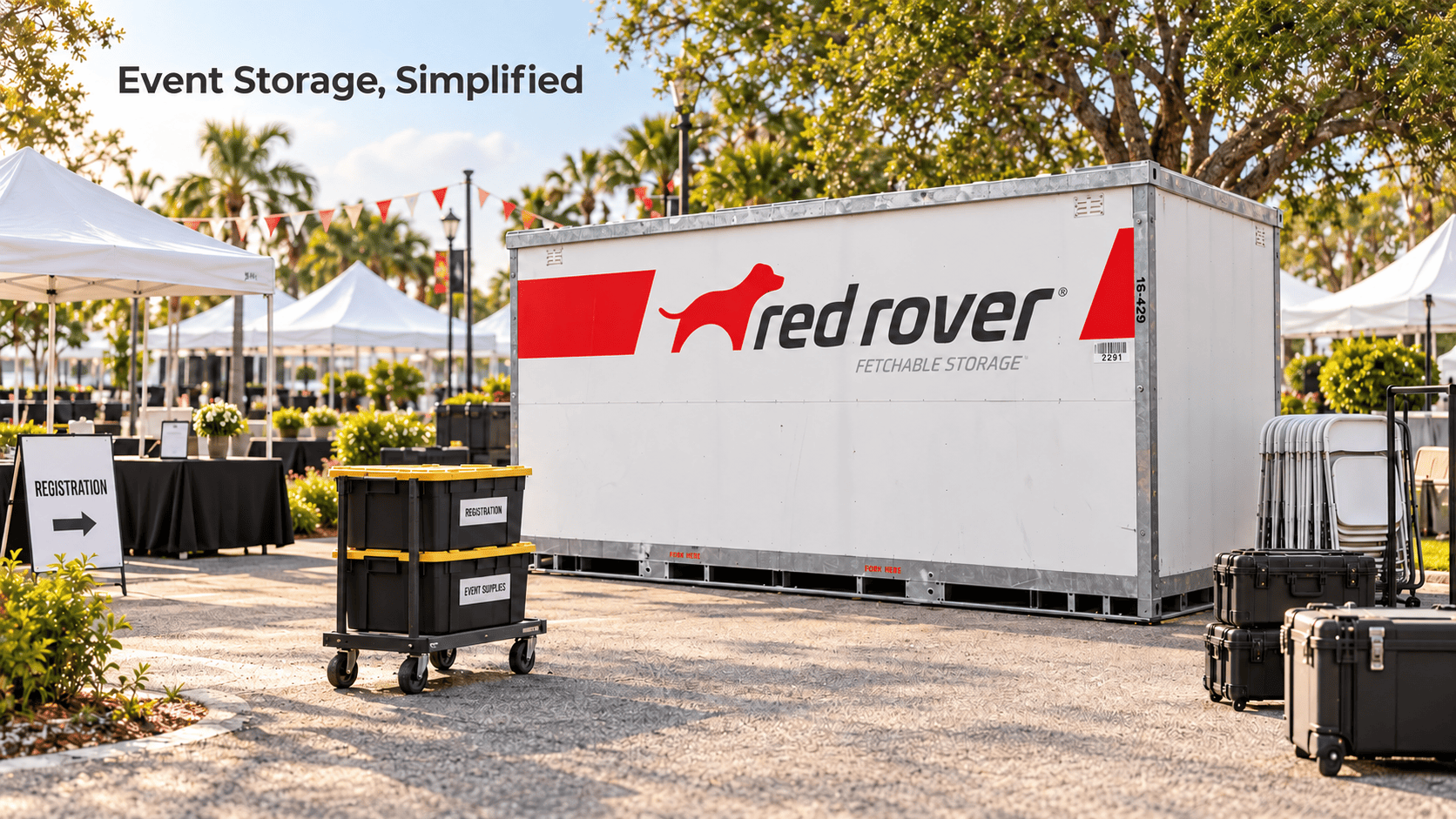
An event starts taking shape long before guests arrive. You need to sort signs, position furniture, and store supplies while vendors set up. Once the event ends, you must collect, check, and move the same items out, often within a tight venue deadline.
Temporary storage can make both stages easier by giving equipment and supplies a designated place before, during, and after the event. Instead of filling hallways or making repeated trips to collect forgotten materials, your team can work from an organized storage plan.
Red Rover offers portable storage solutions in Florida for sports teams, event organizers, venues, and tournament operators. This guide explains how temporary event storage supports smoother setup and breakdown, what to consider when choosing a container, and how to coordinate storage with your venue schedule.
Why Storage Belongs in Your Event Plan
Storage is easy to overlook when you are focused on attendance, catering, entertainment, and vendors. However, the space available behind the scenes affects how efficiently everyone can work.
A venue may have room for your finished event layout without having enough spare space for delivery boxes, empty cases, extra furniture, and backup supplies. When these items accumulate near work areas, staff spend more time moving things aside and searching for what they need.
Event storage creates a defined holding area. It can help separate materials waiting for installation from items already packed for collection. For recurring events, it also gives your team a consistent system for managing equipment between dates.
Red Rover lists sports and event storage among its storage services, covering needs such as equipment, signage, furniture, displays, and supplies. Start by identifying which of these items your event actually needs to store.
Make Event Setup Easier Before the First Vendor Arrives
The most useful storage plan follows your setup sequence. Consider what your team will install first, what arrives later, and what materials must remain available until opening time.
Group Materials by Event Area
Create an inventory organized around the event layout. Give each item a clear home: registration supplies, sponsor displays, hospitality materials, and directional signs.
Label boxes on more than one side and use names that match your site plan. A label like “Registration Desk” helps a volunteer more than an unexplained box number. Keep a shared inventory so the person receiving deliveries can identify missing or misplaced items.
Stage Supplies in the Order You Need Them
If a container is loaded before delivery to the venue, plan the unloading order. Keep materials needed first accessible without removing unrelated equipment. Discuss the loading and transport arrangement with the provider before committing to this approach.
Set aside a small setup kit with labels, paperwork, approved fastening materials, and other essentials. Keeping this kit accessible helps prevent a minor missing item from interrupting several people’s work.
Reduce Repeated Trips with On-Site Event Storage
Portable storage can bring supplies closer to the work area. Where venue access and placement allow, a container can serve as a central point for collecting materials, returning unused items, and keeping backup supplies together.
For example, a community festival team might organize its directional signs, registration materials, and spare display components in one container. Different team members can collect their assigned materials without searching several vehicles or rooms.
The benefit depends on placement. A container positioned far from the event workspace may add unnecessary carrying distance. One positioned too close to an entrance may interfere with guests, suppliers, or emergency access.
Review Red Rover’s portable storage solutions and discuss the proposed location with both the venue and delivery team. Confirm the delivery surface, vehicle clearance, gate access, and collection route before the event layout is finalized.
Keep Supplies Organized While the Event Is Running
Temporary event storage remains useful after setup. Spare materials, empty packaging, replacement signage, and unused decorations still need somewhere to go once attendees arrive.
Assign one person to oversee storage access. Make sure relevant staff know who holds the keys, where materials belong, and how to record anything removed. This helps prevent a shared container from becoming an unstructured collection of other people’s belongings.
Separate items by purpose and ownership. Clearly identify vendor property, hired equipment, and your organization’s reusable materials. Keep items requiring special handling in suitable packaging and follow the supplier’s instructions.
Keep storage separate from disposal. Clearly identify rubbish and recycling areas so useful packaging and reusable supplies are not accidentally thrown away during a busy changeover.
Turn Event Breakdown into an Organized Packing Process
Breakdown often happens when staff and volunteers are tired. Vendors may collect equipment while another team dismantles displays and the venue prepares for its next booking. A storage plan gives the work a clearer order.
Sort Items Before Loading
Create collection groups for hired equipment, reusable event materials, damaged items, and waste. Check items against your inventory before they enter storage. Photograph damage and record anything missing while the relevant people are still available.
Use the original protective cases where possible. Keep fixings, cables, and small components with their matching equipment so the next setup doesn’t start with a search for missing parts.
Pack for the Next Event
Loading everything into the nearest available space may clear the venue quickly, but it can create more work later. Label boxes with their contents and condition, and update the inventory as you pack.
Dry and clean suitable items before storing them. If materials become wet during an outdoor event, plan how they will be dried before long-term packing. Secure the load per the storage provider’s instructions, and confirm when collection can take place.
Choose Between Venue Storage and a Storage Center
The right arrangement depends on how often you need access and how long the venue allows the container to stay.
Keeping storage at the venue can work well during setup and breakdown when staff need materials nearby. Confirm permission, placement restrictions, and the final removal deadline in writing with the venue contact.
Storage Center storage may be more practical between events, especially when the venue needs its parking or service area back immediately. Ask how pickup, access, storage, and later delivery would work for your schedule and addresses.
Red Rover offers weather-resistant containers for on-site storage and climate-controlled storage at its Storage Centers. For sensitive materials, explain their storage requirements before choosing an arrangement. Confirm suitable conditions for electronics, printed graphics, fabrics, and other items with manufacturer-specific requirements.
Select a Container Based on Your Event Inventory
Event equipment does not pack like household furniture. Folded tables, rigid display panels, long sign supports, and stacked cases can leave unusable gaps even when the overall load appears small.
Red Rover offers 8-foot containers and 16-foot storage containers. Their listed dimensions are 8 feet long by 8 feet wide by 8 feet high, and 16 feet long by 8 feet wide by 8 feet high, respectively.
Measure the largest items and record how many cannot be stacked. Consider whether you need to retrieve individual boxes during the event or keep the container packed until unloading. Check weight limits and door clearance with the team.
Share photos or an itemized equipment list when requesting advice. For a large event, organizing separate loads by function may be easier than mixing everything, but confirm availability and the full cost before deciding.
Match Delivery and Pickup to the Venue Schedule
A storage booking needs more detail than the event date. Provide the earliest arrival time, when loading must finish, and the latest removal time.
Coordinate these details with the person who controls venue access. A delivery team arriving before the service gate opens cannot solve the problem simply by knowing the event start time.
Check whether setup or breakdown continues outside standard access hours and agree on a contingency if the event runs late. Identify who can approve a revised collection arrangement and how the storage provider should contact them.
Red Rover’s short-term storage options can support temporary needs, but confirm the minimum rental period and applicable billing terms. A weekend event should not be assumed to have a weekend-only rental charge. Check availability for your venue through Red Rover’s locations page.
Compare the Full Cost of Temporary Event Storage
Assess storage as part of the event logistics budget. The container rental is one element; delivery, collection, transport, and storage arrangements may also affect your quote.
When requesting prices, provide the same inventory, addresses, dates, and access requirements to each provider. Ask which charges apply, what happens if dates change, and whether extra handling or loading assistance is included.
Compare this with the work your alternative arrangement requires. Repeated vehicle trips, temporary holding areas, and additional loading may use staff time and transport resources. Estimate these costs for your event rather than assuming a container always saves money.
If you need help with lifting or packing, review Red Rover’s packing and loading assistance and confirm the service scope separately. Event production, equipment installation, and dismantling should remain clearly assigned to the appropriate teams.
A Practical Event Storage Checklist
Before booking temporary storage, confirm the following:
- Your inventory includes quantities, dimensions, ownership, and handling needs.
- The venue has approved the container location and rental dates.
- The delivery team has reviewed access and placement requirements.
- The selected size suits both the load and your access needs.
- You understand storage conditions, coverage, and prohibited items.
- Named team members control keys, inventory, and packing decisions.
- Pickup and any later delivery fit the venue and event schedules.
- The written quote explains the rental period and relevant charges.
Share the final plan with your venue contact and the people supervising setup and breakdown. Keep a copy of the inventory accessible outside the container, so staff can use it while the container is locked or in transit.
Plan Your Next Event with Red Rover
Temporary storage can simplify event logistics when you plan around your team’s work. A suitable container, clear inventory, sensible placement, and coordinated collection can help materials move through setup and breakdown with fewer avoidable interruptions.
For Florida event organizers, Red Rover provides portable storage options that can be discussed around the venue, equipment, and event schedule. Whether you are preparing for a tournament, community festival, business event, or recurring program, start with the items you need to store and the dates you need access.
Request a Red Rover quote to confirm availability, container size, and storage arrangements for your next event.
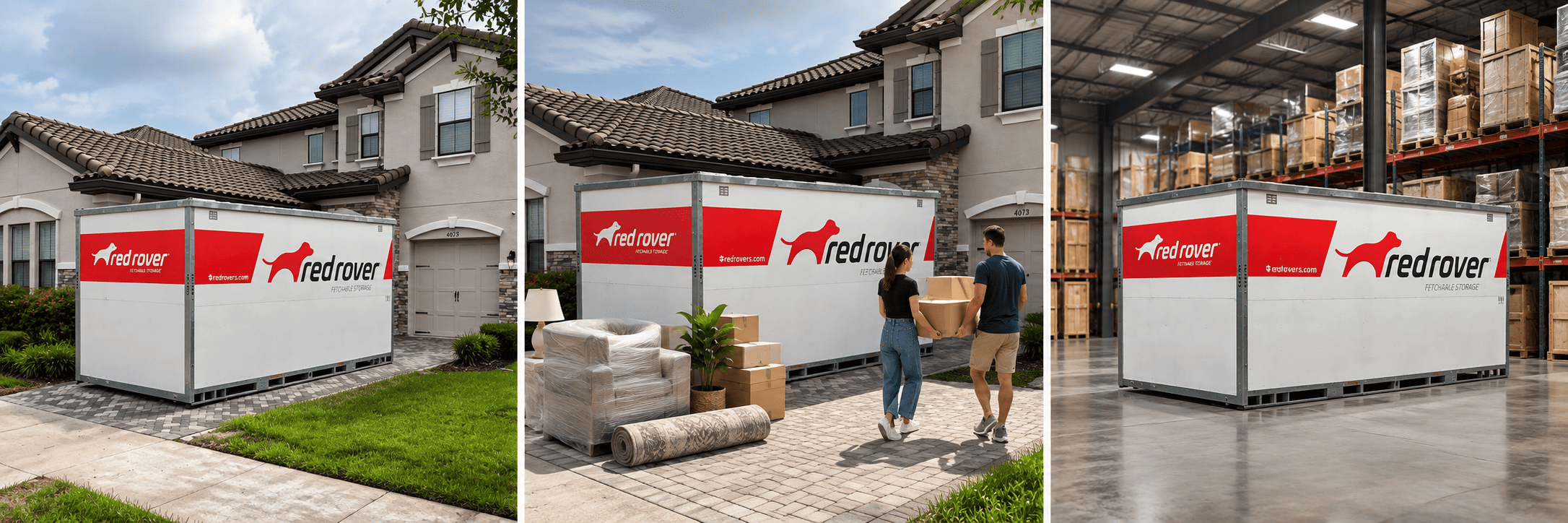

 Now Serving Orlando!
  Portable Moving & Storage Delivered to Your Door —
  Same-Day Delivery Available |
  We’ll Beat Any Competitor’s Price! -