
Finding storage often starts with a deadline. Your renovation is about to begin, your closing dates no longer line up, or your garage needs clearing before another project can start. Searching for “storage near me” gives you plenty of results, but choosing the right option takes more than comparing the lowest advertised monthly rate.
The first question is how you want to move your belongings into storage. Do you want to drive them to a traditional facility, or have a container delivered to your property?
Red Rover Moving & Storage provides portable storage containers and moving services in Florida. You can load a delivered container, keep it at your location where permitted, or arrange storage at a Red Rover Storage Center. This checklist explains how to choose portable storage based on your space, schedule, access needs, and budget.
Decide Whether Portable Storage Fits Your Project
With traditional self-storage, you transport your belongings to a rented unit. That may involve arranging a truck, making several trips, and unloading everything at the facility.
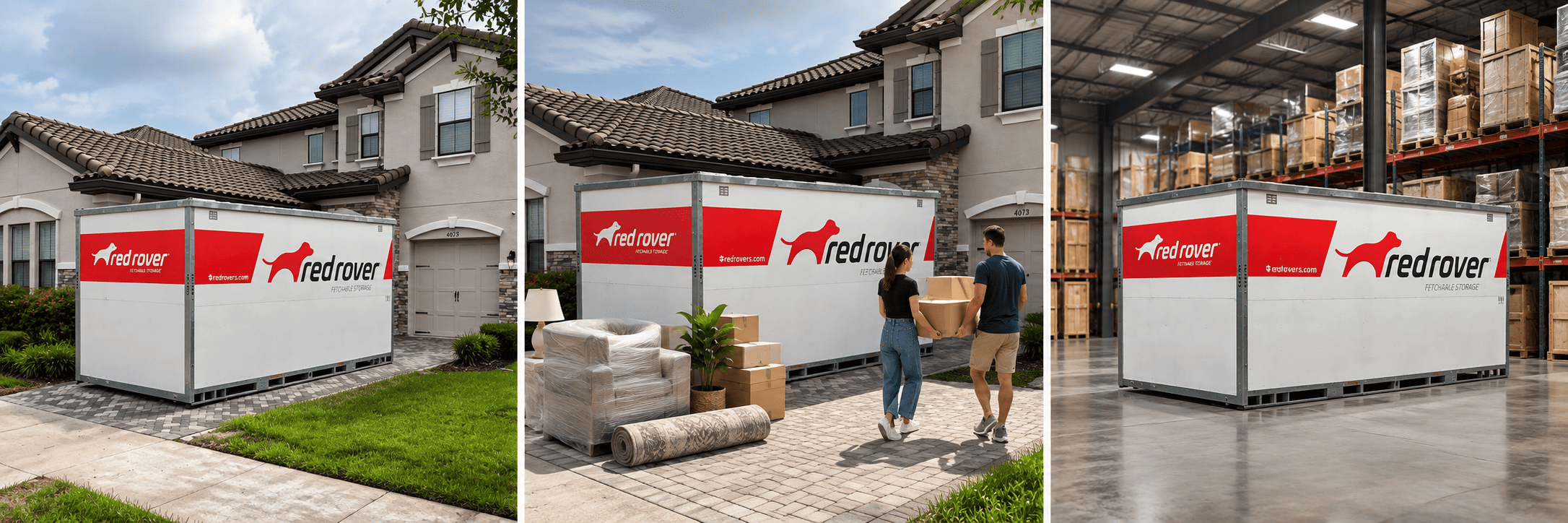
Portable storage brings the container to you. You load it at your location, then arrange its next step with the provider. For a move, the same loaded container can travel to your next address, subject to service availability.
Start by listing what you need to store and why. Furniture from a remodeling project creates different requirements from business inventory that staff need every week. Your timeline matters, too: a brief gap between homes calls for different planning than several months of storage.
Explore Red Rover’s portable storage solutions to understand the available options before choosing your container and delivery date.
Check Service Availability at Your Address
When searching for portable storage near me, check delivery coverage before comparing container sizes or rates. A nearby Storage Center does not automatically mean every address or moving route is available.
Use Red Rover’s locations page to review its Florida locations, including Clearwater, Port Charlotte, and its Orlando-area location in Lakeland. Then confirm service for your exact ZIP code.
If you are moving, provide both the pickup and destination addresses. Also explain whether the loaded container needs to spend time in storage between deliveries.
Share any property restrictions early. An apartment parking lot, narrow driveway, gated entrance, or shared business loading area may affect placement. Ask what information the delivery team needs to assess access and whether someone must be present when the container arrives.
Choose the Right Storage Container Size
Choosing storage containers for rent starts with an inventory. Count boxes, measure large furniture, and identify anything unusually heavy or awkwardly shaped. Room counts offer a starting point, but the actual contents of those rooms determine how much space you need.
Red Rover offers two container sizes:
Container | Approximate capacity | Comparable self-storage space |
8-foot container | Contents of 1–2 moderately furnished rooms | 10 × 5 feet |
16-foot container | Contents of 3–4 moderately furnished rooms | 10 × 15 feet |
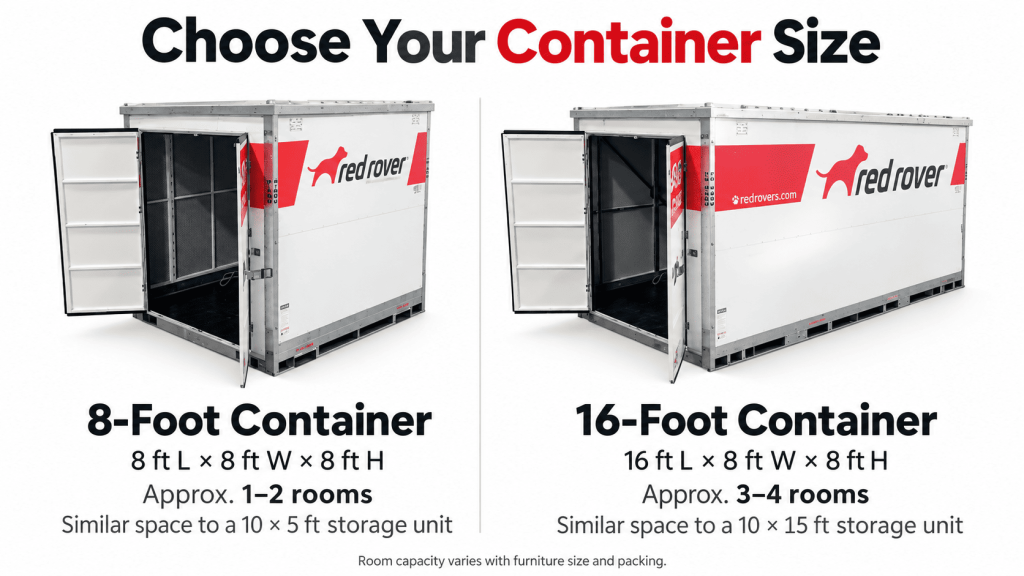
An 8-foot storage container may suit a smaller furniture collection, selected rooms, or a compact storage project. A 16-foot storage container provides more room for larger household loads.
These capacities are estimates. Shelving, oversized sofas, exercise equipment, and items that cannot be stacked can change the result. Share your inventory with the team and ask about weight limits as well as available space.
For more help, read Red Rover’s guide to calculating how much storage space you need.
Decide Where Your Container Should Stay
Your access needs should guide the choice between keeping a container on your property and arranging Storage Center storage.
On site storage for frequent access
On-site storage container rental can be practical when you need furniture, supplies, or equipment nearby throughout a project. During remodeling, for example, you may want to return belongings to the house one room at a time.
Before booking, check whether your property has a suitable placement area. Confirm any landlord, homeowners association, parking, or local requirements that apply. Ask Red Rover about the clearance and surface needed for delivery and pickup.
Think beyond the first delivery. The container must remain accessible when it is time to collect it, even if contractors, vehicles, or building materials arrive during the project.
Storage Center storage when space is limited
If keeping a container at home is impractical, ask about storage at a Red Rover Storage Center. This may suit an apartment move, a gap between closing dates, or a project that requires your driveway to stay clear.
Confirm how to arrange access to stored belongings and how much notice is needed for retrieval or redelivery. For a closer comparison, read on-site versus Storage Center storage.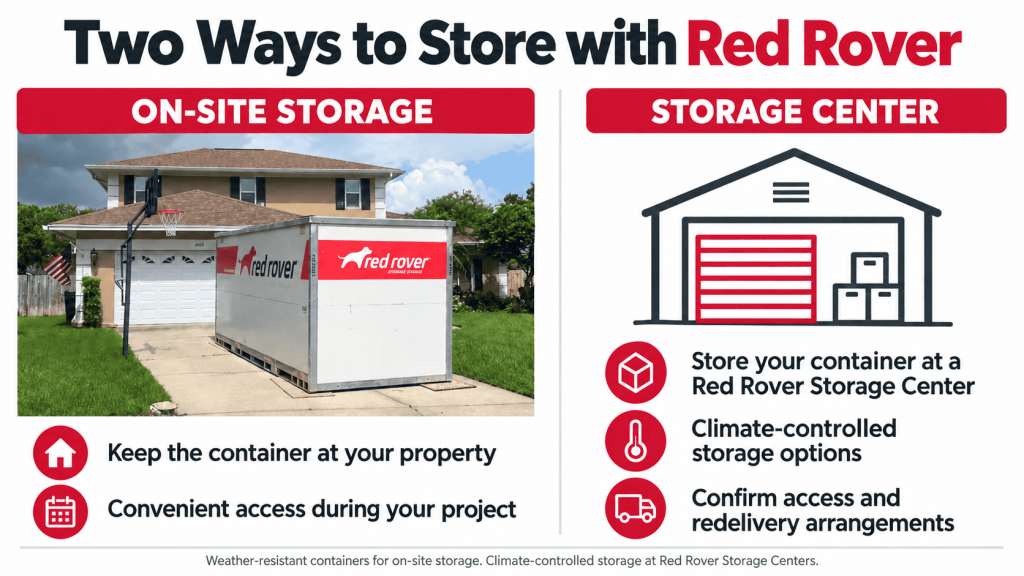
Understand Climate Control Before Storing Sensitive Items
Red Rover offers climate-controlled Storage Centers. This is different from keeping a weather-resistant container outdoors at your property; an on-site container should not be assumed to have temperature or humidity control.
Tell the team what you plan to store, especially if your inventory includes wood furniture, electronics, photographs, documents, artwork, or other items with specific storage requirements. Ask whether the proposed storage arrangement is suitable and check manufacturer guidance where relevant.
Prepare everything before loading. Furniture, fabrics, and appliances should be clean and dry. Avoid sealing moisture inside boxes or protective coverings, and choose packing materials appropriate to each item.
Weather resistance also has limits. Discuss placement and severe-weather procedures with the provider rather than assuming an outdoor container will protect every item under every condition.
Match the Rental to Your Timeline
A portable storage container rental should fit your whole project, including delays. Plan around when you need the container delivered, when loading will finish, and when you expect to need your belongings again.
Red Rover offers month-to-month rentals for short-term and long-term storage. Confirm the minimum rental period, billing dates, extension process, and notice required to end the rental before booking.
Temporary furniture storage during a renovation may need an extension if materials arrive late. Storage between homes may need a new delivery date if a closing changes. Ask how those adjustments are handled and whether they affect the quoted price.
Keep a written schedule with your preferred dates and any dates that are fixed. This helps the team understand where you have flexibility and where you need a specific arrangement.
Compare the Total Cost of Storage
The most useful quote covers the complete service you need. National self-storage averages do not tell you what a delivered container, transport, and storage arrangement will cost at your address.
When comparing storage container rental prices, request an itemized quote and ask which of the following apply:
- Container rental and the billing period.
- Initial delivery and final pickup.
- Transport between addresses.
- Storage Center storage and redelivery.
- Taxes and any administrative charges.
- Locks, protection options, or other required items.
- Charges for changing dates or extending the rental.
Compare providers using the same container capacity, dates, addresses, and storage arrangement. A lower monthly price may produce a different total once the required services are included.
Ask about current promotions, eligibility, and the rate after any introductory offer ends. Get those details in writing. You can request a Red Rover quote using your ZIP code, schedule, and storage requirements.
Review Security and Rental Terms
Before loading, inspect the container’s interior, door operation, and visible condition. Report concerns promptly and photograph its condition for your records. Ask which locks are suitable and how many you need for the container supplied.
For Storage Center storage, ask how customer access works and what security measures apply at that location. Clarify the procedure for collecting individual belongings or arranging delivery of the full container.
Review any coverage requirements and available protection options directly with Red Rover and your insurer. Understand exclusions, limits, and the process for reporting loss or damage before you rely on a policy.
Also request the prohibited-items list. Do not assume everything from your garage, workshop, or business premises is permitted. Confirm cancellation, payment, pickup, and rental-ending terms before signing.
Prepare Your Belongings and Delivery Area
Good preparation makes loading easier and helps you use the space efficiently. Pack room by room, label boxes clearly, and keep an inventory of important items. Set aside documents, medication, valuables, and daily essentials that should remain with you.
Use sturdy boxes and protect furniture with suitable padding. Place heavier items low, distribute weight evenly, and secure the load according to the provider’s instructions. Keep anything you may need during storage accessible within the limits of a safe packing plan.
Clear the agreed delivery area before the truck arrives. Discuss gates, trees, overhead obstacles, parked vehicles, and any changes to the site since booking.
If you need help lifting or packing, review Red Rover’s packing and loading assistance and confirm the scope, availability, and price separately.
Choose Storage for the Way You Will Use It
Portable moving and storage can support more than a household move. The best setup depends on how often you need access and what must remain available during the project.
For home renovations, create an inventory for each room being cleared and coordinate delivery with the contractor’s schedule. For downsizing or an estate cleanout, separate items you intend to keep from those awaiting sale, donation, or collection.
Businesses should consider who needs access, which items can be stored, and how loading will affect daily operations. Red Rover’s business storage solutions cover needs such as extra space during projects and business transitions.
Retailers handling seasonal stock can explore retail inventory storage. Students planning around semester dates can review college dorm storage. Discuss the specific contents and dates before choosing an arrangement.
Your Portable Storage Booking Checklist
Before reserving a container, confirm these details:
- Service is available at your delivery and destination addresses.
- The container size and weight allowance suit your inventory.
- Placement is permitted and delivery access has been reviewed.
- You have chosen on-site or Storage Center storage.
- Access arrangements and climate-control needs are understood.
- The written quote includes the services you require.
- Rental terms, coverage, and prohibited items have been checked.
- Delivery, pickup, and any redelivery dates are agreed.
Choosing portable storage becomes easier when you work through these decisions before booking. Start with what you are storing, establish where the container should stay, and compare the full cost for your schedule.
Ready to plan your move or clear space for a project? Contact Red Rover Moving & Storage to confirm local availability and discuss a container rental that fits your needs.
 Now Serving Orlando!
  Portable Moving & Storage Delivered to Your Door —
  Same-Day Delivery Available |
  We’ll Beat Any Competitor’s Price! -